Trending

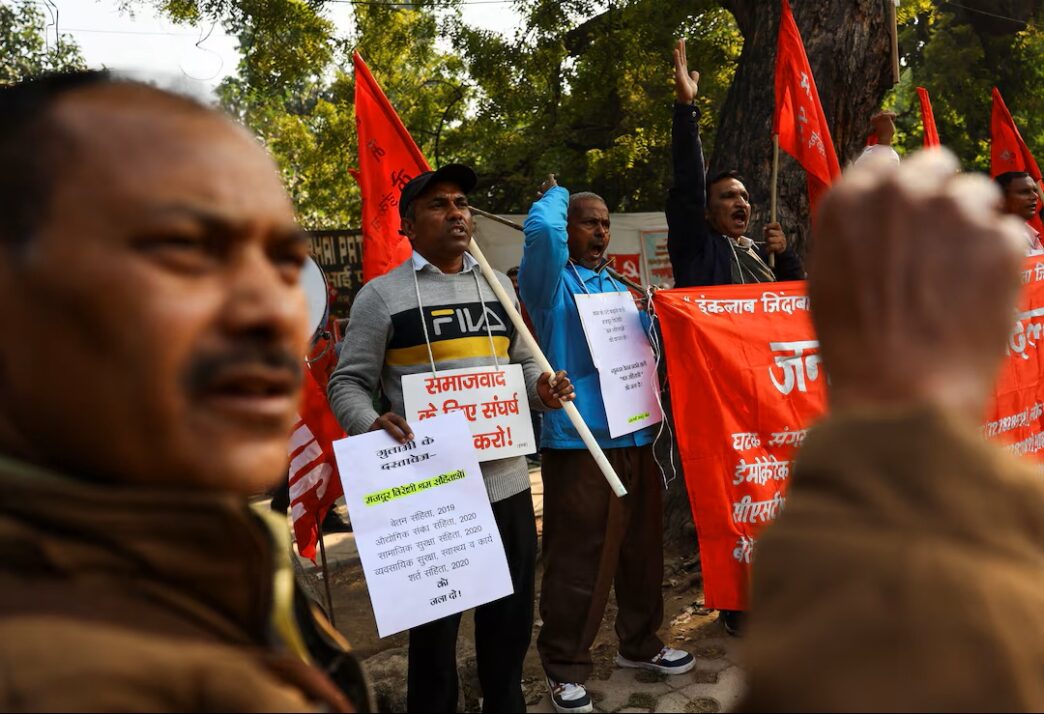
Thousands of trade union workers across India staged protests on Wednesday against the government’s introduction of new labour codes, arguing that the reforms would erode long-standing protections and expose them to corporate exploitation.
The world’s fifth-largest economy last week brought long-awaited labour reforms into force, replacing colonial-era legislation and simplifying a complex system of regulations. The overhaul merges 29 existing labour laws into four main codes, cutting more than 1,400 rules down to about 350. However, unions insist the changes come at the expense of workers’ rights.
Gautam Mody of the New Trade Union Initiative said employees from various sectors gathered outside factories and in city centres nationwide. “Workers have been blindsided by the government,” he told AFP. “We want fairness, justice, and equity before the law — all of which are being denied under the new codes.”
Although the reforms strengthen workplace safety standards and guarantee social security for gig workers, they also allow longer factory shifts, restrict workers’ ability to strike, and make it easier for medium-sized companies to dismiss staff. A particularly contentious provision raises the threshold for firms requiring government approval for layoffs from 100 to 300 employees, meaning companies with up to 300 staff can now retrench without official permission.
‘Deceptive Fraud’
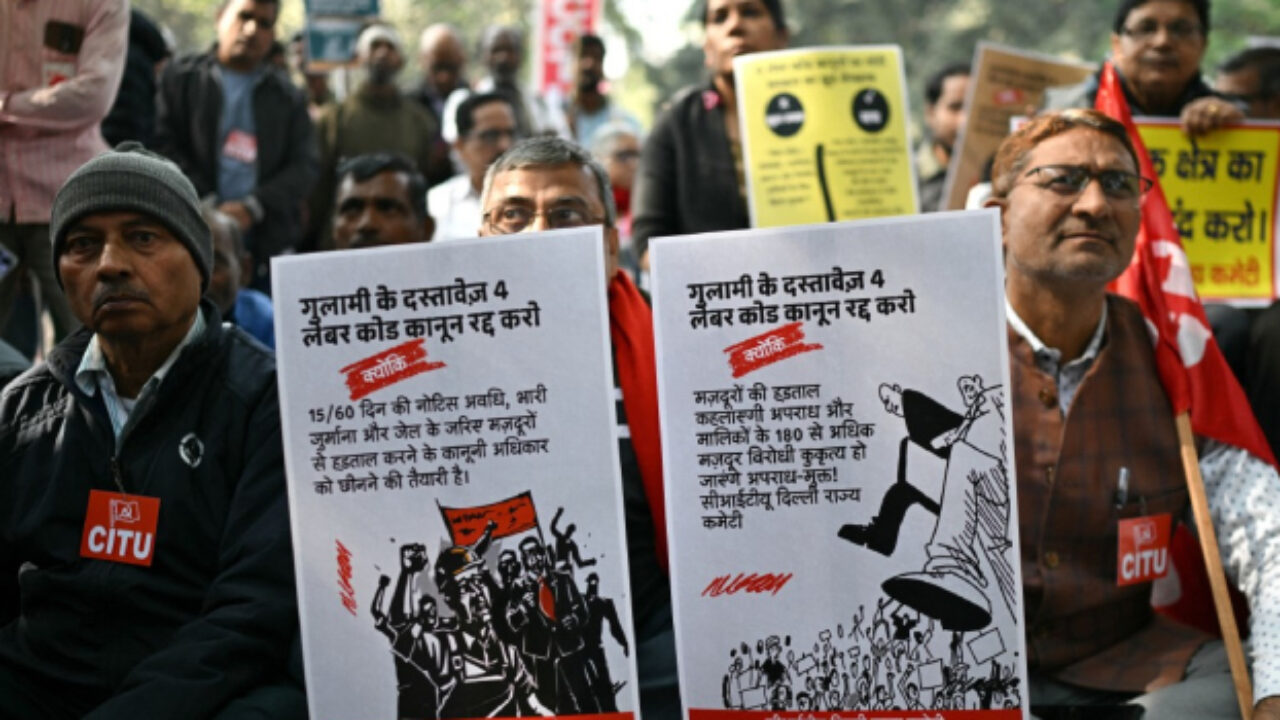
Trade unions, many aligned with opposition parties, have condemned the move as a “deceptive fraud” against India’s workers. The Centre of Indian Trade Unions (CITU) argued that the government is falsely portraying the codes as “pro-worker” and “modernising”. In reality, it said, the reforms amount to the “most sweeping and aggressive removal of workers’ hard-earned rights since Independence”, designed to enable corporate exploitation, contractualisation, and unfettered hire-and-fire practices.
Prime Minister Narendra Modi has defended the overhaul, saying it removes excessive compliance requirements that have long discouraged foreign investment. He described the reforms as “one of the most comprehensive and progressive labour-oriented changes since Independence.”
Despite remaining the world’s fastest-growing major economy, India has experienced a slowdown over the past year. Growth has slipped below the eight per cent benchmark many economists consider necessary to generate sufficient well-paid employment.
India’s economic outlook has also been clouded by US President Donald Trump’s sweeping tariffs, partly triggered by Washington’s anger over Delhi’s purchases of Russian oil. The tariffs have raised concerns over India’s energy security and investment climate.
Analysts at Nomura said the labour reform was an attempt to modernise outdated and overly complex laws that have hindered the ease of doing business. However, they noted it formed part of a wider government push to accelerate economic reforms, particularly in response to the 50 per cent tariffs imposed by the Trump administration.