Trending
Iran and the United States (US) agreed to a temporary ceasefire on Tuesday, pausing hostilities for two weeks after weeks of intense cross-border attacks that triggered a global energy crisis and rising fuel prices.
Before the war erupted, both countries were at the negotiating table discussing Iran’s nuclear weapon programme, which the US considers a threat to its internal security and that of its allies and interests in the global system. But neither party came to an agreement, triggering a war.
While the war was ongoing, there were reports, particularly from Trump, claiming that both countries were still negotiating terms to end the war.
Trump had also proposed ceasefires before now, but they were all unsuccessful. In late March, the US proposed a 15-point ceasefire plan to Iran through mediators like Pakistan, but Iran refused the truce. There was no agreement until Tuesday, when Trump proposed a two-week ceasefire, which Iran agreed to under ten conditions.
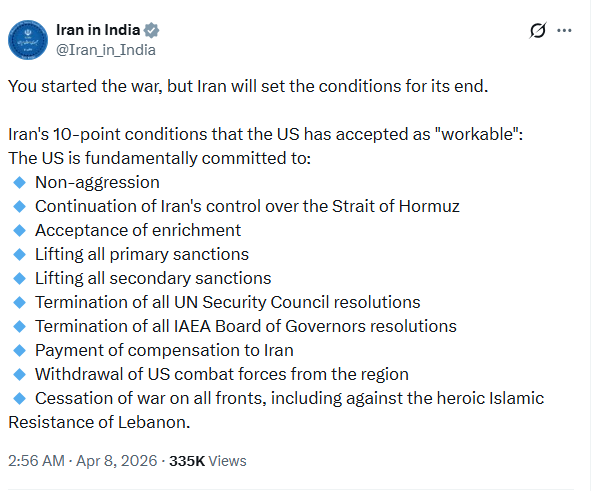
You started the war, but Iran will set the conditions for its end.
Iran’s 10-point conditions that the US has accepted as “workable”:
The US is fundamentally committed to:
🔹 Non-aggression
🔹 Continuation of Iran’s control over the Strait of Hormuz
🔹 Acceptance of enrichment…— Iran in India (@Iran_in_India) April 8, 2026
Iran’s 10-Point Plan is the framework for the ceasefire and outlines Iran’s demands and proposals to end the war.
According to Iran’s state media, the country will only accept ending the war permanently once details are finalised in line with a 10-point peace plan reportedly submitted to the White House via Pakistani intermediaries.
The following are Iran’s demands under its 10-Point Plan:
1. Lifting all primary sanctions:
For over four decades, the US has imposed sanctions on Iran, considered one of the most extensive sanctions regimes in the world. The US imposes oil and energy sanctions, a trade embargo on Iran and targets individuals and companies doing business with the Middle East country.
2. Lifting all secondary sanctions:
The US also threatens to punish countries and companies that partner with them. As a result of these secondary sections, foreign companies risk losing access to the US financial market and systems if they help Iran trade. The primary and secondary sanctions turned Iran into a pariah state, but countries like China and Russia remain some of its key allies. The imposed sanctions are a point of contention in the 10-point plan, and Iran demands their removal.
3. Continuation of Iran’s control over the Strait of Hormuz:
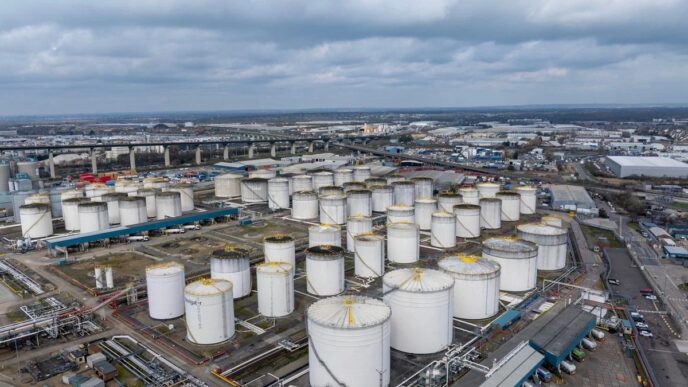
The Strait of Hormuz is a vital waterway in the Middle East through which about 20% of the world’s crude supply passes. Since the war began, the strait has become volatile and dangerous. Hundreds of seafarers have been stuck in the strait for weeks. This has led to an increase in crude oil prices and a rise in refined petroleum product prices worldwide. Trump had instructed Iran to open the Strait since the beginning of the war, but he was met with defiance. Iran wants control over the Strait of Hormuz and listed it as part of its 10-point plan.
4. Withdrawal of US combat forces from the region:
The US has allies in the Persian Gulf and military troops in the region. Iran considers US military bases in the region as launch points for future attacks on Iran and a threat to its internal security. Some of Iran’s reprisal and retaliatory attacks were targeted against US bases in Qatar, Bahrain and other Gulf countries that are US allies.
4. Non-aggression:
The US has launched attacks against Iran and people linked to the country for decades. Before the February 28 attack that spiralled into a war lasting weeks, US forces bombed Iranian nuclear facilities at Natanz, Fordow and Isfahan. Iran demands an end to the age-long attacks on it and its allies.
5. Release of frozen Iranian assets:
Billions of dollars of Iranian funds and assets have been frozen under the US-imposed sanctions for decades. Iran has reportedly managed to access some of it, but much of it still remains frozen due to sanctions.
6. Payment of compensation to Iran:
The ongoing escalation has had a negative toll on Iran. From the start of the war, Iran lost its late Supreme Leader Ayatollah Khamenei, who was killed by US strikes. Other key officials were also targeted and killed. Several infrastructure and economic assets have been destroyed, and over 3,000 people have died in Iran since the beginning of the war. Iranian authorities have demanded compensation for the losses they’ve incurred as conditions for permanently ending the war.
7. Acceptance of enrichment:
Iran does not yet have a nuclear weapon, but it has a long history of engaging in secret nuclear weapons research. Per international law, Iran is not allowed to have nuclear weapons. Iran has, however, claimed that its nuclear facilities are purely for civilian purposes. For the US and Israel, Iran’s nuclear enrichment is a threat to their national security and that of their allies. The US and Israel are determined to wipe out Iran’s nuclear facilities. Iran’s nuclear weapon ambitions formed the basis of the ongoing escalation, but Iran has refused to give up on its ambitions.
8. Termination of all UN Security Council resolutions:
Iran has demanded the termination of all United Nations Security Council (UNSC) resolutions that target it. Some of these resolutions have targeted its uranium enrichment, nuclear research and development, arms imports and exports, among others. Many UNSC resolutions have reinforced sanctions, limiting trade, banking, and international partnerships. For Iran, terminating them would ease economic restrictions and complement the lifting of U.S. sanctions and release of frozen assets.
9. Termination of all IAEA Board of Governors resolutions:
The International Atomic Energy Agency (IAEA) is the UN’s nuclear watchdog. Its board of governors issues resolutions that monitor, regulate, or restrict a country’s nuclear activities. Iran demands that all past and current resolutions that impose restrictions or monitoring obligations be annulled, ending IAEA oversight of its nuclear program as a precondition for further negotiations. By doing so, Iran wants to regain nuclear autonomy.
10. Cessation of war on all fronts, including against the heroic Islamic Resistance of Lebanon:
Iran also demands a halt to all hostilities, including proxy conflicts targeting Iran by its allies, including Hezbollah.