Trending
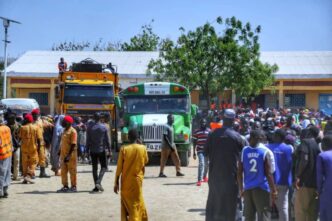
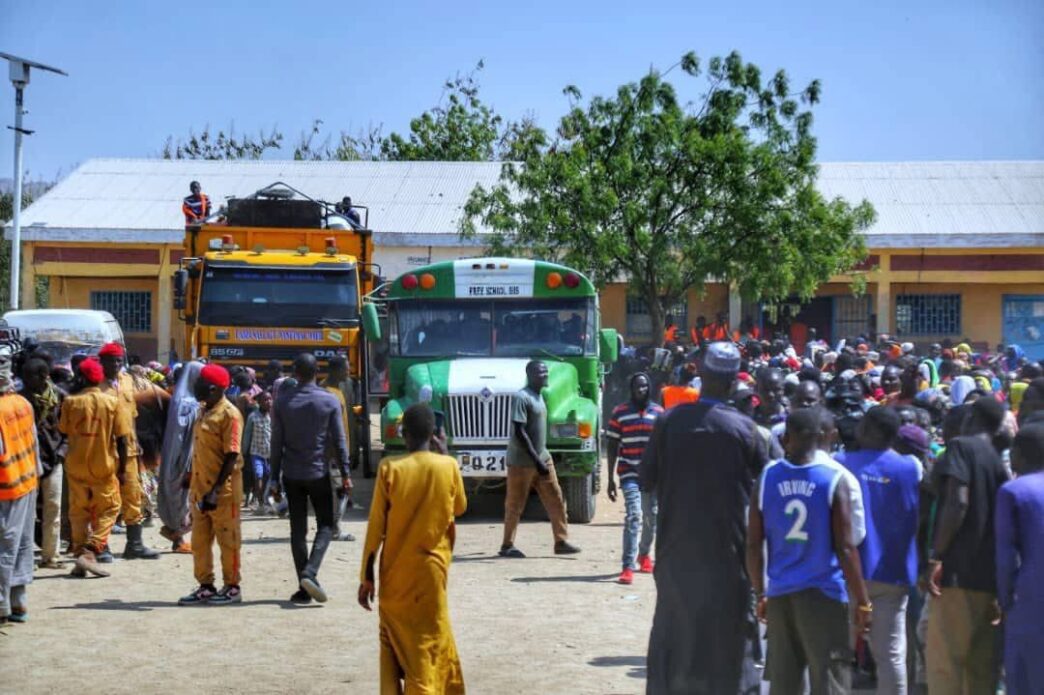
After more than 11 years away, Nigerian refugees have started returning from Cameroon to Borno State. This week, 300 refugees arrived in Pulka town in the Gwoza Local Government Area. This is part of an organised return programme by the Borno State Government and its partners. It is the fourth phase of the exercise.
Governor Babagana Zulum’s pledge to repatriate Borno refugees from Cameroon, Chad, and Niger includes the return programme. But the return has led to concerns about the state’s living conditions and security.
Why people fled Borno
Many residents of Borno fled their homes because of Boko Haram attacks. Since 2014, the group carried out killings, bombings, abductions and raids on villages.
One of the most well-known attacks was the kidnapping of more than 270 schoolgirls from Chibok in 2014. After that, violence increased across the state.
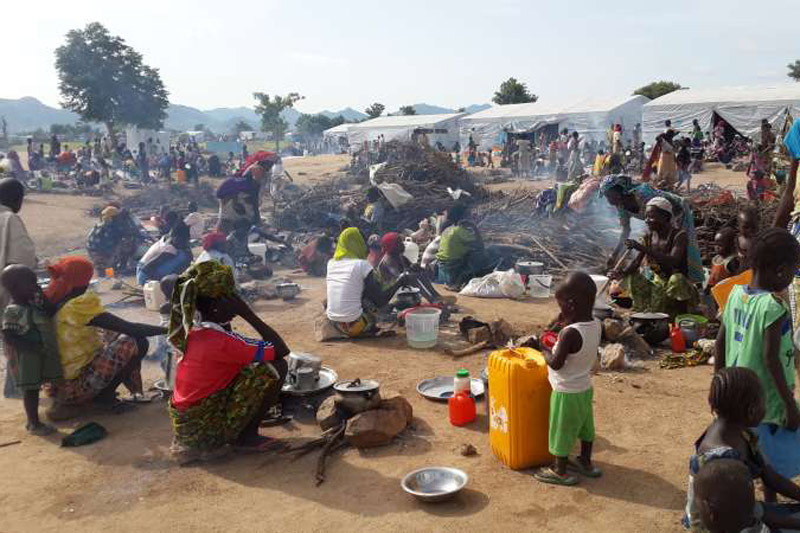
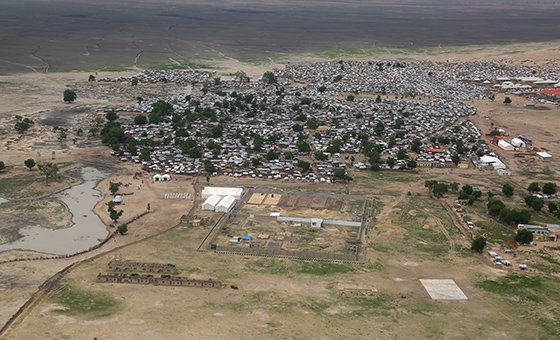
Homes were burnt, farms destroyed, and schools closed. Many families had no choice but to run for safety. About 1.4 million people were displaced from Borno alone. Thousands crossed into Cameroon and lived for years in the Minawao refugee camp.
How the return is being done
The return is being handled by the Borno State Government, the National Commission for Refugees, Migrants and Internally Displaced Persons, and United Nations agencies.
Officials say the return is voluntary. Refugees agreed to come back after meetings and assurances about safety and support.
Each household receives ₦500,000 from the government, while women receive an additional ₦50,000 to facilitate smooth reintegration.
The government also provides basic items such as mattresses and clothing, while the National Commission for Refugees, Migrants, and Internally Displaced Persons supplies essential food items, including rice, millet, beans, and cooking oil.
What the security situation looks like now
The Borno State Government says security has improved in some areas, like Pulka. Speaking on the return exercise, the Chairman of the Borno State Sub-Committee on Repatriation, Lawan Wakilbe, said: “This homecoming is a testament to our collective resolve. We are not just moving people; we are restoring lives and reigniting hope in our communities.”
Authorities say towns now under government control can safely receive returnees. However, violence has not ended completely. Armed attacks still happen, especially in rural areas.
In recent days, at least eight Nigerian soldiers were killed, and about 50 were wounded when Boko Haram fighters attacked a military base in the Timbuktu Triangle area.
Shortly after, a Nigerian army major was killed during an ISWAP attack on a military patrol in Damasak, Mobbar Local Government Area. Security sources said the officer was leading a patrol when the troops came under gunfire and explosives.
In September 2025, more than 60 people were killed in an attack on Darul Jamal village near the Nigeria–Cameroon border, an area where residents had recently returned.
Reacting to the attack, Zulum told AFP, “It’s very sad. This community was resettled some months ago and they went about their normal business.”
He added that “the numerical strength of the Nigerian army is not enough to contain the situation”, but noted that a newly created force known as the Forest Guards would help strengthen security.
Meanwhile, security sources say Nigerian troops have also recorded successes. At least 22 ISWAP fighters were reportedly killed during clashes with soldiers in the Timbuktu Triangle area.
“ISWAP suffered heavy casualties during the encounters,” one of the sources said.
“Among those killed were a senior commander, known as a Qaid, and two unit leaders, referred to as Munzirs, while several other fighters sustained injuries.”
The United States also resumed intelligence and surveillance flights over Sambisa Forest last year in response to recent airstrikes against militants affiliated with ISIS in Sokoto State.
A US-operated reconnaissance aircraft is seen over Borno State, a long-standing insurgent stronghold, according to flight tracking data, indicating a resumption of monitoring of Islamic State West Africa Province operations throughout the North-East and Lake Chad region.
Problems returnees may face
Even with support, life after return is not easy. Many communities lack schools, hospitals, clean water and jobs. Some houses and farms were destroyed and have not been rebuilt.
Aid groups also say overcrowding remains severe in displacement camps, while aid funding cuts since early 2025 have reduced access to healthcare, food and protection services.
“Living conditions continue to deteriorate, with increasing vulnerability and diminishing prospects for a rapid recovery,” INTERSOS, an international aid group, said.
Food insecurity is also a major concern. The World Food Programme (WFP) has recently warned that parts of the state could face extreme hunger in 2026, with thousands at risk of catastrophic food shortages if funding does not improve.
“If we can’t keep families fed and food insecurity at bay, growing desperation could fuel increased instability,” WFP Country Director in Nigeria, David Stevenson, said.
WFP has warned that around 15,000 people in Borno could face catastrophic food insecurity between June and August 2026.
INTERSOS added that “the hunger crisis is a major threat, as the population is heavily dependent on humanitarian assistance to meet basic needs.”
“The absence of sustainable livelihood opportunities increases vulnerability and undermines resilience in the areas where we operate.” it added.
During the upcoming lean season, approximately 600,000 children may experience severe acute malnutrition, according to the UN Office for the Coordination of Humanitarian Affairs.
Education and rebuilding
The conflict had a negative impact on education, destroying hundreds of schools and depriving many children of years of schooling, but Zulum says his administration has completed 104 mega schools and is building another 36 across the state.
The schools are equipped with classrooms, laboratories and ICT facilities.
“We must protect these schools and ensure they serve their purpose for generations to come,” Zulum said.
“Education remains our greatest weapon against ignorance and insurgency. With these mega schools, we are preparing our children to become leaders, innovators, and agents of peace.”
Three brand-new Mega Schools and a fleet of 620 fully electric cars and tricycles delivered by Zulum were put into service by President Bola Tinubu last year.
The state government has also stepped up security efforts, providing patrol vehicles, motorcycles, and equipment to the military, police, the Civilian Joint Task Force, and local hunters to improve response times.