Trending
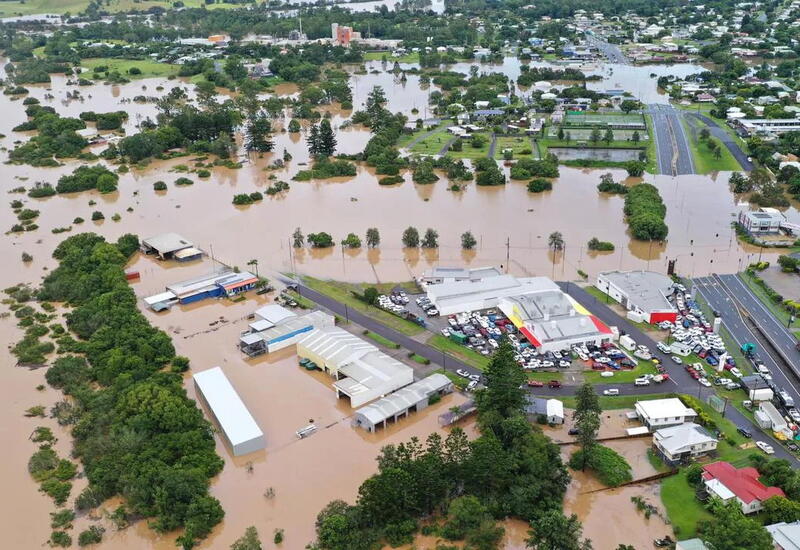
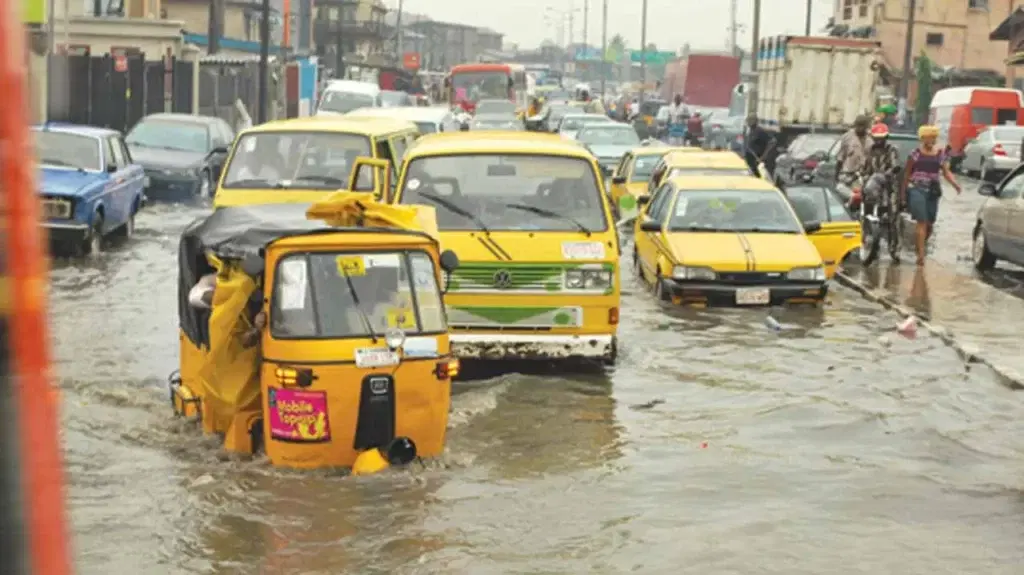
Lagos State has secured a $7.5 million flood insurance policy designed to help protect millions of residents from the impacts of flooding, according to the Insurance Development Forum on Thursday.
The initiative comes as the coastal city continues to face environmental pressures linked to rising sea levels and changing rainfall patterns.
Lagos, a major economic center with an estimated population of more than 22 million people, is considered one of the urban areas in West Africa that could experience serious climate-related risks in the coming decades.
These risks include coastal flooding, shifting rainfall patterns, and rapid urban population growth.
In a statement, Governor Babajide Olusola Sanwo-Olu said climate-related challenges could have serious financial implications for the state if not addressed.
He noted that potential economic impacts could reach as high as $40 billion by 2050, affecting infrastructure, public services, and residents.
“Our wetlands and biodiversity are also under threat,” Sanwo-Olu said.
“These realities demand urgent action.”
🇳🇬 Parametric flood insurance policy goes live in Lagos State, delivered by @followlasg, @UNDPNigeria, @BMZ, Insurance Development Forum and @ISF_Solutions:
🟢 4 million people protected
🟢 US$7.5M secured in rapid financing post floodshttps://t.co/mwij8EHFW6 pic.twitter.com/WmhBwelTYL
— UNDP Sustainable Finance (@UNDP_SDGFinance) March 26, 2026
According to the announcement, 90 percent of the insurance premium is being financed by the InsuResilience Solutions Fund, which receives support from Germany, while the Lagos State government is covering the remaining portion.
The insurance program is expected to provide protection for up to four million people across seven local government areas.
Coverage includes support for government-led disaster response efforts and potential direct cash assistance to affected communities.
Officials said Lagos State’s share of the premium is expected to increase during the second and third years of the policy.
The policy uses a parametric insurance model, meaning payouts are triggered when predefined conditions are met, such as rainfall levels measured by satellite data, rather than after a traditional damage assessment.
Details about the exact rainfall threshold that would trigger payouts were not immediately available.
However, the Insurance Development Forum, an organisation working alongside the United Nations Development Programme and the World Bank Group, described the initiative as an important step in expanding climate risk protection in the region.
The organisation noted that insurance coverage remains limited in many parts of the state, where a large share of households are low-income.
As a low-lying coastal city, Lagos faces ongoing challenges related to flooding and coastal management, alongside the demands of rapid urban growth.