Trending
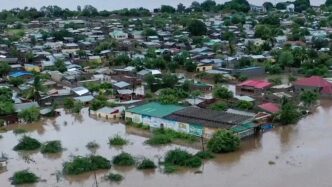
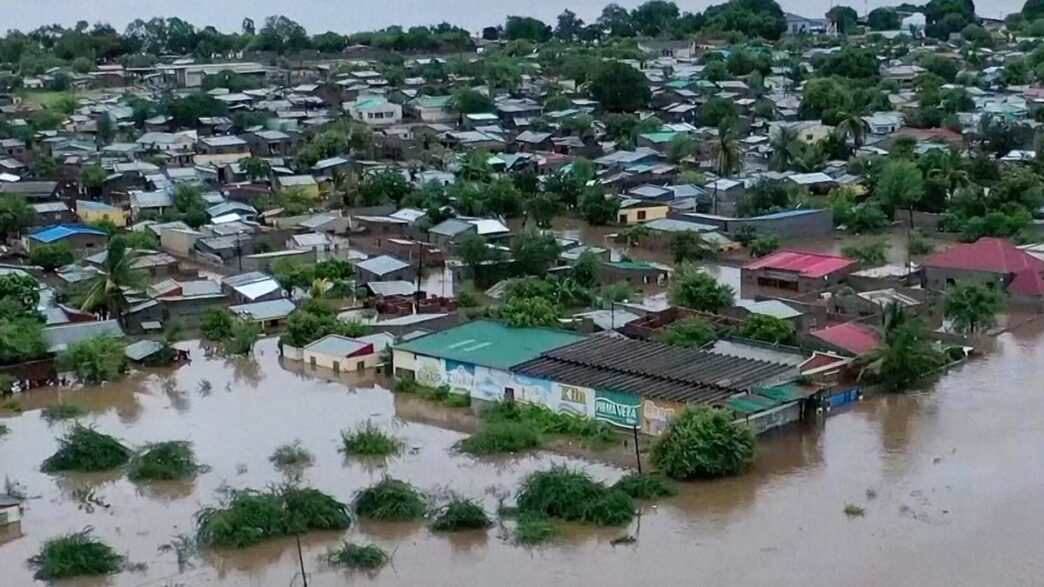
Lagos State is at risk of flooding, heavy rainfall, and strong winds as the rainy season begins, the state’s Ministry of Environment and Water Resources has warned residents.
The Commissioner for Environment, Tokunbo Wahab, issued this warning during a conference with journalists in Lagos. The commissioner said the predictions were based on the forecasts released by the Nigerian Meteorological Agency (NiMET), which indicated expected rainfall patterns, temperature changes, and other weather parameters across Nigeria.
According to Wahab, the 2026 prediction was based on a projected weak La Niña and a neutral phase of the El Niño Southern Oscillation (ENSO), which could influence rainfall patterns.
A weak La Niña (cold phase) features slightly cooler-than-normal Pacific waters, causing minor shifts in rainfall and weaker global impacts, such as reduced Atlantic hurricane activity, while an ENSO-neutral phase is the normal state with no extreme, favouring typical seasonal weather patterns.
“As a result, above normal rainfall amounts are anticipated in the first peak of the rainy season, while normal rainfall amounts are expected in the second peak of the rainy season. The rainy season is expected to start as early as the last week of March, while the end of season is expected in the first week of December. Also, the average annual rainfall amount predicted is 1650 and 3030mm.”
He said rainfall is expected to begin on March 31 in the state’s capital, Ikeja, with a cessation date of an estimated annual rainfall of 1,932mm, adding that Badagry was projected to experience rainfall from March 28 to December 3, with an annual rainfall of about 2,010 mm, while Ikorodu was expected to record rainfall from March 31 to December 2 with about 1,935 mm, and Lagos Island was projected to have rainfall from March 30 to December 2 with about 1,968mm. Epe is also expected to record rainfall from March 29 to December 3, with an annual rainfall of about 1,984 mm.
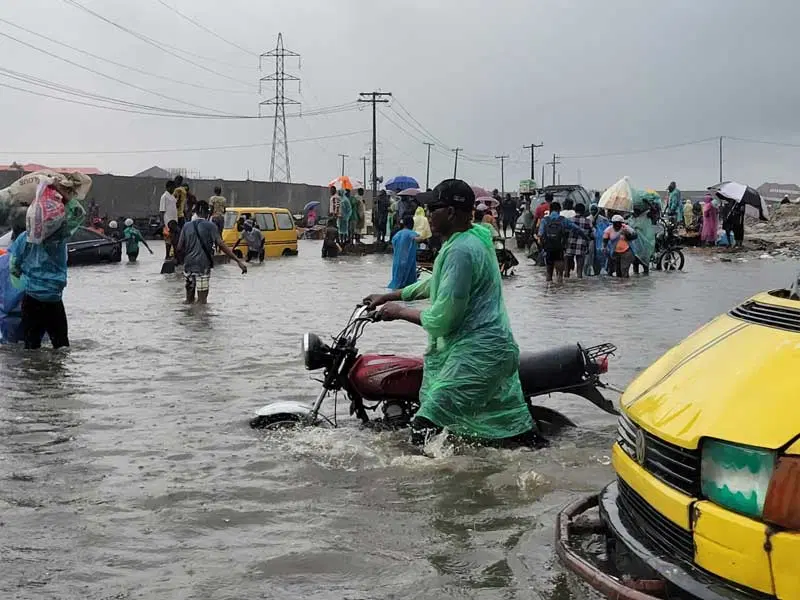
According to the commissioner, the expected heavy rainfall puts the state at risk of flooding.
Lagos experiences intense rainstorms during the rainy season. In some cases, prolonged rainfall overwhelms drainage systems. For example, a 10-hour downpour in July 2024 caused severe flooding in Lekki, submerging homes and roads