Trending

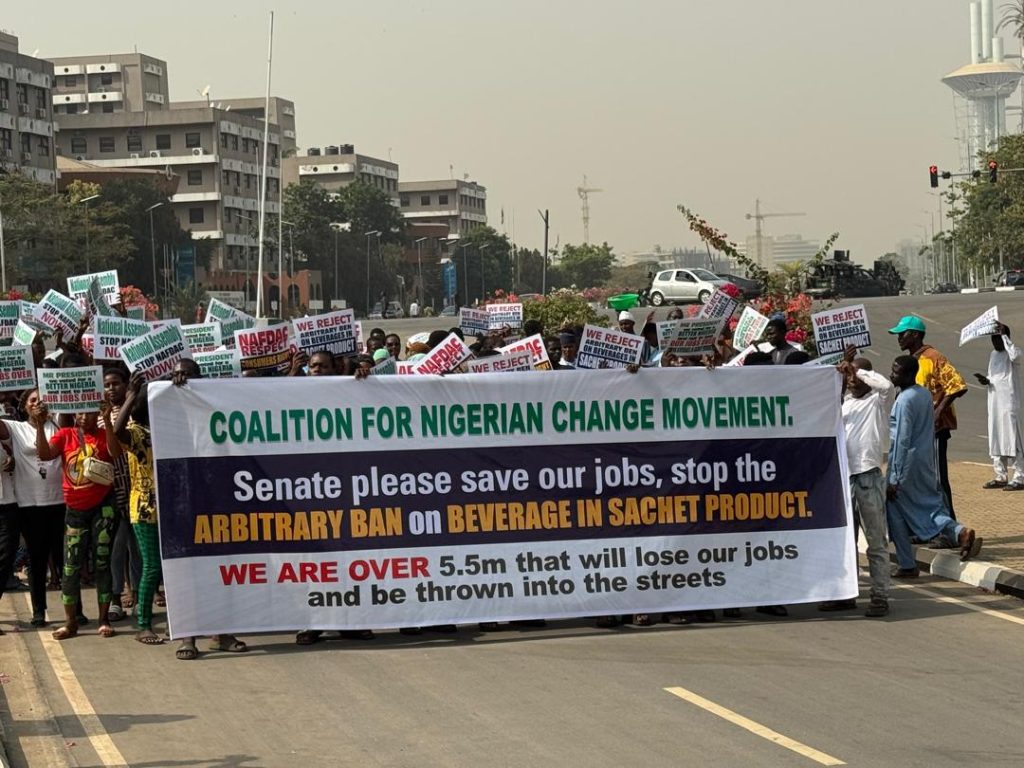
The Director-General of the National Agency for Food and Drug Administration and Control (NAFDAC), Prof. Mojisola Adeyeye, has defended the nationwide prohibition of sachet and small-pack alcoholic beverages, describing it as the most effective strategy for tackling the growing incidence of underage drinking in the country.
Adeyeye made the remarks in Abuja on Tuesday during a press briefing to announce the commencement of enforcement of the ban. She explained that the exercise would be carried out jointly by NAFDAC, the National Orientation Agency and the Federal Competition and Consumer Protection Commission (FCCPC).
According to her, limiting the sale of alcohol in sachets and small-volume bottles, which can be easily concealed, would substantially reduce children’s access to alcoholic drinks. She observed that alcohol remains one of the most widely abused substances among young people.

Adeyeye referred to studies showing a marked increase in alcohol availability, production, importation and consumption across all age groups in recent decades. She added that easy accessibility has been identified as a key driver of rising consumption among minors.
Describing the findings as alarming, Adeyeye stated that 54.3 per cent of minors and underage individuals obtained alcohol themselves from various sources, while 49.9 per cent patronised retailers selling sachets and PET bottles.
She disclosed that around half of children consume alcohol. The data indicated that 47.2 per cent of minors and 48.8 per cent of underage individuals who purchased alcohol themselves preferred sachets because they are easy to hide.
The survey further revealed that 63.2 per cent of minors and 54 per cent of underage individuals drink alcohol occasionally, compared with 44.3 per cent and 38.3 per cent of adults who consume alcohol occasionally and daily, respectively.
In addition, 9.3 per cent of minors and 25.2 per cent of underage children consume alcoholic beverages, while 11.3 per cent of minors and 9.4 per cent of underage individuals take alcohol at least once a week. The research found that children as young as nine consume alcohol.
Regarding patterns of abuse, the findings showed that approximately 11.7 per cent of underage children had engaged in binge drinking, with the highest incidence recorded in Gombe. In terms of overall consumption, Lagos and Rivers states registered the highest levels of use.
Adeyeye stressed that NAFDAC’s actions are anchored in its statutory mandate to safeguard public health, particularly the well-being of children.