NASA Releases “Earthset” Photo From Moon

NASA Releases “Earthset” Photo From Moon NASA Releases “Earthset” Photo From Moon
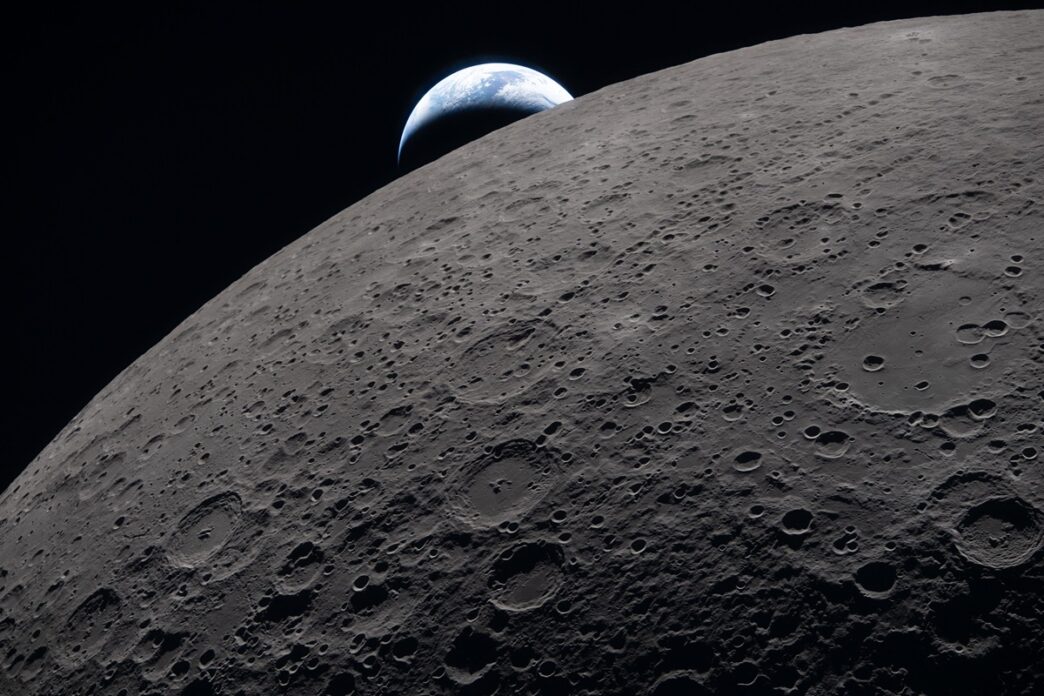
This handout picture released on April 7, 2026, by NASA shows the lunar surface in the foreground while a distant Earth sets in the background at 6:41 PM EDT (20:41 GMT), as seen from the Orion spacecraft on April 6, 2026. The Artemis II astronauts wrapped up their lunar flyby as they continue their journey back to Earth on Tuesday, bringing with them rich celestial observations including little-known lunar craters, a solar eclipse and meteor strikes that scientists hope will open doors. (Photo by Handout / NASA / AFP) / RESTRICTED TO EDITORIAL USE - MANDATORY CREDIT "AFP PHOTO / NASA" - HANDOUT - NO MARKETING NO ADVERTISING CAMPAIGNS - DISTRIBUTED AS A SERVICE TO CLIENTS

NASA on Tuesday released a historic photograph showing Earth dipping below the lunar horizon, more than 57 years after the iconic “Earthrise” image was captured during the Apollo 8 mission.

The new image, dubbed “Earthset,” was taken by astronauts aboard the Artemis II mission from their Orion spacecraft during a record-setting flyby of the Moon.

The photograph echoes the famous “Earthrise” shot taken in December 1968 by US astronaut William Anders during the first mission to carry humans around the Moon.

Advertisement

NASA shared the image on the social media platform X, while the White House also posted the photograph online.

“Humanity, from the other side,” the White House wrote.

“First photo from the far side of the Moon. Captured from Orion as Earth dips beyond the lunar horizon.”

The Artemis II crew includes US astronauts Reid Wiseman, Christina Koch and Victor Glover, along with Canadian astronaut Jeremy Hansen.

NASA Releases “Earthset” Photo From Moon
This handout picture released on April 7, 2026, by NASA shows Artemis II crew members Mission Specialist Christina Koch (top L), Mission Specialist Jeremy Hansen (bottom L), Commander Reid Wiseman (bottom R), and Pilot Victor Glover (top R) using eclipse viewers to protect their eyes at key moments during the solar eclipse they experienced during their lunar flyby, on April 6, 2026. The Artemis II astronauts wrapped up their lunar flyby as they continue their journey back to Earth on Tuesday, bringing with them rich celestial observations including little-known lunar craters, a solar eclipse and meteor strikes that scientists hope will open doors. (Photo by Handout / NASA / AFP).

The four-member team is currently circling the Moon as part of a broader program aimed at returning humans to the lunar surface by 2028.

During the mission, the astronauts reported detailed observations of the Moon’s surface and witnessed a solar eclipse as the Moon passed directly in front of the Sun.

The White House also shared a separate NASA image of the eclipse, calling it “a view few in human history have ever witnessed.”

In 1968, Apollo 8 orbited the Moon 10 times without landing. During one orbit, Anders captured the celebrated “Earthrise” image showing the blue planet rising above the stark grey lunar horizon against the darkness of space.

The photograph went on to become one of the most famous images ever taken and was included in 2003 in Life magazine’s book 100 Photographs That Changed the World.


Author

  • Jimisayo Opanuga

    Jimisayo Opanuga is a web writer in the Digital Department at News Central TV, where she covers African and international stories. Her reporting focuses on social issues, health, justice, and the environment, alongside general-interest news. She is passionate about telling stories that inform the public and give voice to underreported communities.

Share the Story
Advertisement

Keep Up to Date with the Most Important News

Weekly roundups. Sharp analysis. Zero noise.
The NewsCentral TV Newsletter delivers the headlines that matter—straight to your inbox, keeping you updated regularly.