Trending
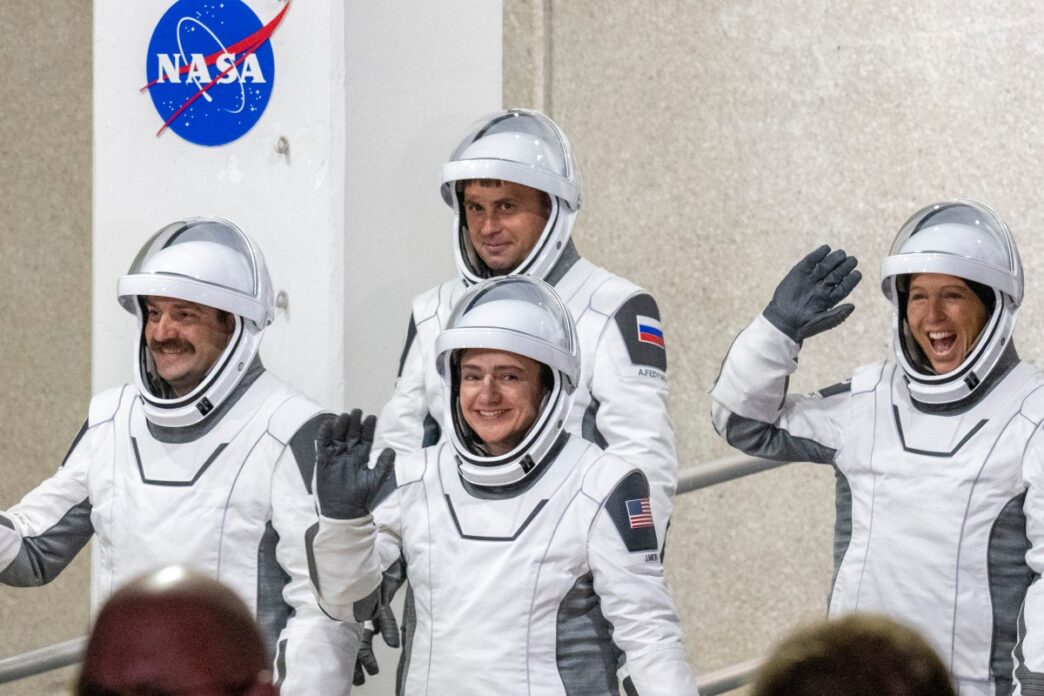
Four astronauts have embarked on a historic mission to the International Space Station (ISS), marking another milestone in international space cooperation.
The Crew-12 mission, launched on Friday morning from Cape Canaveral, Florida, was delayed by two days due to adverse weather conditions, including high winds that could have complicated emergency manoeuvres. Despite the superstition surrounding a Friday the 13th launch, NASA officials were in high spirits, with Steve Stich, the official coordinating ISS launches, joking, “Pretty amazing times.”
The Crew-12, aboard a SpaceX Falcon 9 rocket, includes Americans Jessica Meir and Jack Hathaway, French astronaut Sophie Adenot, and Russian cosmonaut Andrey Fedyaev. They are expected to arrive at the ISS after a 34-hour journey, replacing a crew that had to return early due to a medical issue involving one of its members. While NASA has not disclosed the details of the health issue, the early return marked the first-ever medical evacuation from the space station.
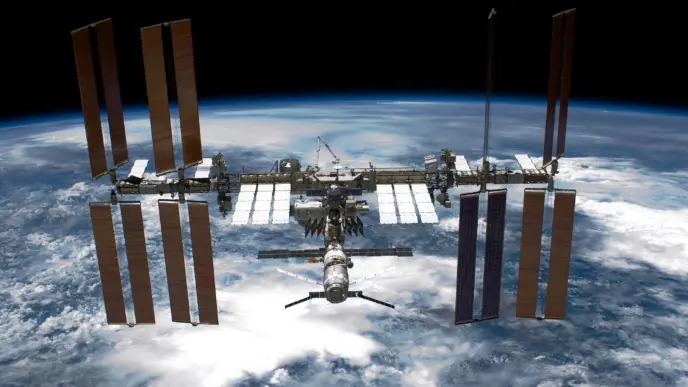
The ISS, located 250 miles above Earth, has been continuously inhabited for the past 25 years and remains a rare symbol of collaboration between the West and Russia, despite tensions back on Earth. The mission underscores the commitment to “the peaceful exploration of space,” as emphasised by the European Space Agency’s Daniel Neuenschwander.
The astronauts will spend eight months aboard the space station, conducting experiments on the effects of microgravity on the human body. Meir, a marine biologist, will serve as the commander, while Adenot, the second French woman to fly in space, will test a system using artificial intelligence and augmented reality that enables astronauts to perform their own medical ultrasounds.
This mission marks the beginning of the end for the ISS, which is scheduled to be decommissioned and deorbited by 2030.