Trending
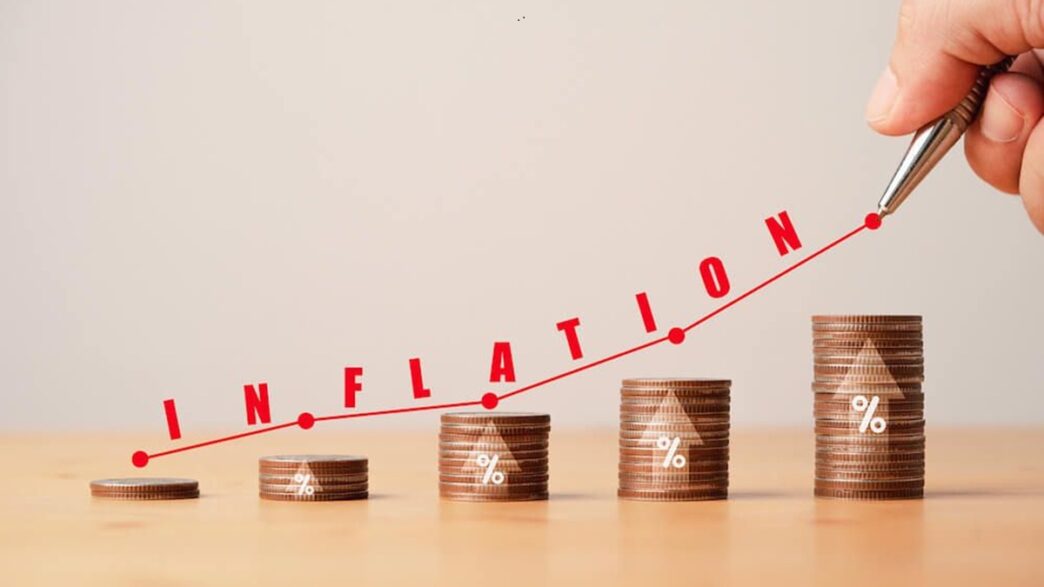
The latest Consumer Price Index report released on Monday by the National Bureau of Statistics (NBS) shows that Nigeria’s headline inflation rate dipped slightly to 15.10 percent in January 2026 from 15.15 percent in December 2025.
Data from the bureau showed that the Consumer Price Index (CPI) fell to 127.4 in January from 131.2 recorded in December, indicating a 3.8-point decline.
On a year-on-year basis, inflation stood at 15.10 percent, significantly lower than the 27.61 percent posted in January 2025.
Month-on-month, inflation contracted by 2.88 percent in January compared to 0.54 percent in December, suggesting a general decline in average price levels during the period.
The NBS reported that the January headline rate declined by 0.05 percentage points from the previous month.
It also noted that the twelve-month average CPI for the period ending January 2026 rose by 21.97 percent, representing an increase of 4.37 percentage points compared to the corresponding period in 2025.
Food inflation saw a sharper slowdown. On a year-on-year basis, it dropped to 8.89 percent in January 2026, down from 29.63 percent in the same month of 2025.

Month-on-month, food prices declined by 6.02 percent, compared to a marginal drop of 0.36 percent in December.
The bureau attributed the easing in food prices to reductions in the cost of items such as water yams, eggs, green peas, groundnut oil, soya beans, palm oil, maize, guinea corn, beans, beef, and cassava.
The twelve-month average food inflation rate stood at 20.29 percent, lower than the 38.47 percent recorded in January 2025.
At the state level, Benue recorded the highest year-on-year all-items inflation rate at 22.48 percent, followed by Kogi at 20.98 per cent and the Federal Capital Territory at 19.25 percent.
Ebonyi, Katsina and Imo posted the lowest year-on-year headline rates at 8.72 per cent, 8.94 percent, and 10.61 percent, respectively.
On a month-on-month basis, Imo and Ondo recorded the highest increases, while Cross River, Ogun and Kogi posted the steepest declines.
In food inflation, Kogi recorded the highest year-on-year rate at 19.84 per cent, followed by Benue and Adamawa, while Ebonyi, Abia, and Imo recorded the slowest increases in food prices.