Trending


The Nigerian government has approved a fourfold increase in the annual uniform allowance for nurses in its employ, raising it from N20,000 to N80,000.
The decision, contained in a memo issued by the National Salaries, Wages and Income Commission (NSIWC), will take effect from January 1, 2026.
The commission’s chairman, Ekpo Nta, conveyed the approval in correspondence addressed to the Minister of Health and Social Welfare, Muhammad Pate, with copies sent to the Ministers of Finance, Budget, and National Planning, and the Minister of State for Health.
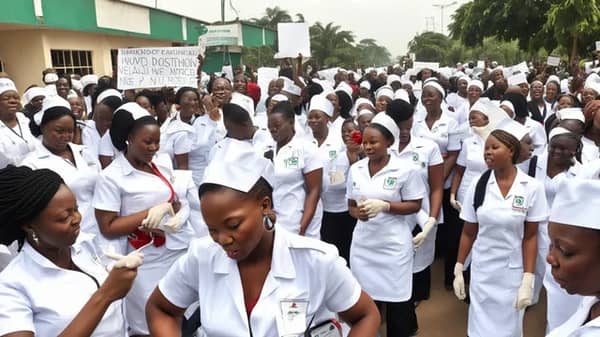
According to the memo, the N80,000 allowance will be paid annually to nurses in federal hospitals, medical centres, and clinics under Ministries, Departments, and Agencies through the Integrated Personnel and Payroll Information System (IPPIS).
It noted that the payment would no longer be charged to overhead budgets to align it with other regular allowances processed via IPPIS.
The increase follows months of agitation by the National Association of Nigerian Nurses and Midwives (NANNM), which in July 2025 criticised the previous N20,000 annual allowance as grossly inadequate.
The union said at the time that the figure was unacceptable and called for broader structural reforms within the health sector.
NANNM President Morakinyo-Olajide Rilwan had told journalists that the earlier allowance notice was issued without consulting the association, despite its direct impact on nurses nationwide.
On July 14, 2025, the union issued a 15-day ultimatum to the Nigerian government, warning of a potential nationwide healthcare shutdown if its demands were not addressed.
Among its requests were a review of shift allowances, a separate salary structure for nurses, an increased core duty allowance, mass recruitment of nurses, and the creation of a Directorate of Nursing Services within the Federal Ministry of Health, headed by a registered nurse.
Union leaders also decried the working conditions in public health facilities, saying nurses had endured years of inadequate equipment and supplies, including basic items such as gloves.
The latest adjustment represents a 300 per cent increase on the previous rate and appears to be one of the government’s responses to the union’s demands.