Trending
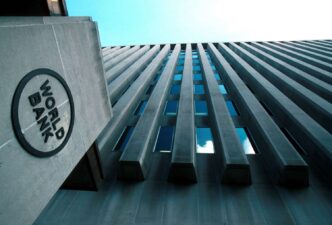
World Bank loans to Nigeria are projected to total $9.65 billion between 2023 and 2025, excluding grants, as the government accelerates borrowing for key sectors like power, education, digital infrastructure, and health.
Including grants, the total World Bank support for these three years rises to about $9.77 billion.
The funds are sourced from the International Bank for Reconstruction and Development (IBRD) for middle-income countries and the concessional International Development Association (IDA) for the poorest nations.
Under the current administration, the borrowing cycle began with $2.7 billion in loans in 2023, primarily for power sector recovery and women’s and girls’ empowerment programmes.
The volume sharply increased in 2024 to $4.25 billion in loans, driven by policy-based operations like the $1.5 billion programme for economic stabilisation.
The projected pipeline for 2025 stands at $2.695 billion in loans, showing a decline from 2024 but remaining robust. Overall, IDA loans constitute the majority of the funding, at approximately $7.30 billion.
This rising loan portfolio has solidified Nigeria’s position as the largest IDA borrower in Africa and the third-largest globally, with its IDA exposure reaching $18.5 billion as of September 2025.
Economic Debate: The heavy reliance on external debt has sparked debate among economists.
Experts like Adewale Abimbola and Dr Muda Yusuf acknowledge that multilateral loans are concessional and necessary for development, provided they are effectively utilised in projects that generate revenue and promote growth.
However, Dr Aliyu Ilias expressed strong reservations, questioning the need for large-scale borrowing given the government’s claimed revenue surpluses following reforms.
He warned that debt servicing is consuming a significant portion of revenue, negatively impacting public service delivery, fuelling inflation, and worsening the exchange rate crisis.