Trending
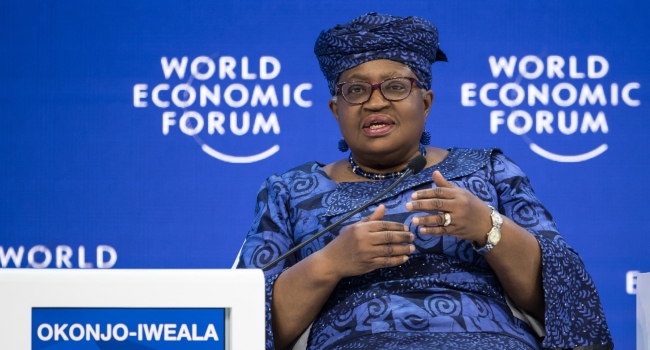
The Director-General of the World Trade Organisation, Ngozi Okonjo-Iweala, has urged the Nigerian government to deliberately target global investors and relocate supply chains to reduce import dependence, expand manufacturing, and create jobs.
Okonjo-Iweala made the remarks on Wednesday at Nigeria House during a panel discussion at the ongoing World Economic Forum in Davos.
She said rising geopolitical tensions, particularly between the United States and China, had accelerated efforts by global firms to diversify supply chains.
Okonjo-Iweala said companies were increasingly adopting “China+1” sourcing strategies to reduce exposure to “single-country risks,” even as China remains “deeply embedded in many global value chains.”
She noted that tariffs and trade restrictions had further pushed firms to reconsider dependence on dominant suppliers, leading to the relocation or diversification of production hubs.
“In addition, tariffs and trade restrictions have incentivised companies to reconsider reliance on dominant suppliers, prompting the relocation or diversification of production hubs,” Okonjo-Iweala said.
According to her, the ongoing disruptions in global trade present an opportunity for Nigeria to secure a share of international supply chains, but only with deliberate efforts to attract investment.
She said recent economic reforms underway in Nigeria must translate into job creation, noting the need to move “from stabilisation to job creation.”
“As you said, some good reforms are being pursued right now. I think they need to yield to job creation. That was what I said to His Excellency—that we need to move from stabilisation to job creation, because that is where we are lacking,” the WTO Chief stated.
“It is not going to be overnight, but they are moving in the right direction. What I think they need to do is map where the opportunities are.
“What I would like to see is a continued effort to attract investment into the country, because there is an opportunity now to attract these supply chains. If there is one thing I would say, it is that everything we can do to showcase Nigeria as a country worthy of investment is what we should be doing.”
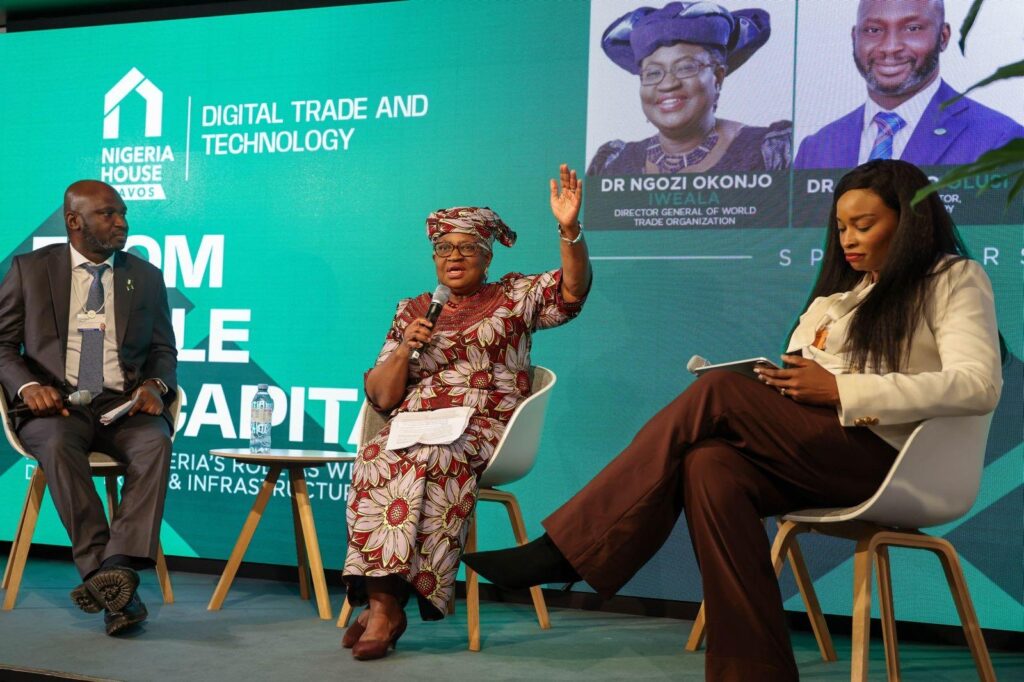
She added that Nigeria must actively market itself to investors, urging authorities to adopt targeted strategies to attract foreign capital from major economies, including China and the United States.
Okonjo-Iweala said that although much of the supply chain diversification away from China was still taking place within Asia, including India, Nigeria could attract a significant portion if it positioned itself properly.
“And we should deliberately have strategies to go after those investments and investors—to go to China, the US, whatever it takes—to come and invest in our country.
“As companies seek to diversify supply chains, a lot of that movement is still within Asia. Diversification is moving from China but still within Asia, and India is another destination. We should attract a sizeable chunk of that. I’m not saying all.”
She identified renewable energy manufacturing, textiles, and pharmaceuticals as sectors where Nigeria could reduce imports and build domestic production capacity.
Okonjo-Iweala also lamented the continued importation of textiles, noting that many finished wax fabrics sold locally were produced abroad.
“Let’s build solar panels in Nigeria. We are importing, but we can also manufacture. We have the renewable capacity. In fashion, let them come to invest.
“Every time I buy a piece of wax (textile), I check to see where it’s made. Let’s attract investment to make it at home rather than elsewhere. Many of the shiny new textiles we are wearing now are not made in Nigeria; a lot of them are imported.”