Trending
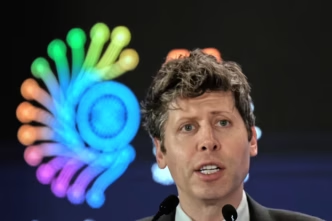
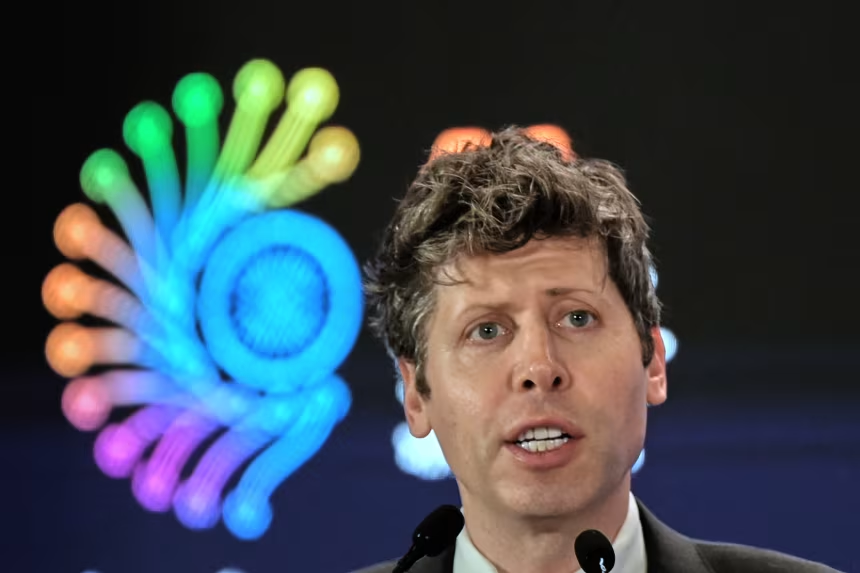
OpenAI CEO Sam Altman announced late Friday that the company has signed a landmark deal with the Pentagon to integrate its artificial intelligence tools into the military’s classified systems.
The agreement includes specific “safety principles” that prohibit the use of AI for domestic mass surveillance and ensure human responsibility for the use of force, particularly regarding autonomous weapon systems.
Altman noted that the Department of War (DoW) has agreed to these terms in writing, and OpenAI will deploy engineers to the Pentagon to ensure the models are used safely and effectively.
The announcement comes at a volatile moment for the AI industry, occurring the same day President Donald Trump ordered all federal agencies to stop using tools from OpenAI’s rival, Anthropic.
Defence Secretary Pete Hegseth officially designated Anthropic a “supply chain risk”—a label typically reserved for companies linked to foreign adversaries—after the firm reportedly refused to waive restrictions on the use of its technology for autonomous weaponry and surveillance.
This blacklisting effectively forces military contractors to prove their work does not touch any Anthropic products.
Despite the administration’s aggressive stance toward Anthropic, Altman’s statement suggests that OpenAI secured a contract with guardrails similar to those its competitor had sought.
Altman publicly urged the Department of War to offer these same “reasonable” terms to all AI companies, expressing a desire to see the situation de-escalate away from legal and governmental actions.
It remains unclear why the Pentagon accepted these conditions from OpenAI while simultaneously labelling Anthropic a national security risk for requesting them.
Under Secretary of Technology Emil Michael praised the new partnership, describing OpenAI as a “reliable and steady partner” that engages in good faith.
Meanwhile, Anthropic has vowed to legally challenge its “supply chain risk” designation, calling the move legally unsound.
As OpenAI moves to embed its engineers within the Pentagon, the deal marks a significant shift in the relationship between Silicon Valley and the U.S. military as they navigate the ethical and strategic boundaries of the AI age.