Trending
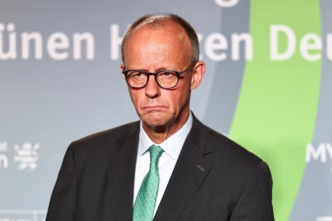
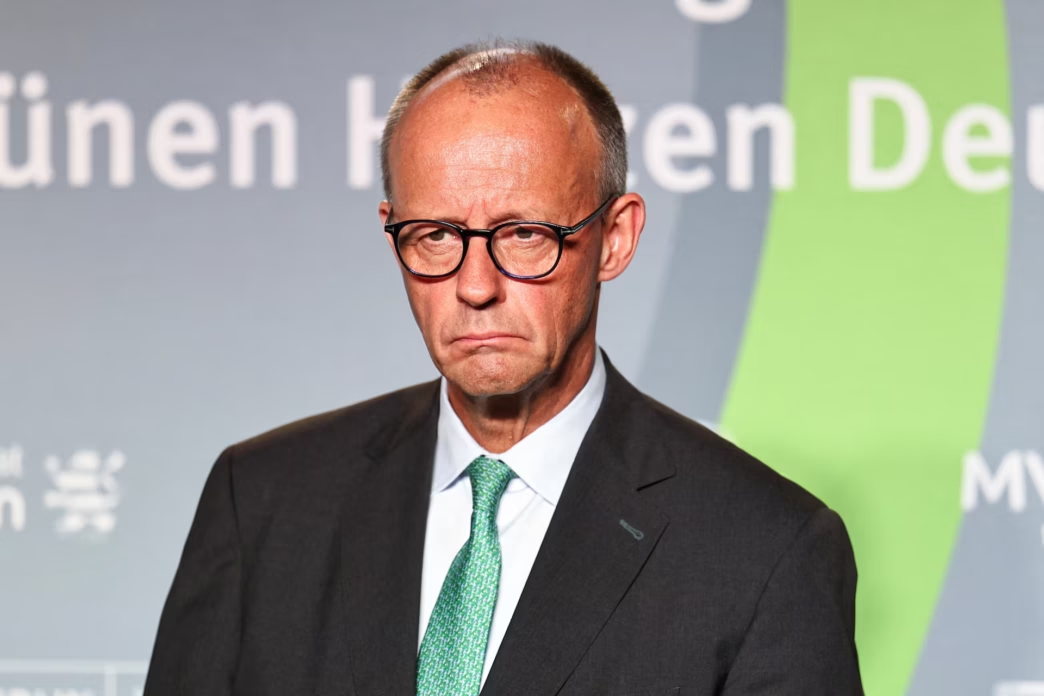
German Chancellor Friedrich Merz expressed a guarded openness to re-establishing dialogue with the Kremlin during his address at the Munich Security Conference on Friday.
While acknowledging French President Emmanuel Macron’s recent calls for Europe to resume direct contact with Vladimir Putin, Merz argued that Russia is currently not interested in “serious” peace talks.
He noted that even with the United States resuming high-level exchanges, there are no tangible signs that Moscow is ready to abandon its military objectives in Ukraine.
The Chancellor emphasised that the conflict will likely only resolve once Russia reaches a point of total economic and military exhaustion.
“We are approaching this time, but we are not yet there,” Merz stated, suggesting that Western allies must maintain a multi-front strategy of pressure.
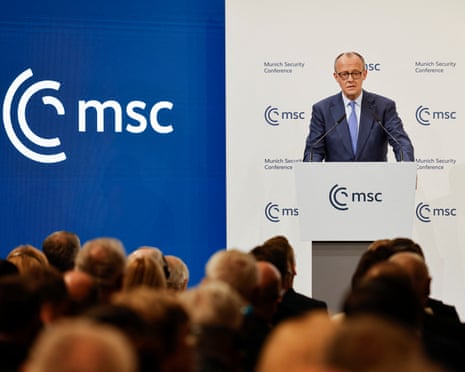
He argued that the international community must use every available tool—economic, military, and diplomatic—to ensure the Kremlin sees no further advantage in continuing the war.
The debate over diplomatic engagement has intensified since December, as President Macron has urged European leaders to follow the lead of U.S. President Donald Trump in reopening lines of communication.
Macron recently sent a top diplomatic advisor to Moscow to prepare for a potential call with Putin, signalling a shift toward European-led mediation.
However, Merz remains firm that any such discussions must be contingent on a clear concession from the Russian side regarding a ceasefire and a viable peace plan.
Ultimately, Merz’s remarks underscore a cautious European balancing act: the desire to end the “terrible war” versus the fear of a premature peace that rewards aggression.
As the Munich conference continues, the divide between those advocating for immediate dialogue and those favouring continued exhaustion of Russian resources remains a central theme for the continent’s security architecture in 2026.