Trending
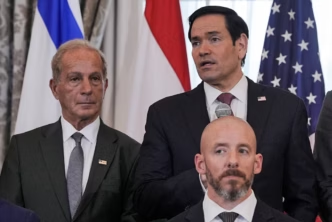
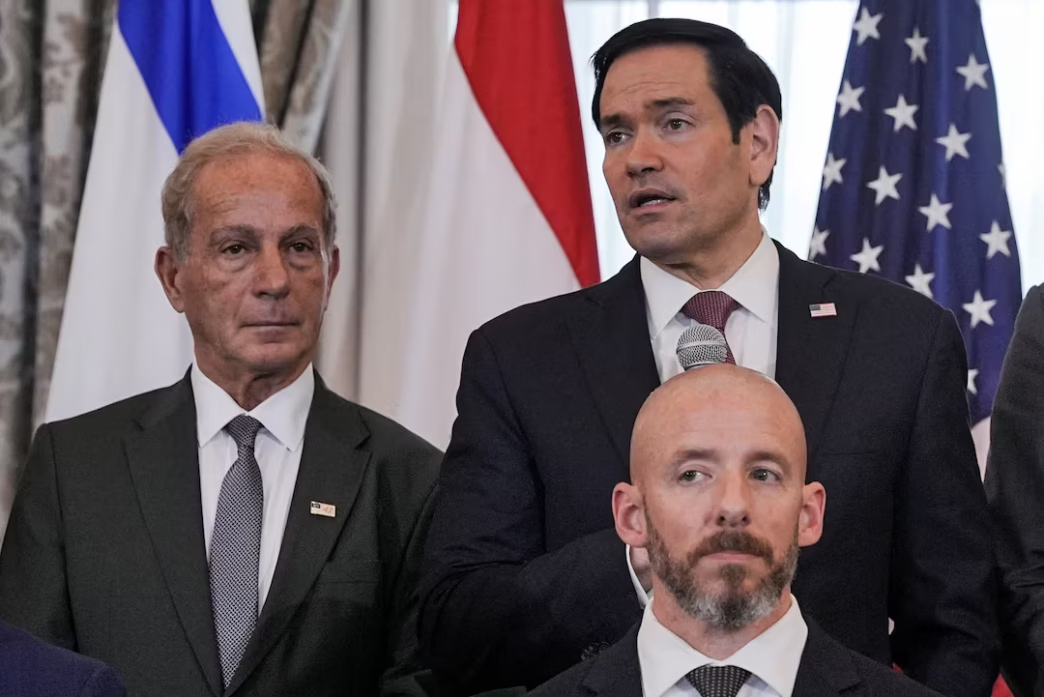
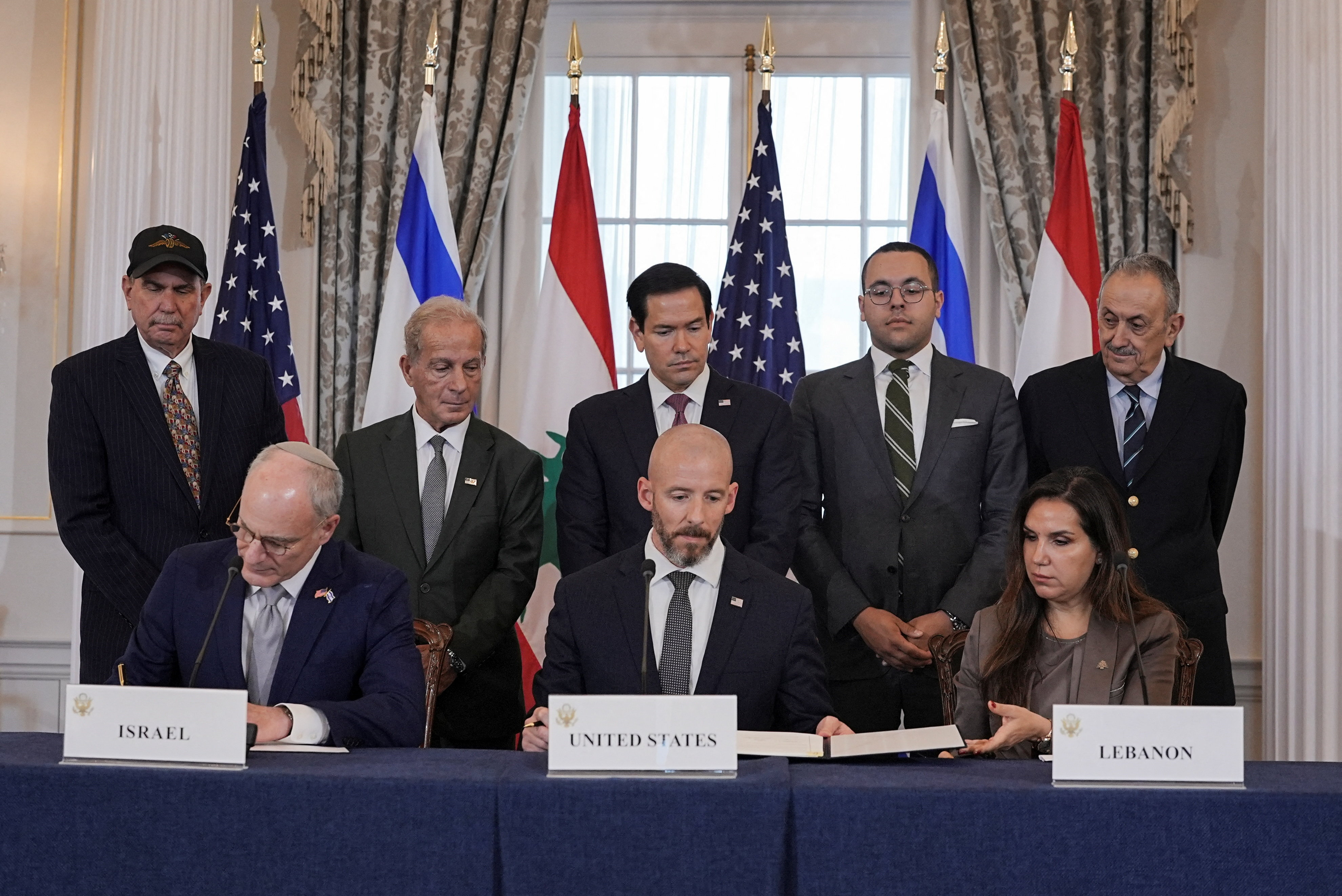
Lebanon, Israel, and the United States signed a historic trilateral framework agreement in Washington on Friday to pave the way toward a formal peace treaty between the two long-time Middle Eastern adversaries.
The unpublicised accord concludes five rounds of talks in the American capital aimed at ending decades of hostilities and weeks of intense fighting between Israel and Hezbollah in southern Lebanon.
US Secretary of State Marco Rubio described the deal as a critical initial framework for lasting security, though he noted that significant work remains ahead.
Read More : UNGA: Lavrov Offers Help in Gulf, Slams Europe
The agreement drew optimistic responses regarding sovereignty and regional security from both sides.
Lebanon’s ambassador to Washington, Nada Hamadeh Moawad, framed the accord as a first step toward restoring Lebanese sovereignty, securing a permanent cessation of hostilities, and allowing displaced citizens to return home.
Concurrently, Israel’s envoy to the United States, Yechiel Leiter, praised the deal for removing Iranian and Hezbollah influence from the border area to create a clear path toward peace.
The deep-seated conflict dates back to March 2, when Hezbollah launched rocket fire at Israel to avenge the killing of Iran’s supreme leader, Ayatollah Ali Khamenei, in joint US-Israeli strikes.
Israel responded with heavy airstrikes and a ground invasion into southern Lebanon, displacing over one million Lebanese citizens and killing more than 4,200 people.
Despite the newly signed deal, both parties continue to voice major differences.
Hezbollah chief Naim Qassem demanded an unconditional and complete Israeli withdrawal, while Israeli Prime Minister Benjamin Netanyahu insisted that his troops will maintain a security zone in southern Lebanon until Hezbollah completely disarms.
The complex roadmap relies on gradual territorial handovers to test the fragile peace.
Read More : Trump Rejects Iran Proposal To Reopen Hormuz
According to reports, the agreement requires Israeli forces to withdraw from small occupied sections, allowing the Lebanese army to assume control over “two pilot areas” located north and south of the Litani River.
Netanyahu confirmed this pilot plan but clarified that civilians from the security zone cannot yet return home.
This latest diplomatic push follows a failed April truce and a highly fragile ceasefire brokered this month after Tehran insisted on Lebanon’s inclusion in broader conflict negotiations.