Trending

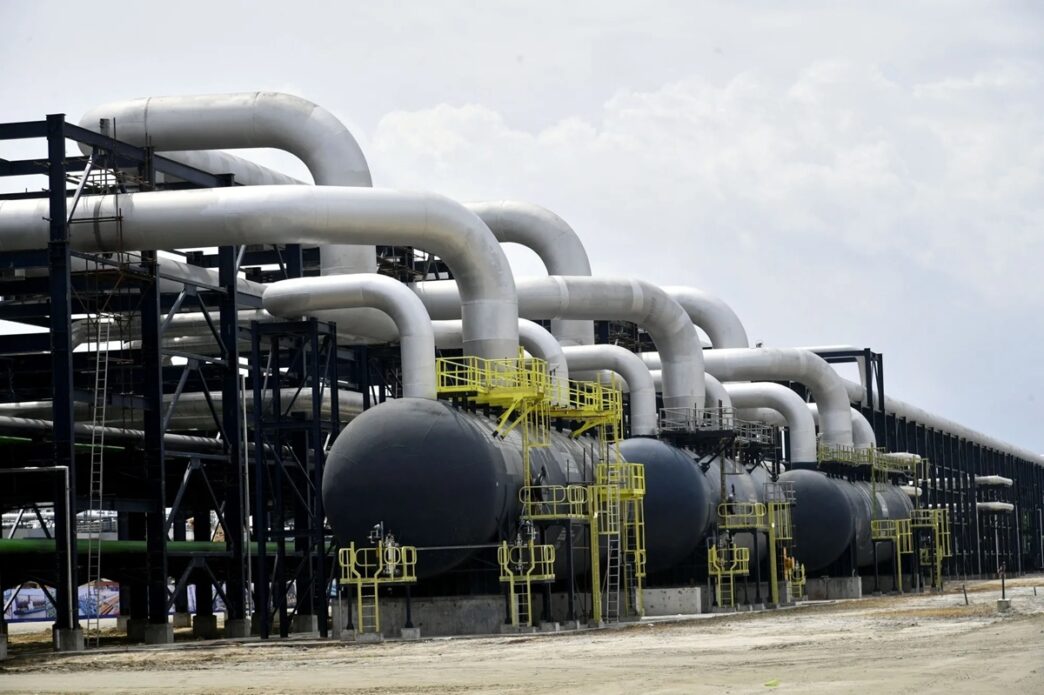
The United States reduced its imports of Nigerian crude oil in January 2026, with purchases falling 47.16 per cent month-on-month, according to data from the U.S. Census Bureau and the Bureau of Economic Analysis.
U.S. crude imports from Nigeria fell to 1.664 million barrels in January, down from 3.149 million barrels in December 2025, a decline of 1.485 million barrels.
In value terms, the drop was also significant, with customs valuation falling from $217.36 million to $115.99 million, while cost, insurance, and freight (CIF) value fell from $223.10 million to $118.95 million.
The narrowing gap between CIF and customs values, about $2.96 million in January compared to $5.74 million in December, suggests lower shipping or insurance costs during the period.
The decline occurred amid a broader slowdown in U.S. crude imports, which fell from 198.29 million barrels in December to 188.21 million barrels in January, a 5.1 per cent drop.
Total import value also decreased, with customs value falling from $11.41 billion to $10.56 billion, and CIF value dropping from $12.04 billion to $11.15 billion.
Within Africa, Nigeria lost ground to other suppliers. While total African exports to the U.S. remained steady at 6.933 million barrels, Angola’s shipments rose sharply from 575,000 barrels to 2.062 million barrels, and Ghana emerged as a new supplier with 738,000 barrels. Libya’s exports, by contrast, fell from 2.137 million barrels to 1.086 million barrels.
Nigeria’s share of total U.S. crude imports fell to 0.88 per cent in January, down from 1.59 per cent in December. Crude oil remained the main component of Nigerian exports to the U.S., accounting for 63–65 per cent of total imports in January, compared with 73.2 per cent in December.

The U.S. recorded a $419 million goods trade surplus with Nigeria in January, up from $84 million in December, driven by a rise in U.S. exports to Nigeria from $381 million to $602 million. Across Africa, the U.S. posted a $503 million trade deficit in January, reversing a $174 million surplus in December.
Despite lower exports to the U.S., the Nigerian National Petroleum Company (NNPC) reported a profit after tax of N385 billion in January 2026, even as crude production increased to 1.64 million barrels per day from 1.55 million barrels per day in December 2025.
Revenue fell 47 per cent to N2.571 trillion, down from N4.82 trillion, while statutory remittances totaled N726 billion.
Analysts noted that the decline in U.S. imports occurred despite higher Nigerian production. Trade disruptions were partly influenced by U.S. trade and tariff policies, including a tariff increase on Nigerian goods signed by President Donald Trump, although crude oil remained largely exempt.
Economist Muda Yusuf, CEO of the Centre for the Promotion of Private Enterprise, said the impact of U.S. tariffs on Nigeria’s economy is limited, given the narrow trade profile and dominance of crude oil in exports.
“Our trade with the US is not that strategic. When anything goes wrong, it is not as if it can have any fundamental effect on our economy. Our trade exposure to them is very limited,” Yusuf explained.
He also noted that U.S. visa policies are a longer-term constraint on trade and investment relations, saying, “The bigger challenge for Nigeria’s trade relationship with the US is Washington’s visa policy. Barriers to travel limit business interactions and investment inflows. That is more critical than tariffs in the long run.”