Trending
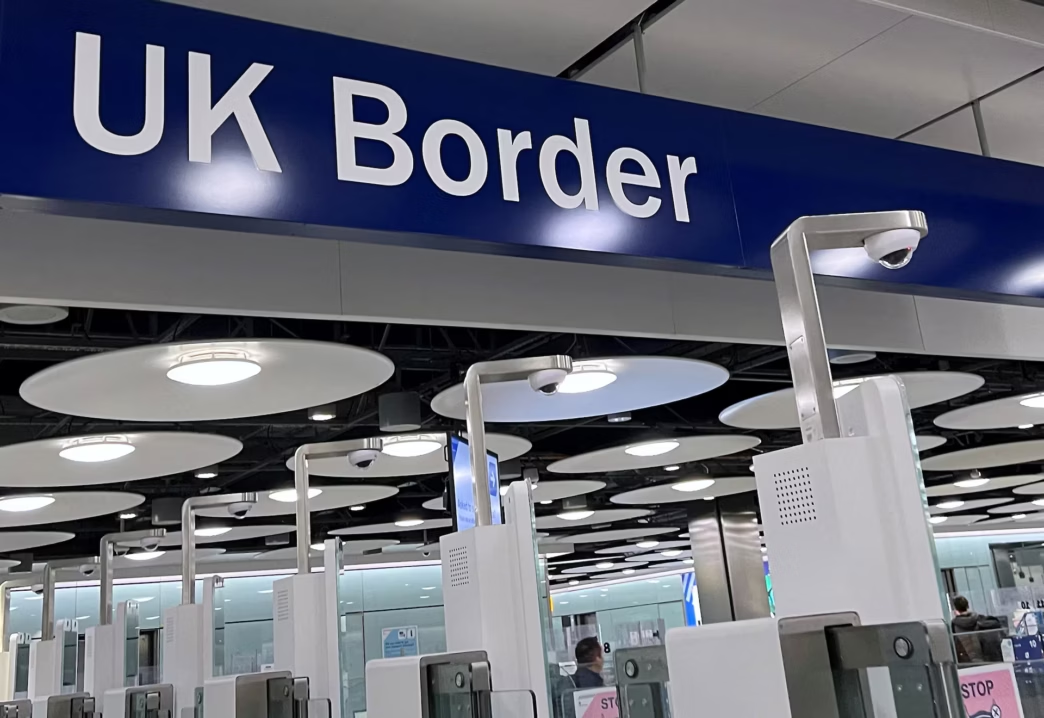
The British government has launched a massive, sweeping overhaul of its immigration rules, transforming the legal landscape for businesses, international students, and foreign workers.
The sweeping policy shift, officially detailed in the 38-page Statement of Changes HC 259, alters 42 separate sections of the Immigration Rules.
This restructuring introduces strict standardised language to eliminate previous policy grey areas, dramatically tightens visa requirements, and significantly strengthens the state’s deportation powers.
Read More : US Denies Visas to Iranian UNGA Delegation
The Home Office will roll out the legal changes in two distinct waves this summer.
A safe harbour provision protects any migrant who submits an application for entry clearance, permission to stay, or an Electronic Travel Authorisation (ETA) prior to the August deadlines, ensuring officials judge those cases under the old rules.
The most profound shift hits foreign nationals facing criminal convictions.
The government has drastically lowered the threshold for deportation by expanding Part 13 of the rules.
Staggered Implementation Timeline
For convictions occurring on or after March 22, 2026, the Home Office will treat individuals who receive a suspended prison sentence of 12 months or more the same as offenders given immediate jail time.
This means the state will mandate deportation unless the individual meets incredibly narrow human rights or family life exceptions.
Additionally, authorities can now reject ETA and child student applications if the applicant has a past suspended sentence.

The reform also introduces an uncompromising, unified text block across 30 distinct visa pathways—including the Skilled Worker, Global Talent, Student, Graduate, and Visitor routes.
This new rule dictates that applicants must not be in breach of immigration laws or out on immigration bail if they wish to secure permission to stay.
The Home Office effectively eliminates localised leniency and prior policy variances by applying the same compliance text to everyone, from corporate executives to long-term residents.
For asylum seekers from the EEA or Switzerland, the new rules significantly fast-track the rejection process.
The Secretary of State now holds explicit power to completely bypass the personal interview phase if paperwork shows a claim is “clearly unfounded.”
Crucially, the rule change explicitly notes that skipping the interview will not stall a rejection, permitting the Home Office to issue a negative decision immediately based solely on the written application.
Read More : US Sanctions Threatens Iranian Airlines
Corporate and technical visa routes also face minor, precise tune-ups.
For the skilled worker transition, upcoming 2027 and 2028 salary rules will now look at the date the employer issued the Certificate of Sponsorship (CoS) rather than the final visa application date, giving businesses a fairer transition window.
Furthermore, the Scale-Up visa route now includes neonatal leave under its statutory absences so that parents are not penalised during employment continuity checks, while Indian nationals holding valid diplomatic passports receive a fresh administrative exemption under the visitor route.