Trending
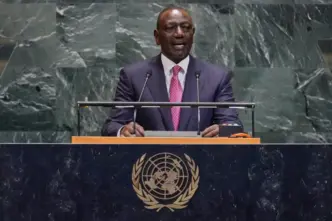
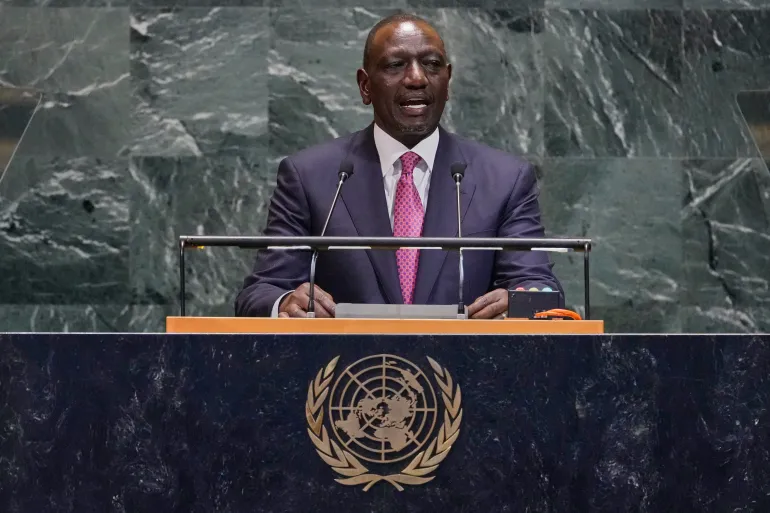
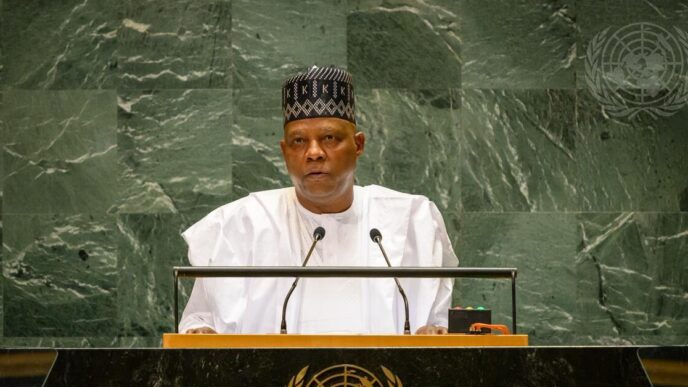
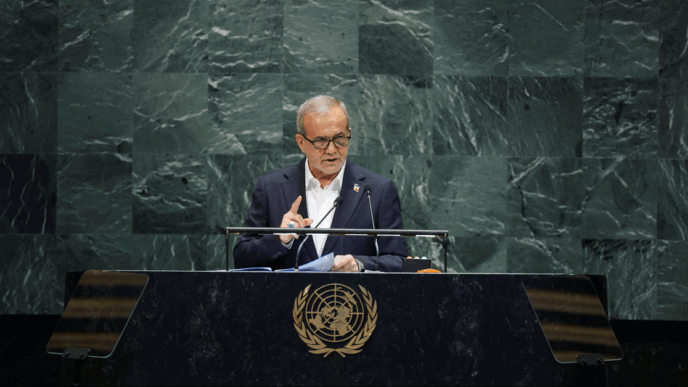
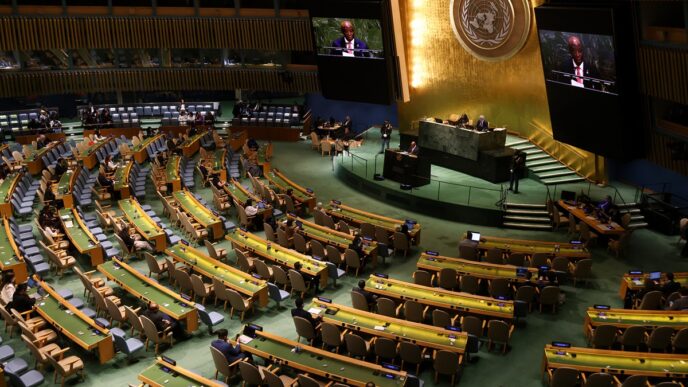
Kenya’s President William Ruto gave a powerful speech at the 80th United Nations General Assembly (UNGA) in New York on Wednesday.
His speech touched on many global issues — the war in Sudan, the humanitarian crisis in Gaza, the need for reforms at the UN and in global financial institutions such as the IMF and World Bank, the security situation in Haiti, and wider tensions in world politics.
Ruto voiced Kenya’s “grave concern” over the situation in Gaza. He urged for a permanent ceasefire and respect for international law.
“Only through such a process can the vision of a two-state solution be realised — where Israel and Palestine live side by side, in peace and in security.”
Turning to global finance, he criticised the IMF and the World Bank, accusing them of treating Africa unfairly by giving more funds to richer countries while burdening Africa with high interest rates, limited loans, and strict conditions.
“For instance, during the IMF’s recent allocation of Special Drawing Rights (SDRs), 64% went to wealthy countries with little need for liquidity support, while the poorest countries received just 2.4%. This imbalance highlights how the very institutions meant to safeguard global financial stability often perpetuate inequity.”
Ruto also called for Africa to have more representation on the UN Security Council, demanding two permanent seats with veto power and two non-permanent seats. He stressed that this was essential for the UN’s survival.
“Africa dominates most of the Security Council’s agenda… yet we remain the only continent without a permanent seat at the table, where decisions about our destiny are made. The world must understand that reforming the Security Council is not a favour to Africa; it is a necessity for the UN’s own survival.”
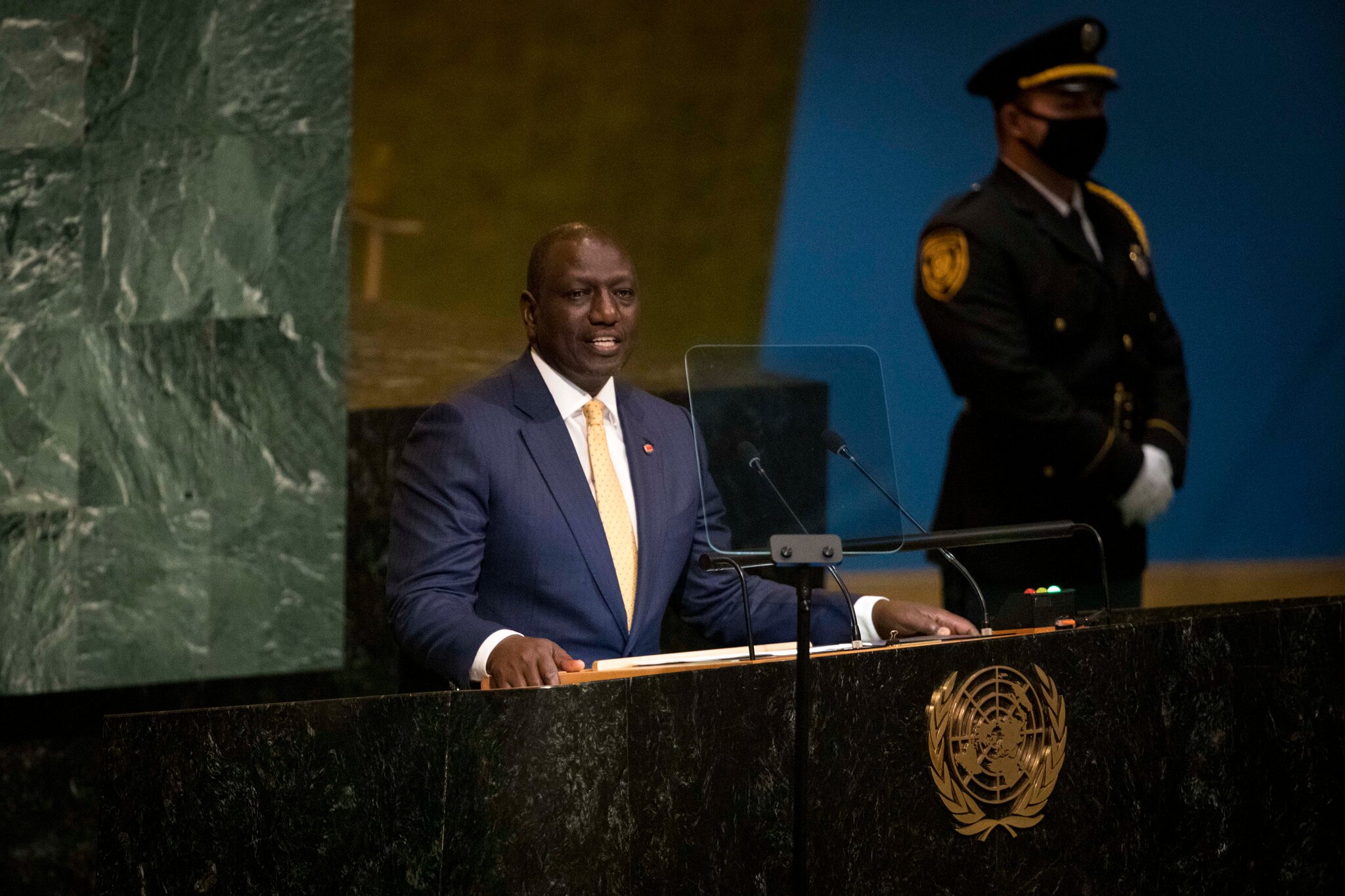
He warned that the UN is facing “deepest challenges in its credibility” because it is “too often drowned by the rivalries of the great powers.” He said the organisation is failing to respond as it should.
“Too often, the UN’s blue helmet, once a symbol of moral authority, no longer commands the same respect. From the conflicts in Gaza and Ukraine to the crises in Sudan, DR Congo, Somalia, and the Sahel, we see actors proceed undeterred by the UN’s calls.”
On Haiti, where Kenya is leading a UN-backed security mission, Ruto said his country remains committed but is struggling with resources.
“The (Kenya-led security) mission has operated in a volatile environment under enormous constraints. It has been underfunded, under-equipped, and operated below 40% of its authorised personnel strength. Our police officers have valiantly shouldered responsibilities without the full logistical support that should accompany any mission sanctioned by the United Nations.”
On Sudan’s civil war, he stressed that the conflict — between the Sudanese army (SAF) and the paramilitary Rapid Support Forces (RSF) — cannot be solved through fighting, only through dialogue.
“We fully endorse the Quad — comprising Egypt, Saudi Arabia, the United Arab Emirates, and the United States — in affirming that there can be no military solution and that only political dialogue offers a viable path forward. We urge all parties, including SAF, RSF, and external actors, to respect Sudan’s sovereignty, unity, and territorial integrity, and firmly reject any attempts to divide the country, reaffirming our unwavering support for a unified Sudan.”
Ruto also criticised the lack of progress in global unity, warning that mistrust and division are growing. He called for urgent reforms to restore trust in international cooperation.
“Instead of trust, mistrust is spreading. Instead of solidarity, fragmentation is taking root. In place of hope, anxiety fills our global community. We are living, to borrow from the words of the founders of this institution (UN), not in ‘larger freedom,’ but in growing uncertainty. At this moment of turbulence, when we most need a strong United Nations, the organisation faces its deepest crisis in credibility and capacity. Funding cuts have paralysed its operations. Bureaucracy has slowed its response. The Security Council remains frozen in the post-war structures of 1945, unable to act inclusively, with fairness, and with speed.”