Trending


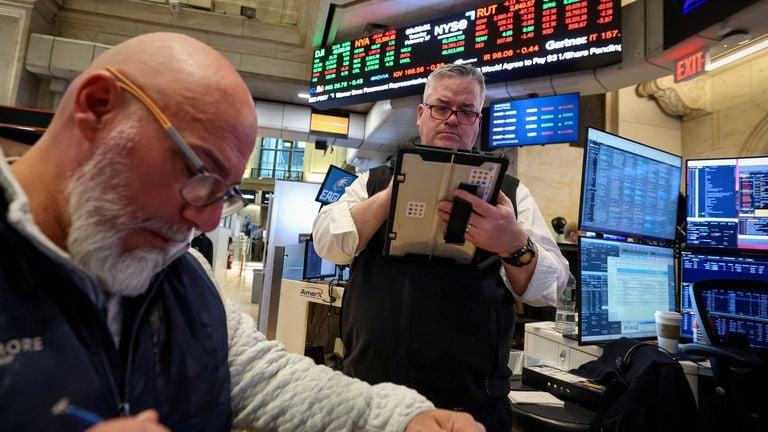
Wall Street opened mixed on Tuesday as investors struggled to find a steady footing after a volatile session.
While the Dow Jones Industrial Average managed a slight gain of 0.2%, both the S&P 500 and the tech-heavy Nasdaq Composite trended lower.
The cautious atmosphere stems from a combination of renewed trade tensions and lingering anxiety regarding the disruptive potential of artificial intelligence on traditional industries and white-collar jobs.
Market stability was jolted at midnight when new US tariffs came into effect.
This move followed President Donald Trump’s rejection of a Friday Supreme Court ruling that had initially outlawed previous levies.
Analysts noted that the court’s decision was expected to bring finality to trade disputes; instead, the administration’s workaround has introduced fresh “disruptive” uncertainty, threatening to upend international trade deals that have been months in the making.
Adding to the complexity is the “AI anxiety” that triggered heavy losses in the preceding session.
Investors are increasingly concerned that rapid advancements in artificial intelligence will negatively impact legacy technology companies and the broader workforce.
However, the sector saw a notable bright spot as semiconductor giant AMD surged 6.5%.
The jump followed the announcement of a massive supply agreement with Meta to provide six gigawatts of essential AI chips, signalling that targeted growth remains possible despite broader market fears.
The trading week is expected to remain high-stakes as investors prepare for two major catalysts.
All eyes are on Washington for the president’s annual address to Congress on Tuesday night, where further details on economic and trade policy are anticipated.
This will be followed on Wednesday by highly anticipated quarterly results from chip powerhouse Nvidia, which is often viewed as the primary bellwether for the health and direction of the global AI economy.