Trending


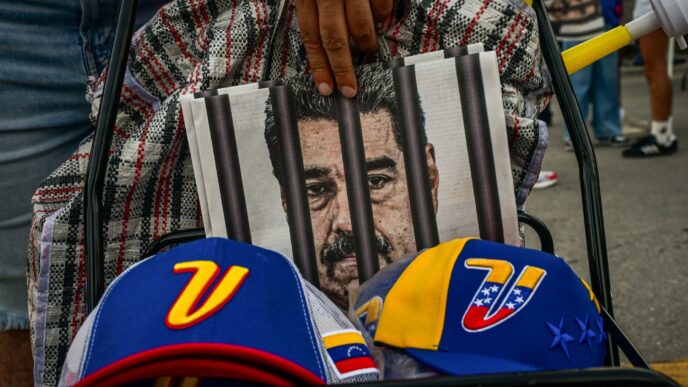
Venezuela on Thursday began releasing a large number of political prisoners, including several foreigners, in an apparent concession to the United States after its ouster of ruler Nicolas Maduro.
The releases are the first since Maduro’s former deputy Delcy Rodriguez took over, with the backing of President Donald Trump, who says he is content to let her govern as long as she gives Washington access to oil.
The White House credited Trump with securing the prisoners’ freedom.
“This is one example of how the president is using maximum leverage to do right by the American and Venezuelan people,” Deputy Press Secretary Anna Kelly said in a statement to AFP.
The releases were announced by Rodriguez’s brother, parliament speaker Jorge Rodriguez, a key figure in the anti-US socialist movement founded by Maduro’s predecessor, Hugo Chavez. He said “a large number of Venezuelan and foreign nationals” were being immediately released in the name of “peaceful coexistence.” He did not say which prisoners would be released, nor how many or from where.
Renowned Spanish-Venezuelan activist Rocio San Miguel, imprisoned since February 2024 over a purported plot to assassinate Maduro, was among five Spanish citizens freed, according to Spain’s foreign ministry.
Security was stepped up Thursday afternoon outside the notorious El Helicoide detention centre in Caracas, used by the intelligence services to jail political and other prisoners. Miguel was held in El Helicoide after her arrest.
Leading opposition figure Alfredo Diaz, who died in December in custody, was also held at the facility.
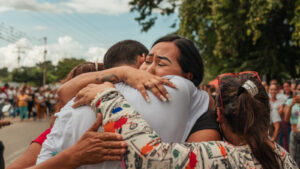
Families gathered outside on Thursday for news of their loved ones.
On Tuesday, Trump had told Republican lawmakers that Rodriguez’s administration was closing a torture chamber “in the middle of Caracas” but gave no further details. His remarks had sparked speculation that Venezuelan authorities had agreed to close El Helicoide.
Thursday’s move by Caracas came as Trump suggested the United States could run Venezuela and tap into its oil reserves for years.
Shortly after Maduro’s seizure in US airstrikes and a special forces raid that left 100 people dead, according to Caracas, Trump announced that the US would “run” the Caribbean country for a transitional period.
Meanwhile, the US Senate on Thursday took a major step toward passing a resolution to rein in military actions against Venezuela.
The Democratic-led legislation, expected to pass a vote next week, reflects widespread disquiet among lawmakers over Saturday’s secretive capture of Maduro, conducted without their express approval. It is expected to face resistance in the Republican-dominated House, however.
Oil has emerged as the key to the US’s control over Venezuela, which has the world’s largest proven oil reserves.
Trump announced a plan earlier this week for the United States to sell between 30 million and 50 million barrels of Venezuelan crude, with Caracas then using the money to buy US-made products.
Delcy Rodriguez, on Wednesday, called the US attack to depose Maduro, who was taken to New York with his wife to face trial on drug charges, a “stain” on relations with the United States. But she also defended the planned oil sales to Washington.
On the streets of Caracas, opinions remain mixed about the plan.
Trump has warned Rodriguez she will pay “a very big price, probably bigger than Maduro” if she does not comply with his agenda.