Trending
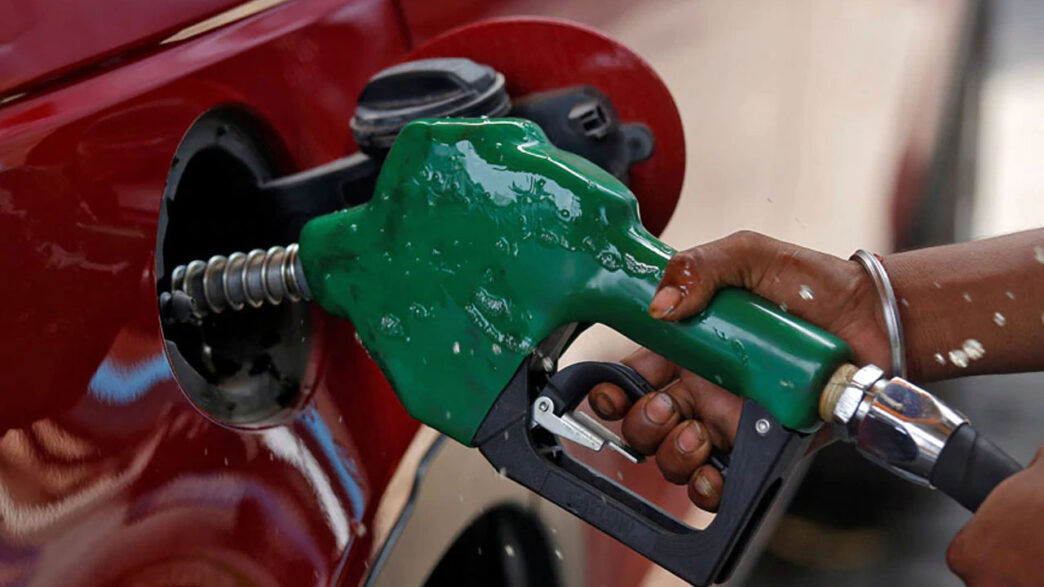
The Central Bank of Nigeria (CBN) has projected that the pump price of petrol could rise to about N950 per litre, warning that global oil prices, exchange rate pressures, and production assumptions could push fuel costs higher.
The projection was contained in the Apex Bank’s 2026 Macroeconomic Outlook for Nigeria, which outlined baseline assumptions for oil prices, foreign exchange, and domestic crude oil output.
According to the CBN, the outlook assumes crude oil prices will average $60 per barrel in the fourth quarter of 2025 and $55 per barrel in 2026, while the exchange rate at the Nigerian Foreign Exchange Market is expected to average N1,451.63 to the dollar in Q4 2025 and N1,400 in 2026. Domestic crude oil production is projected at about 1.5 million barrels per day during the period.
Based on these assumptions, the apex bank said the price of premium motor spirit is expected to hover around N950 per litre.
CBN stated, “The baseline projections are predicated on the following assumptions: crude oil price at an average of $60/barrel in Q4 2025 and $55/barrel in 2026 (consistent with the US EIA’s outlook that rising global crude oil inventories and supply glut would moderate prices); NFEM exchange rate at an average of N1,451.63/$ in Q4 2025 and N1,400/$ in 2026 (supported by a more efficient FX market, higher capital inflows, a current account surplus, and a broad-based improvement in economic activity).
“Furthermore, domestic crude oil production is assumed at about 1.5 mbpd (excluding condensates) throughout the forecast period. PMS price is expected to hover around N950 per litre in 2026. Government expenditure is projected to follow the 2025-2027 MTEF/FSP path, reflecting an expansionary fiscal stance aimed at supporting the $1tn economy initiative.
“MPR and CRR are assumed at 27.00 and 45.00 per cent, respectively. The baseline projections were generally supported by the assumption of continued improvement in business optimism and stronger investor sentiment.”
The projection comes despite recent reductions in pump prices following cuts by the Dangote Refinery. In December, the refinery slashed its gantry price from N828 to N699 per litre, leading to a pump price of about N739 per litre at MRS Oil filling stations and forcing other marketers to lower prices to remain competitive.
Before the latest price cuts, petrol had sold for N900 per litre and above in many parts of the country.
The Dangote refinery, however, has cautioned that petrol prices could rise sharply if Nigeria relies mainly on imports. It warned that prices could climb to N1,400 per litre in a post-subsidy environment without large-scale domestic refining.
In a statement, the refinery said, “Recent price movements further highlight an uncomfortable reality. In the absence of the Dangote Petroleum Refinery, fuel importers would continue to operate without restraint, with petrol prices potentially escalating to levels estimated at up to N1,400 per litre in a post-subsidy environment. The refinery’s operations have therefore served as a critical stabilising force in the downstream petroleum market.”
In its outlook, the CBN said that increased private-sector investment, particularly in domestic refining, is expected to support growth in 2026.
Read More : Key Takeaways from Tinubu’s Independence Speech
“Increased crude oil production, underpinned by improved security around oil assets, especially with the launch of the production monitoring command centre and expansion of domestic crude oil refining, and stable energy prices are expected to drive growth further in 2026,” it added
Despite its petrol price projection, the apex bank also expressed optimism that competition in the midstream sector would help moderate prices over time.
It also projected that headline inflation would decelerate to 12.94 per cent in 2026 from an estimated 21.26 per cent in 2025, driven largely by easing food and petrol prices.