Trending
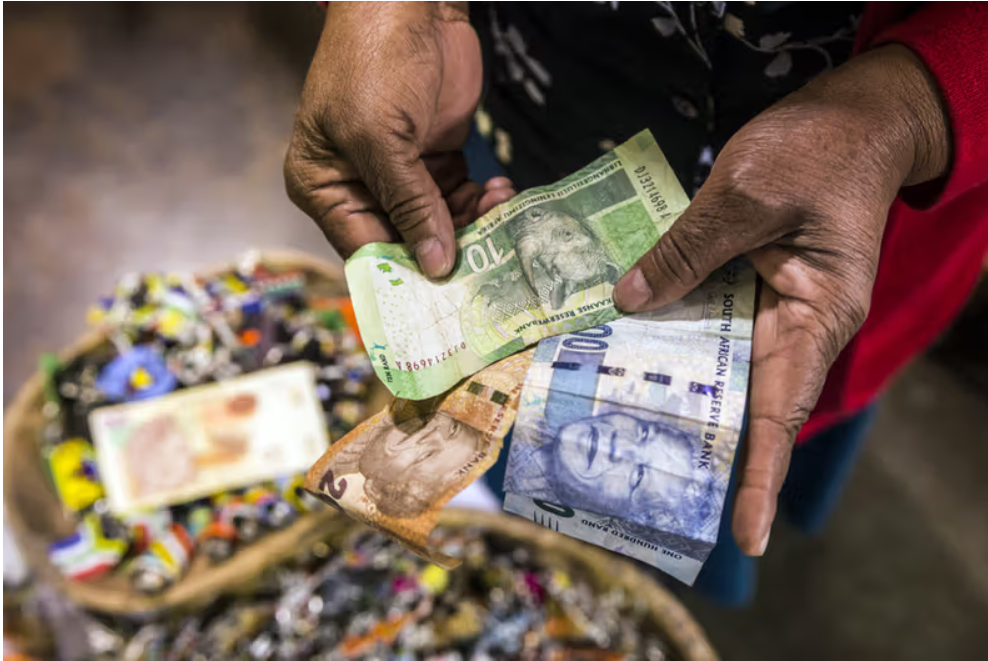
South Africa will increase its national minimum wage by 5% from 1 March, raising the hourly rate to R30.23 ($1.89) from R28.79 ($1.80), the government announced on Tuesday.
The adjustment is higher than the 4.7% increase that many analysts, business groups and labour organisations had expected for 2026.
Employment and Labour Minister Nomakhosazana Meth said the increase is intended to “step towards improving the livelihoods of workers across all sectors, including vulnerable farm and domestic workers.”
The increase is calculated using the November annual inflation rate of 3.5%, plus an additional 1.5 percentage points, to comply with recommendations from the National Minimum Wage (NMW) Commission.
Workers employed through expanded public works programmes will receive a higher adjustment of 9.6%, raising their hourly wage to R16.62 ($1.04) from R15.16 ($0.95).
South Africa introduced a national minimum wage in 2019 at R20 ($1.39) an hour as part of broader efforts to address income inequality.
The latest increase represents an additional R1.44 ($0.09) per hour.
Official data shows about 32% of the labour force is unemployed, rising to 42% when discouraged job seekers are included.
Analysts note that workers who spend most of their income on essentials such as food, transport and electricity may see only limited improvement in their living conditions from the higher wage.
Africa’s largest economy has struggled with weak growth for more than a decade.
An OECD economic survey found that real gross domestic product grew at an average annual rate of about 0.7%, below population growth.
Rising electricity tariffs, frequent power outages and persistent inflation continue to weigh on households and businesses. Consumer prices rose 3.6% in December 2025.
According to Matthew Parks, parliamentary coordinator of the Congress of South African Trade Unions, the country’s largest labour federation, the wage increase “will inject badly needed stimulus into the economy, spurring growth, sustaining and creating jobs.”
Employers are required by law to comply with the national minimum wage, although exemptions may be granted in specific circumstances.
Allowances for items such as transport, food or accommodation are not counted toward the minimum wage.
Economists say the increase offers some relief to low-paid workers but does not resolve deeper structural problems, including high unemployment and slow economic growth, that continue to limit improvements in living standards.
The NMW is the legal minimum wage, according to Meth, who noted that “no employee shall be paid below the NMW, and it cannot be varied by contract or collective agreement.”