Trending


In Zambia, young engineers across the country’s university campuses are creating solutions to local problems using artificial intelligence (AI).
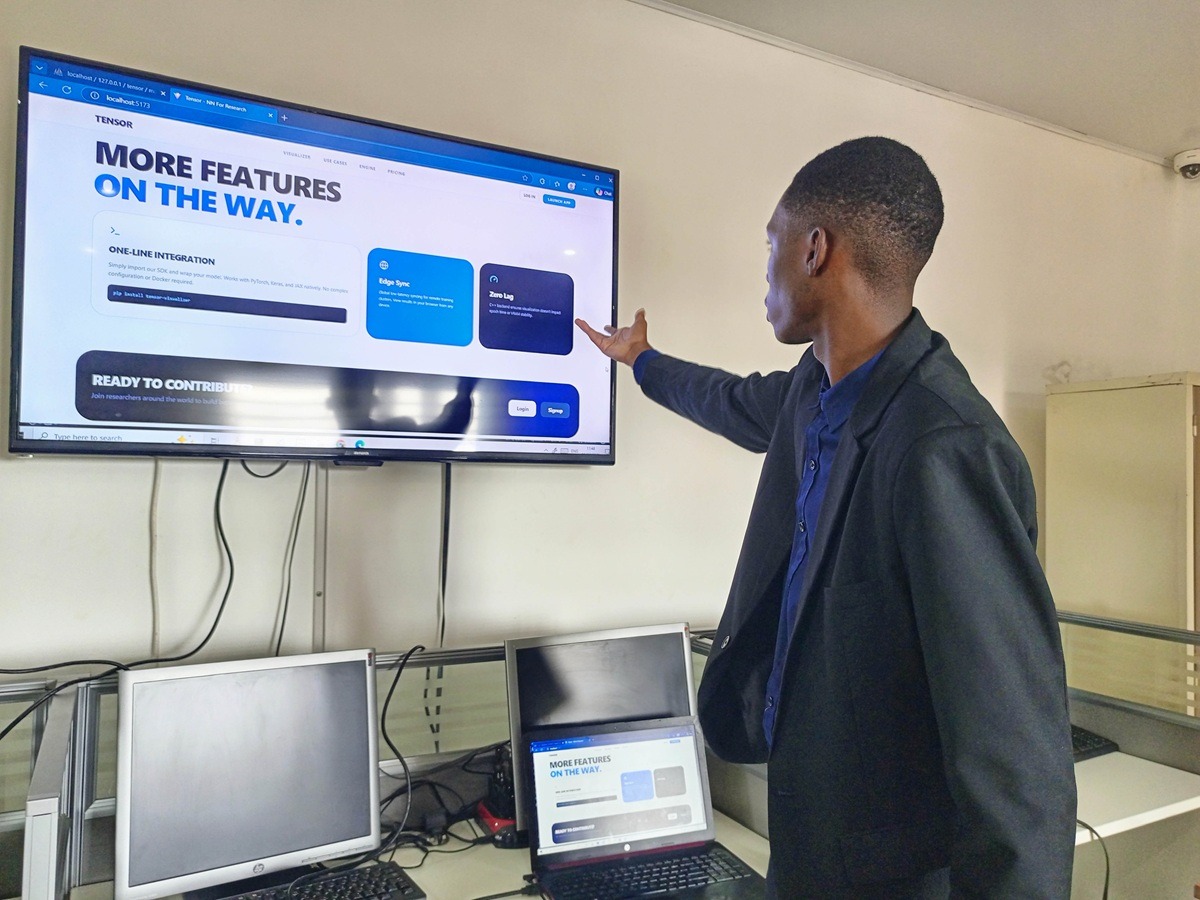
One of the engineers, a 20-year-old software engineering student, Innocent Mugwadi, built a system called Tensor, which explains the mathematical operations that organise neural networks.
Mugwadi says the idea for Tensor emerged from Mugwadi’s own academic challenges.
Read More : Google Faces UK Court Over App Store Charges
While working on AI-related software projects, the second-year university student had encountered challenges understanding the mathematics behind AI.
He told Bird he had attended several boot camps and AI events, but many of them did not help him understand the mathematics side of AI.
Mugwadi’s product, Tensor, uses AI to translate complex mathematical functions into more human-readable explanations, enabling users to understand the logic behind algorithms rather than simply interpreting numbers and symbols.
Another engineering student, Enock Chisulo, in his fourth year of electrical engineering at the University of Zambia (UNZA), built an AI-powered application, Moteev, to help university students shop for groceries and other items without hassle on campus.
Chisulo’s path to building the application began when he arrived on the UNZA campus as a first-year student. He recounts how expensive groceries were and how hard to find and how he and other students endured long walks to surrounding neighbourhoods like Kalingalinga
“When I came to UNZA, the first thing I noticed about living on campus was the high cost of living. Buying groceries on campus is very expensive, and sometimes you don’t find everything you need, so students often opt to buy from outside,” said Chisulo.
Chisulo says building Moteev first started as a hobby, but this hobby now allows order groceries and essentials directly from their phones, receive smart recommendations, and have their items delivered straight to their hostels. According to Bird, Moteev now serves more than 800 students across UNZA and the Copperbelt University.
The Moteev founder won the prestigious 2-Minute Drill Competition, hosted by renowned American entrepreneur David Meltzer in 2025. The international recognition marked a turning point for the young engineer.
Chisulo’s team of 18 plans to expand Moteev’s operation into other African countries, including South Africa, Botswana, Kenya, Ghana, Nigeria, and the Democratic Republic of Congo.
Speaking on the AI-powered solutions young university students are building in Zambia, Dr. Tafadzwa Munzwa, a specialist in tech businesses and the co-founder and executive director of DAWA Health, an AI-powered digital health platform focused on democratizing access to sexual and reproductive, maternal, and child health services, said the country’s youths are Zambia’s innovation ecosystem.
Read More : Norway Plans Temporary AI Smart Glasses Ban
“Young Zambians are really embracing emerging technologies like artificial intelligence. Across the ecosystem, I know many young innovators who are integrating AI into different parts of the economy, from fraud detection to credit risk scoring to crop-fields prediction, diagnosing plants, in healthcare, understanding complications, all that, trying to really improve the ecosystem,” said Munzwa.
He added that the solutions being developed by young Zambians are making the country one of Africa’s leading innovation hubs, particularly in the southern region of the continent.
By Annie Zulu, bird story agency.