Trending
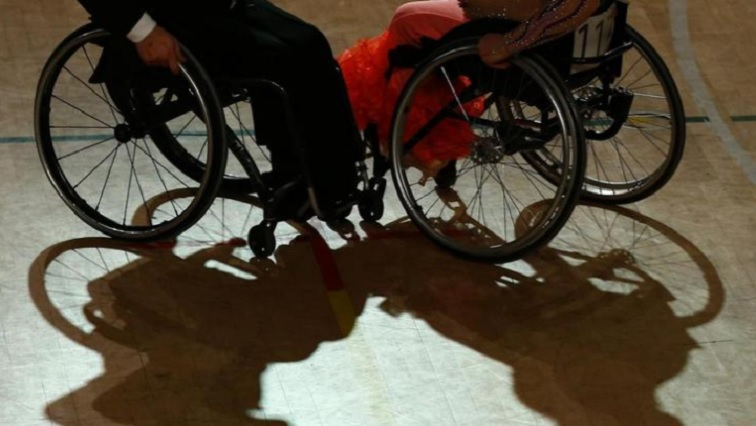
Advocates for the disability community are calling for a fundamental shift in Nigeria’s legislative framework, demanding reserved seats for persons with disabilities (PWDs) across all levels of government.
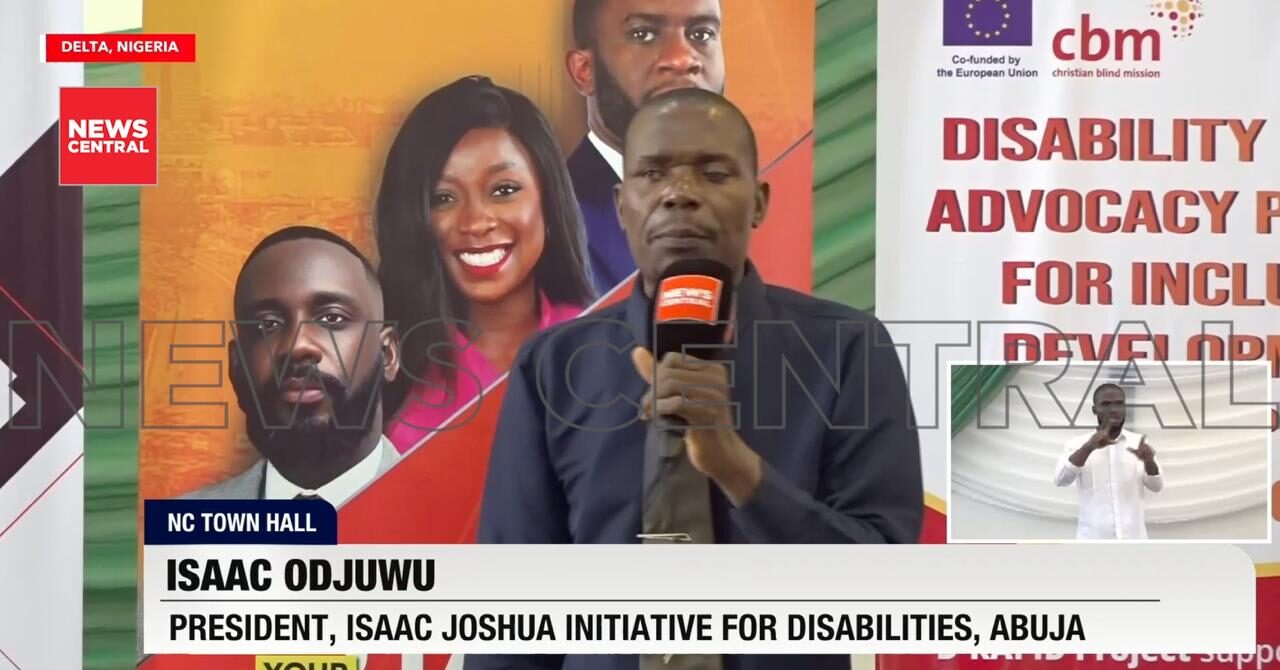
Speaking at News Central TV’s Town Hall in Delta State on Thursday, Isaac Odjuwu, president of the Isaac Joshua Initiative for Disabilities, asserted that inclusive policymaking is impossible without the direct participation of those it affects.
“You cannot initiate laws to improve our lives without us being in the seat to initiate them,” Odjuwu stated, urging the federal and state governments to establish dedicated representation in the National Assembly and local councils.
Read More : Surging Ebola Outbreak Overwhelms Congo
Odjuwu emphasised that the community is both “qualified and educated,” yet remains systematically excluded from decision-making roles.
“State government should try to make every institution in Delta State disability-free…”
Isaac Odjuwu says that the Nigerian Government should create special seats for persons with disabilities at the federal, state, and local levels.#NCTownHallSeries pic.twitter.com/lsb0GgmrVk
— News Central TV (@NewsCentralTV) March 26, 2026
He called for PWDs to be appointed as supervising councillors and urged the Delta State government to lead by example by offering free tuition for PWDs in tertiary institutions and mandating full wheelchair accessibility across all public campuses.
The town hall also highlighted severe systemic failures in the education and healthcare sectors.
Edirin Aruokpere, a deaf lawyer, shared a poignant account of the barriers faced by the hearing-impaired in Delta State.
Despite being a legal professional, Aruokpere noted that many in her community are left illiterate because special schools lack teachers proficient in sign language.
She also detailed the isolation faced in public institutions, recounting a distressing experience at a government hospital where staff accused her of “lying” about her disability because she could speak. ”
Accessibility is not just about building a ramp,” she emphasised. “It is about having interpreters and people to assist us.”
“Our major challenge in this Delta State is education. Apart from education, employment. For the deaf, it’s even more harder.”
Edirin Aruokpere says deaf people face daily barriers in education and employment due to the lack of sign language interpreters.#NCTownHallSeries pic.twitter.com/fMvOhUKh3F
— News Central TV (@NewsCentralTV) March 26, 2026
These testimonies added to a series of harrowing accounts from other participants who described a lifetime of systemic discrimination.
Philomena Kowen, an accomplished scholar and para-athlete, recounted how major banks refused to hire her despite her passing recruitment tests with perfect scores, while Ambassador Christie Uti described the indignity of her son being forced to crawl on the floors of dilapidated, windowless school buildings.
The speakers collectively argued that the community is “qualified and educated,” yet remains marginalised by both physical infrastructure and social prejudice.
Beyond political representation, the advocates issued specific demands to the Delta State government, including free tuition for PWDs in all state tertiary institutions and the mandatory employment of sign language interpreters in hospitals and schools.
The participants emphasised that Nigeria can only alter the narrative for persons with disabilities (PWDs) by transitioning from a “charity model” to one of “enforceable rights,” asserting that accessibility must be regarded as a fundamental prerequisite of public service and governance.