Trending

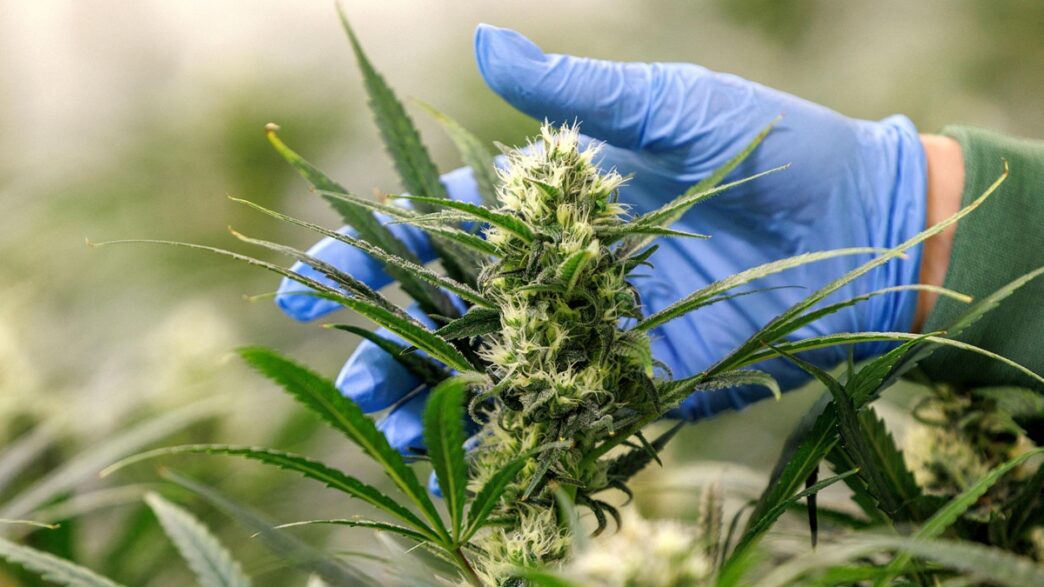
Cannabis has become one of the most widely consumed psychoactive substances in the world, influencing debates on public health, criminal justice, youth culture, and economic policy across continents.
Once treated largely as an underground drug market issue, it now occupies a central place in global conversations about legalisation, taxation, regulation, and social reform.
From North America to Africa, Europe to Asia, cannabis use continues to grow in visibility, even in countries where it remains illegal. Governments are divided on how to respond: some have embraced regulated markets, others maintain criminal bans, while many are caught between enforcement and reform.
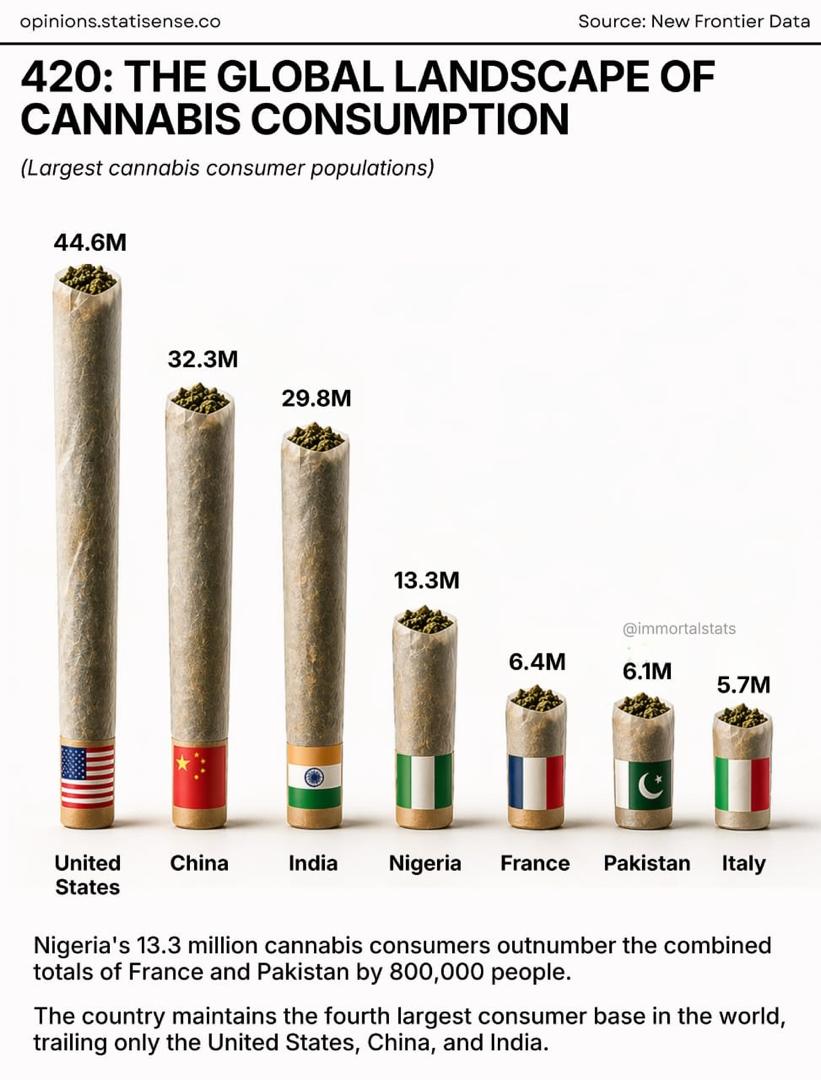
That global shift is reflected in a ranking based on estimates from research firm New Frontier Data, which identified the countries with the highest numbers of cannabis consumers worldwide.
According to the estimates:
- United States – 44.6 million
- China – 32.3 million
- India – 29.8 million
- Nigeria -13.3 million
- France – 6.4 million
- Pakistan – 6.1 million
- Italy – 5.7 million
The figures, while not official census counts, offer a snapshot of how deeply cannabis consumption has spread across both developed and developing economies.
America’s Dominance
The United States leading the ranking with 44.6 million consumers mirrors the country’s rapid transformation from prohibition to commercialization.
Over the past decade, dozens of U.S. staveates h legalized cannabis for medical or recreational use. Retail dispensaries, branded cannabis products, and multi-billion-dollar tax revenues have turned America into the world’s most visible cannabis market.
The U.S. now stands at the centre of a global experiment: whether legalization can reduce criminal markets while managing health risks.
China and India: High Consumption Rates
China and India’s occupying second and third positions in the global cannabis rankings are driven largely by population scale. In countries of more than a billion people, even modest levels of consumption can produce user totals larger than many entire regions.
Because both nations enforce strict drug controls, reliable public data is limited and underreporting is common. But despite legal restrictions, the rankings indicate that cannabis use remains present on a massive scale.
Nigeria’s Rise in an Expanding Illicit Market
Perhaps the most surprising figure in the ranking is Nigeria’s 13.3 million estimated consumers, placing it fourth globally.
That estimate puts Nigeria ahead of several European nations more commonly associated with cannabis culture. It also means Nigeria’s estimated consumer base exceeds the combined totals of France (6.4 million) and Pakistan (6.1 million) by roughly 800,000 people.
Nigeria’s position may be driven by several factors:
- Africa’s largest population
- A youthful demographic structure
- Rapid urbanization
- Longstanding informal cannabis trade networks.
This also signals how Africa is often underrepresented in global drug discussions despite being a major consumption and production region.
Europe: Stable but Significant Consumption
France and Italy appearing lower in total numbers does not necessarily indicate lower cannabis popularity.
France has frequently recorded some of Europe’s highest cannabis use rates, especially among younger age groups. But with populations far smaller than the United States, India, or Nigeria, total consumer counts naturally remain lower.
What the World Is Saying About Cannabis?
Global opinion on cannabis remains sharply divided.
1. Public Health Voices
Health agencies continue to raise concerns about:
- Dependency risks
- Impaired driving
- Mental health effects in heavy use cases
- Youth exposure
- Increasingly potent cannabis products.
2. Reform Advocates
Supporters of legalization argue that regulated cannabis markets can:
- Weaken criminal supply chains
- Generate public revenue
- Improve product safety
- Reduce incarceration for minor possession offenses.
3. Business and Investors
Cannabis is now a fast-growing commercial sector involving:
- Medical cannabis
- Wellness products
- Pharmaceuticals
- Retail recreational markets.
4. Governments
Countries remain split:
Read More : Africa Ebola Outbreak Exceeds 10,000 Cases
- Canada and Uruguay legalized nationally
- Parts of the U.S. legalized at state level
- Germany and others are reforming policy
- Many Asian and African states retain strict penalties.
These rankings signals what governments worldwide already know: cannabis use is widespread, persistent, and increasingly visible.
Some countries regulate it. Others prohibit it. Millions consume it regardless.
The central question remains whether public policy can keep pace with its growing presence.