Trending
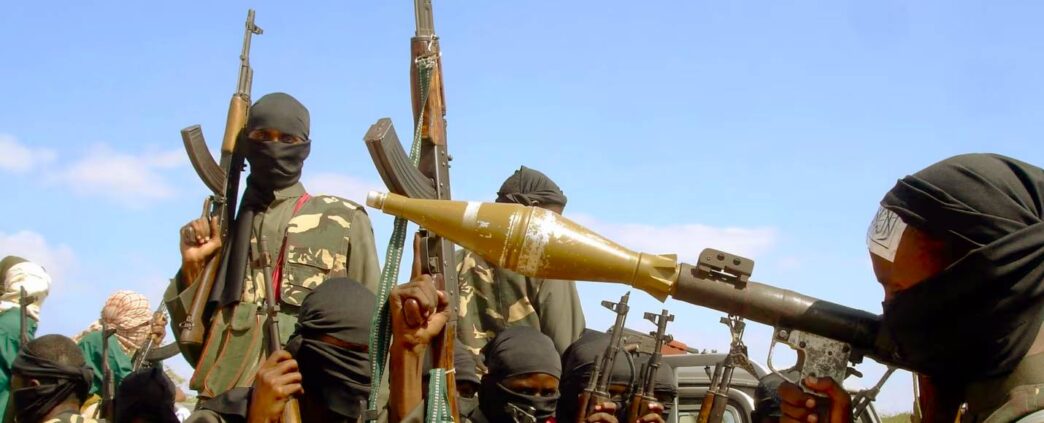
For many young Africans, the choice between joining a terrorist group for pay and having no income at all is not really a choice. It is a real situation in parts of northern Nigeria, the Lake Chad Basin, and the Sahel. In these areas, job opportunities are very limited. Governments are not hiring, industries are scarce, and factories are often nonexistent. Aid organisations may come and go, but they do not always provide lasting employment.
As a result, some young people are left with few options. Recruiters from armed groups are often present and offer immediate incentives such as money, food, and a sense of purpose. This makes it easier for them to attract recruits, especially among those who are struggling to survive.
In 2023, the United Nations Development Programme (UNDP) interviewed more than a thousand former members of extremist groups across eight African countries. Only 17 per cent said religious ideology drove them to join. Twenty-five per cent said they had no job. That number has nearly doubled since 2017.
Read More : Man City Charges: Judgment Day Approaches
“The hope for better jobs eclipses religious ideology as the main driver of recruitment to violent extremist groups in Sub-Saharan Africa,” the UNDP report stated.
‘Boko Haram paid us. The government did not’
In June 2013, Nigerian authorities arrested a group of young suspects in Yobe and Borno states. They were between nine and fifteen years old. They had been setting schools on fire. They told investigators that Boko Haram paid them.
“Boko Haram paid us 5,000 naira each to burn schools,” one suspect said, according to the CLEEN Foundation study commissioned by the United States Institute of Peace. At the time, 5,000 naira was about 30 US dollars.
Another suspect described his activities: “We watched out for the soldiers at their units and reported back to them. We were reporting when soldiers were at ease or enjoying themselves and when they were off guard, and we were paid for doing that.”
A third suspect, identified only as a young man who had received payments from the group, stated: “Boko Haram paid us. The government did not.”
The CLEEN Foundation study reported that in Kano State, 92 per cent of respondents identified unemployment and poverty as important factors driving youth into extremism.
In Borno State, the figure was 93 per cent. In Sokoto State, 70 per cent cited government corruption and neglect of citizen welfare as important factors.
In Somalia, researchers documented that Al-Shabaab offers monthly salaries, food rations, accommodation, and protection for recruits’ families.
One former fighter interviewed for the UNDP study said, “I joined because I needed to eat. There was no other job. The government was not paying anyone. Al-Shabaab paid on time.”
The CLEEN Foundation study identified specific demographic patterns among the recruited participants.
The report stated: “Young people from poor homes or those not brought up by their biological parents, including children from broken homes, abandoned and orphaned children, and children who are in the custody of relatives or others, are the most vulnerable to being used to perpetrate religious violence.”
In Kano State, 80 per cent of survey respondents agreed with this statement.
The UNDP study reported that 83 per cent of voluntary recruits had either no formal education or had not progressed beyond primary school. The average recruit had been unemployed for extended periods prior to joining.
Vice President Kashim Shettima, who was the then-governor of Borno State, said in a 2014 speech: “Distorted translation of the Holy Book by the insurgents landed us in this mess. If we have had good understanding of Islam, we would have been in a better place. There is no room for extremism in Islam.”
‘We continue to see ex-inmates with jobs created by the government while we are struggling’
An evaluation of Nigeria’s Stability and Reconciliation Program documented problems with the implementation of youth employment schemes.
The report found that programmes were used by local politicians “as a source of funds to mobilise political support.” The evaluation noted that flawed outreach and beneficiary selection processes left room for “manipulation by officials according to political, ethnic or religious affiliation.”
Researchers found that many young people believed only those “close to godfathers” could access the programmes. The report concluded that for many youth, these projects “have served to exacerbate a sense of exclusion and frustration, with opportunities perceived to be unjustly distributed, largely ineffective or otherwise beyond reach.”
It warned that “this state of affairs risks exacerbating, rather than reducing, conflict tensions where perceptions of exclusion are a factor.”
A Search for Common Ground study in Niger quoted one young man as saying: “We continue to see ex-inmates with jobs created by the government while we are struggling. There will be some consequence.”
The same study noted, “Despite living in very difficult situations, the young people consulted have not turned to violence, even if so many in their community have. This resistance to violence is strength in which to invest.”
In Sierra Leone, researcher Marc Sommers documented that a donor-funded employment programme was accessed primarily through local chiefs who used the programme to reward supporters.
Sommers wrote that “nepotism drove access to the treasured program.”
He concluded: “In unsteady Sierra Leone, a country with enduring legacies of inequality, corruption, and violent resistance, such a result promises to exacerbate youth anger and fatalism in the face of still more elite favoritism.”
‘A girl about 12 years old was used to detonate a bomb’
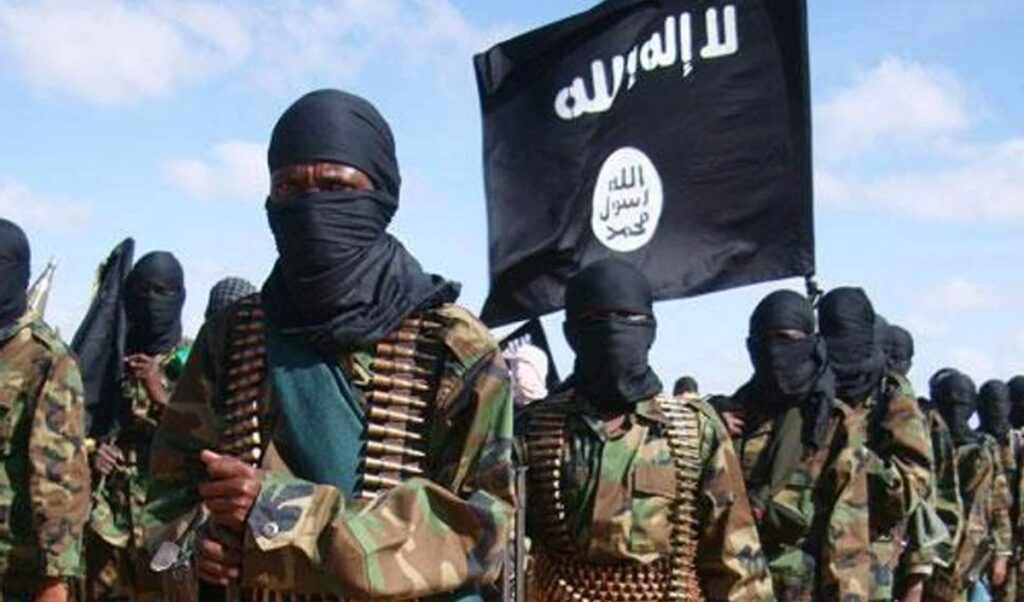
According to a 2017 UNICEF study, between January 2014 and February 2016, girls carried out approximately three-quarters of all child suicide attacks for Boko Haram. The report called this a defining feature of the conflict.
The Office of the United Nations High Commissioner for Human Rights documented specific incidents.
One report stated: “A girl about 12 years old was used to detonate a bomb at a bus station in Damaturu, Yobe State, killing seven people. Similar incidents were reported in Cameroon and the Niger.”
The same OHCHR report noted: “Some boys were forced to attack their own families to demonstrate loyalty to Boko Haram, while girls have been forced to marry, clean, cook and carry equipment and weapons.”
A former captive quoted in the UNDP study said, “I had no parents. My uncle did not want me. The man said he would take care of me. What was I supposed to do?”
The cruelty is what happens after. Girls who escape often cannot go home. Their families reject them. Their communities treat them as outsiders.
This is especially true if they come back with kids. Recent research by UNICEF in northern Nigeria found that people who returned from these places were met with “deep suspicion.” Some people have to go back. The terrorist group is the only family they have left.
The United Nations Security Council, in resolution 2331 (2016), affirmed that “victims of trafficking in persons in all its forms and of sexual violence committed by terrorist groups should be classified as victims of terrorism” to make them eligible for official support and redress.
‘The government has control of 30 per cent or less of the country’
The Global Terrorism Index 2026 reported that 41 per cent of all terrorist attacks occur within 50 kilometres of an international border. Sixty-four per cent occur within 100 kilometres.
According to the Africa Center for Strategic Studies, external assessments indicate that the government of Burkina Faso controls 30 per cent or less of its own territory. Militant groups have blockaded towns and cities, restricting access to essential routes.
The International Labour Organisation stated in a 2019 report: “Two billion people – more than 61 per cent of the world’s employed population – make their living in the informal economy, and about 2 billion people currently live in fragile and conflict-affected situations. These ‘two billion people’ could not be a coincidence.
“The informal economy thrives mostly in a context of high unemployment, underemployment, poverty, gender inequality and precarious work. The situation is aggravated in conflict-affected and fragile situations where a large part of the population has no alternative than operating in the informal economy for securing livelihoods.”
Countries with lower levels of violent extremism
Ghana shares a border with Burkina Faso, where jihadist groups are active. Available data indicate that Ghana has experienced lower levels of extremist violence than its neighbour. The Ghanaian government invested in its northern regions, including road construction, agricultural support, job creation, and decentralisation of authority.
Côte d’Ivoire implemented similar policies after its civil war. The government allocated resources to the northern regions for schools, clinics, markets, and employment programmes. According to the Global Terrorism Index 2026, Côte d’Ivoire hosts approximately 90,000 refugees from Burkina Faso and Mali.
Jessica Moody, a contributor to the Global Terrorism Index 2026, wrote that Côte d’Ivoire “has expended considerable resources in development programmes, job creation and infrastructure projects in the border areas.”
She stated that “this has been crucial to preventing significant jihadist recruitment.”
A civil society leader in northern Côte d’Ivoire told researchers, “The young men here have work. Not everyone. But enough. When the recruiters come, people tell them to leave.”