Trending
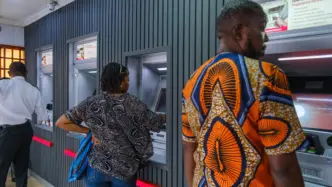
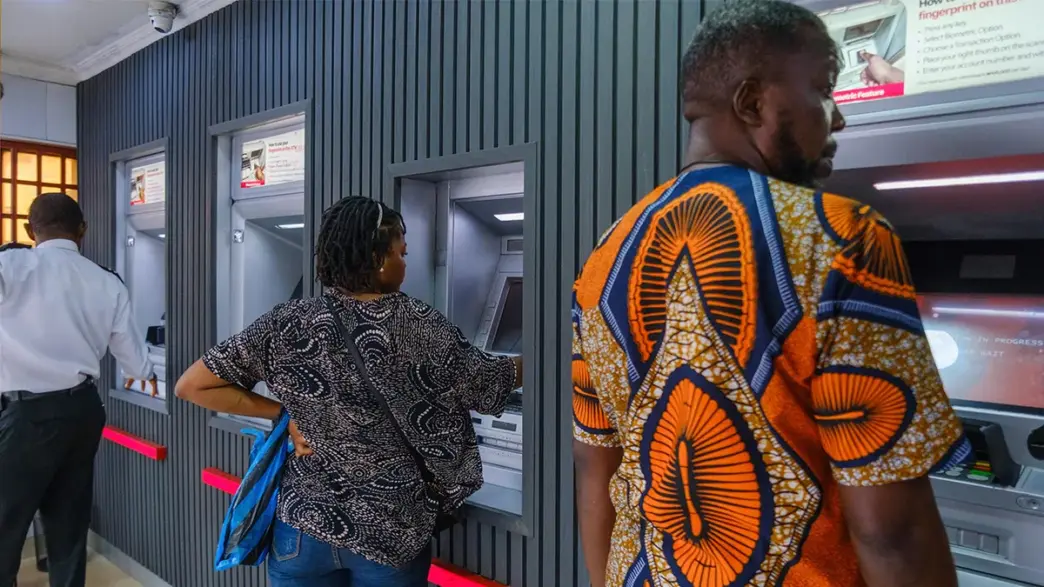
African banks are changing how ATMs have traditionally worked, shifting cash access into retail networks. The shift is not an exit from cash but a restructuring of the systems that support it into a more distributed network.
“Banks are not moving away from cash; they are redesigning how it is accessed and circulated. ATMs are becoming part of a wider network that includes agents, retailers, and digital channels,” said Samwel Abunga, a financial markets manager at Kenya Commercial Bank.
For decades, the ATM has been one of the most visible symbols of banking in Africa. That system is now being re-engineered rather than expanded, as banks respond to rising costs, security risks, and changing customer behaviour.
“ATMs are being repositioned as multi-service devices within a wider system,” Abunga said.
The numbers tell a story
An analysis by MyBroadband shows ATM numbers across South Africa’s five largest banks declined by about 12 percent between 2020 and 2025.
But this contraction reflects replacement and redesign, not withdrawal from cash services.
Alongside these changes, banks are deepening partnerships with retailers such as Shoprite and Pick’n Pay. Customers can now withdraw or deposit cash at supermarket tills, effectively turning retail networks into a distributed banking infrastructure.
“Retailers are becoming critical cash access points because they already sit where transactions happen. It’s a more efficient way to distribute liquidity,” Abunga said.
Why the shift is happening
The logic behind the shift is economic and operational.
“The cost of moving and securing cash has become one of the biggest drivers of change. Banks are restructuring networks to reduce how often cash needs to be transported,” Abunga said.
Cash-in-transit costs in South Africa remain among the highest in the region, driven by security risks, including ATM bombings and cash heists, while many machines remain underutilised in low-traffic areas.
Recycling ATMs reduce cash transportation needs. Smaller machines lower infrastructure costs. Retail partnerships shift cash distribution closer to where transactions already occur.
“Security risks have forced banks to rethink where and how they deploy ATMs. High-risk locations are increasingly being replaced with safer, high-traffic alternatives,” Abunga said.

Cash remains important
Even so, cash remains structurally important in the economy.
According to the South African Reserve Bank, cash in circulation continues to grow in nominal terms, reflecting persistent reliance in informal markets and lower-income segments despite digital payment growth.
“Digital payments are growing, but they are not replacing cash. They are changing how often and where cash is accessed,” Abunga said.
This tension between efficiency and inclusion is now shaping banking strategy.
“There is a real trade-off between efficiency and access. The areas that are least profitable are often the ones most dependent on cash,” he said.
A continent-wide transition
Across Africa, similar transitions are unfolding, though at different speeds and under different pressures.
The latest International Monetary Fund Financial Access Survey (2025) notes that digital financial services and non-traditional access points such as retail agents are expanding rapidly, while traditional infrastructure like ATMs is becoming less central to financial access systems.
In Nigeria, that shift was accelerated by a cash crisis triggered by the Central Bank of Nigeria in 2023, which led to withdrawal limits and widespread shortages that exposed the fragility of ATM-dependent systems.
“Cash shortages in markets like Nigeria exposed how fragile ATM-dependent systems can be, and accelerated the move toward alternative channels,” Abunga said.
Nigeria now has more than 1.4 million point-of-sale terminals, according to the Nigeria Inter-Bank Settlement System, compared with roughly 20,000 to 22,000 ATMs nationwide. Agent networks and merchant locations have become critical liquidity points, often handling higher transaction volumes than ATM machines in urban areas.
Different paths, same direction
In Kenya, the transition toward hybrid access began earlier, driven by mobile money and agent banking expansion. Equity Bank and KCB Group built extensive agent networks that now serve as the dominant cash access layer in many communities.
Kenya has more than 60,000 banking agents compared to fewer than 3,000 ATMs, according to the Central Bank of Kenya, with agents processing hundreds of millions of transactions annually.
In Egypt, banks are pursuing a dual strategy of expansion and modernisation. The Central Bank of Egypt has overseen the growth of ATM networks to more than 20,000 machines while simultaneously upgrading them to support deposits, bill payments, and government services.
Ghana has prioritised interoperability over expansion. Through the Ghana Interbank Payment and Settlement Systems, banks have enabled shared ATM access across networks, reducing duplication of infrastructure while expanding customer reach.
A hybrid future
Across these markets, the pattern is consistent. Financial systems are not eliminating cash, but reorganising how it is accessed, distributed, and processed.
“The future of banking in Africa is not cashless, it is hybrid. Physical and digital systems will continue to operate alongside each other,” Abunga said.
Bonface Orucho, Bird Story Agency.