Trending

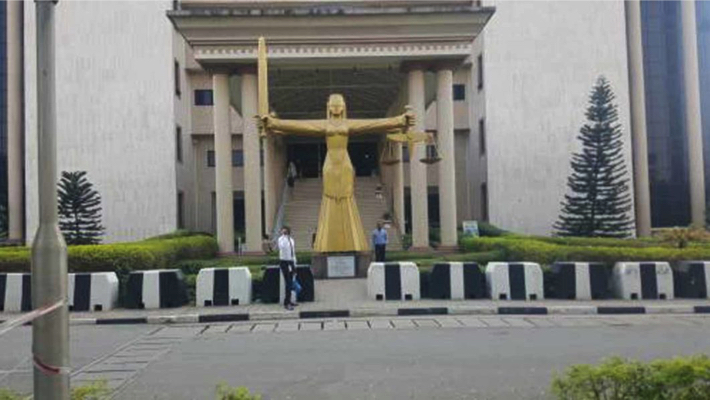
The Federal High Court in Abuja on Wednesday barred the Independent National Electoral Commission(INEC) from recognising or taking part in any congress organised by the disputed caretaker leadership of the African Democratic Congress (ADC).
In a judgment delivered by Justice Joyce Abdulmalik, the court also barred former Senate President David Mark and other party figures from interfering with the functions and tenure of elected state executives.
The ruling marks the latest twist in the leadership crisis rocking the ADC, with implications for control of party structures ahead of future political activities.
Read More : Abia Arrests 86 Over Sanitation Violations
The suit was filed by Norman Obinna and six others on behalf of state chairpersons and executive committees of the party.
The plaintiffs challenged actions taken by the caretaker or interim national leadership, especially plans to organise state congresses through an appointed committee.
They argued that the caretaker body lacked constitutional authority to conduct congresses or appoint any committee for that purpose, insisting that only duly elected party organs recognised by the party constitution could do so.
They asked the court to affirm the tenure of the state executive committees and stop parallel processes that could weaken their authority.

In her ruling, Justice Abdulmalik held that the claims were valid and deserving of judicial consideration, citing alleged breaches of constitutional and statutory provisions.
She said the originating summons was meritorious and identified the key issue as whether Mark and the other defendants had the authority to assume powers belonging to elected state organs of the ADC.
The judge relied on Section 223 of the 1999 Constitution, which requires political parties to conduct periodic elections based on democratic principles, and Article 23 of the ADC constitution, which provides that national and state officers may serve a maximum of two terms spanning eight years.
She said the court had to determine whether Mark and the co-defendants acted unlawfully by convening meetings and appointing a congress committee to organise state congresses.
On the defence argument that the matter was an internal party affair beyond the court’s jurisdiction, the judge said courts generally avoid interfering in such disputes, but can intervene where constitutional or statutory breaches are alleged.
She ruled that where a party claims its constitution has been violated, the court is bound to hear the matter.
“The law is settled that courts will not interfere. However, where there is an allegation of breach of constitutional or statutory provisions, the court has a duty to intervene.
“Where a party alleges that its constitution has been violated, the court is bound to adjudicate. Any argument that this court lacks jurisdiction on that basis fails,” she said.
Justice Abdulmalik further held that political parties must act strictly within their constitutions and cannot justify departures from laid-down procedures under the guise of internal autonomy.
She found that the appointment of the congress committee was not recognised by the ADC constitution and was therefore invalid.
The court ruled that the tenure of the state executive committees remains valid and must run its full course without interference.
It also held that only the elected party structures have the authority to organise state congresses, effectively nullifying any process initiated by the caretaker leadership.
Among the orders issued, the court set aside the appointment of the congress committee and restrained INEC from recognising any congress conducted by it.
Read More : Gbajabiamila Denies PFIPC Allegations
Mark and the other defendants were also barred from organising congresses or conventions outside the provisions of the party constitution or taking steps capable of disrupting the authority of the state executive committees.
The defendants in the suit include the ADC, David Mark, Patricia Akwashiki, Bolaji Abdullahi, Rauf Aregbesola, Oserheimen Osunbor and INEC.
They had opposed the suit through preliminary objections and argued that the dispute was an internal party matter, that the plaintiffs lacked legal standing, and that internal dispute resolution mechanisms had not been exhausted.