Trending

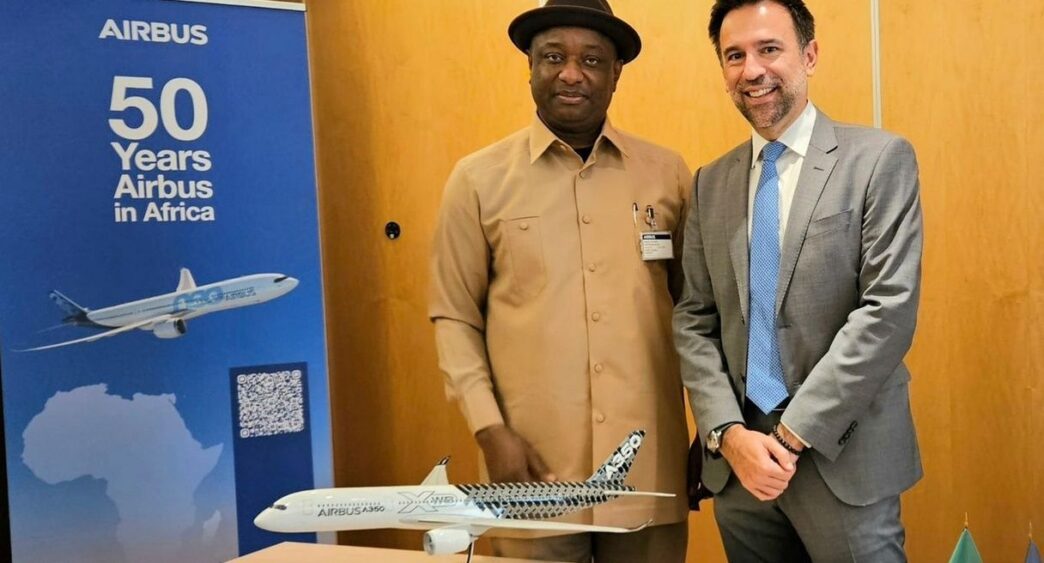
Nigeria has taken a significant step towards strengthening its aviation sector by signing a strategic agreement with European aircraft manufacturer Airbus in Toulouse, France.
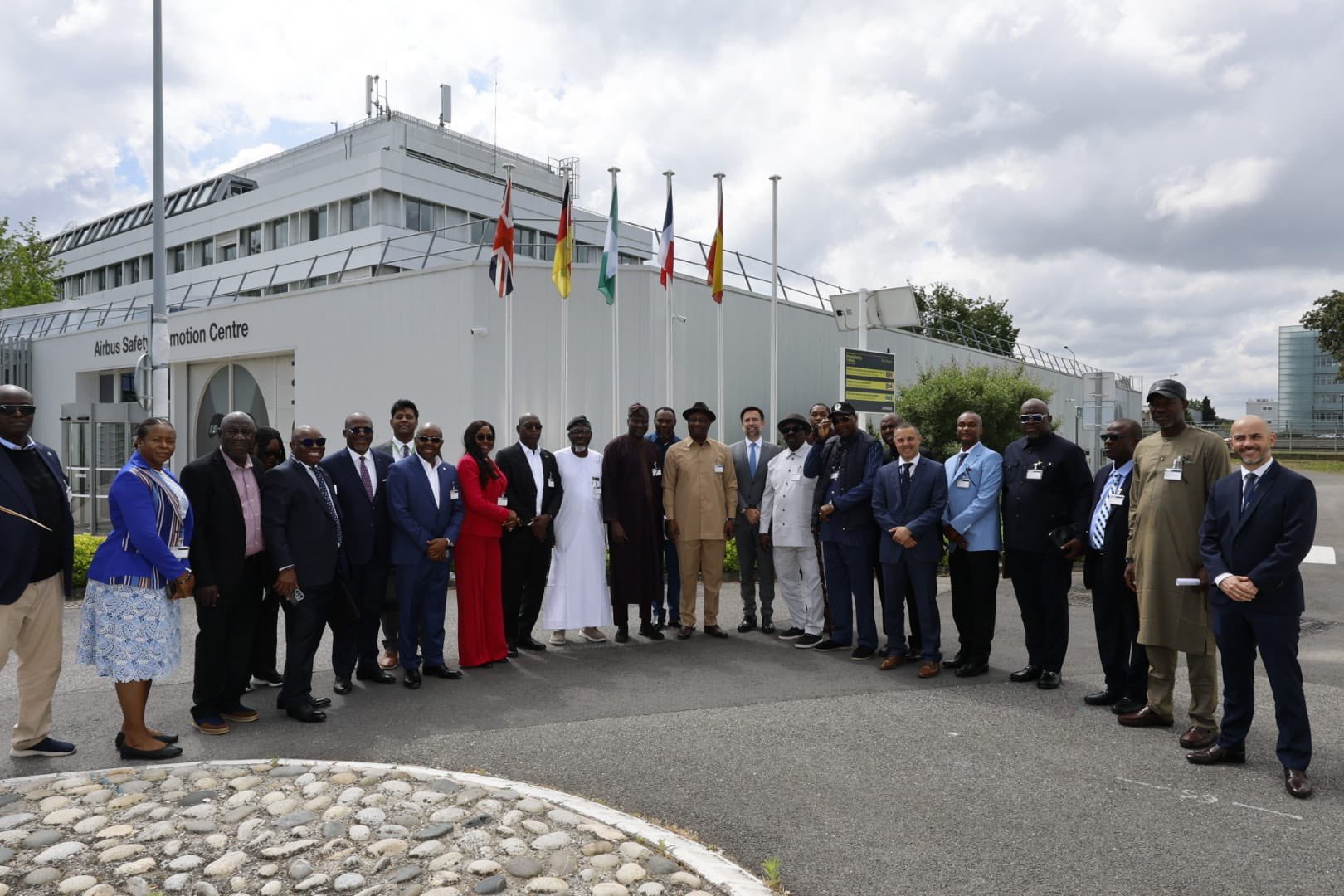
The agreement, described as a “Working Together Agreement,” was formalised during a high-level visit led by a Nigerian delegation led by the Minister of Aviation and Aerospace Development, Festus Keyamo, at the company’s headquarters.
According to Keyamo, the visit came “at the invitation of aircraft manufacturing giants, Airbus,” with the delegation engaging in discussions aimed at repositioning Nigeria within the global aviation ecosystem. The agreement outlines a multi-pronged approach covering fleet expansion, infrastructure development, human capital investment, and long-term market positioning.
Read More : Naira-Dollar Rate Gap Hits ₦84
Today, at the invitation of aircraft manufacturing giants, Airbus, I led a high-level delegation to its headquarters in Toulouse, France. At the occasion, on behalf of the Federal Republic of Nigeria, I signed a Working Together Agreement with the company.
Highlights of the… pic.twitter.com/MYKJ4UUUNw
— Festus Keyamo, SAN, CON, FCIArb (UK) (@fkeyamo) May 4, 2026
A central component of the deal is fleet expansion. The government intends to build on the “successful integration of the Airbus A220 (as seen with Ibom Air)” to strengthen Nigeria’s capacity in regional and continental flight operations. This move is expected to improve connectivity and operational efficiency across West Africa and beyond.
In addition to fleet growth, Airbus will provide technical and advisory support across key aviation segments. This includes consultancy services for Maintenance, Repair, and Overhaul (MRO) facilities, as well as operational guidance and market intelligence. The objective is to enhance Nigeria’s aviation infrastructure and align it with global best practices.
Read More : Dangote to Launch $16 Billion Refinery in Kenya
Human capital development also features prominently in the agreement. The partnership is expected to “create high-value jobs for the next generation of Nigerian talents” through specialised training programmes for pilots, engineers, and cabin crew. This reflects a broader push to build local expertise and reduce dependence on foreign technical personnel.
The agreement further positions Nigeria to capitalise on projected industry growth. Airbus’ Global Market Forecast estimates that Africa will require 1,490 new aircraft over the next two decades. Nigeria is seeking to secure a leading share of this demand by leveraging its geographic location as a strategic hub connecting multiple regions.
The visit concluded with commitments to deepen collaboration through technical exchanges, including planned inspections of Airbus’ Defence & Space and Helicopter divisions. The delegation also included members of the Airline Operators of Nigeria and other industry stakeholders, who participated in the trip independently.