Trending


The World Health Organisation (WHO) has confirmed two cases of hantavirus and five suspected cases among people on a cruise ship stuck off the coast of Cape Verde.
The WHO said on Tuesday that it was making attempts to contact passengers who boarded an April 25, 2026, flight between Saint Helena and Johannesburg, which was taken by one of the sickened cruise ship passengers, who died the following day.
“As of 4 May 2026, seven cases (two laboratory confirmed cases of hantavirus and five suspected cases) have been identified, including three deaths, one critically ill patient and three individuals reporting mild symptoms,” the WHO said in a statement.
Read More : Unknown Virus Leaks From Russian Lab
The United Nations (UN) health organisation said the illness onset occurred between April 6 and 28, 2026, on the cruise ship, which was travelling from Ushuaia in Argentina to Cape Verde off West Africa.
According to the WHO, the illness is characterised by fever, gastrointestinal symptoms, rapid progression to pneumonia, acute respiratory distress syndrome and shock. It added that it is investigating the case.
The WHO emphasised that the risk to the global population from the outbreak was “low”, adding that it would continue to monitor the situation.
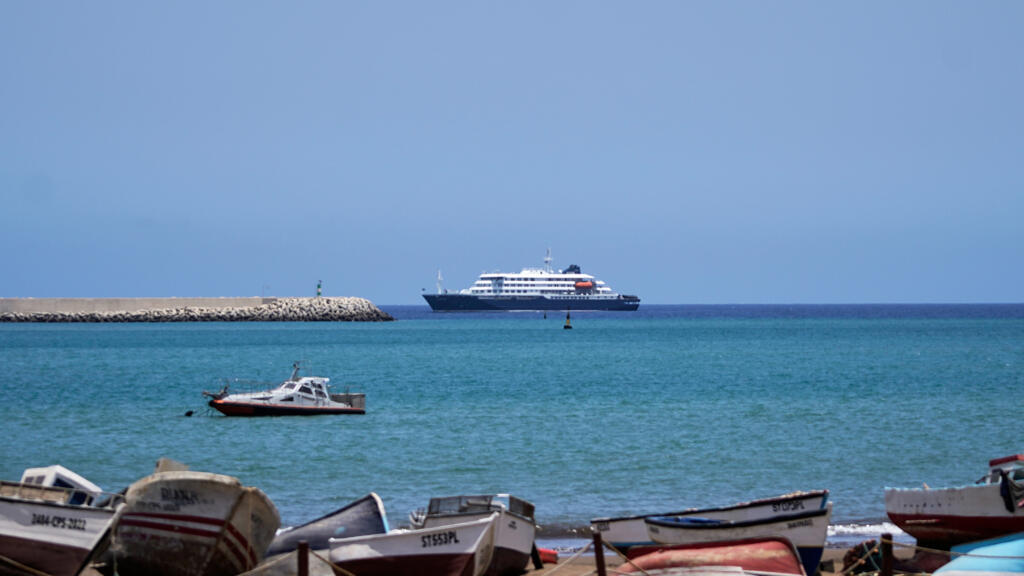
Passengers from Britain, Spain and the United States, as well as crew from the Philippines, were among 23 nationalities aboard the MV Hondius, which WHO said was currently carrying 147 people.
One of the passengers, a Briton, was in intensive care in Johannesburg, South Africa, and two crew — one British and the other Dutch — required “urgent medical care”, the ship’s operator, Oceanwide Expeditions, said in a statement.
Three of the identified cases were no longer on the ship, and four remained on board, including a German who died on Saturday.
The operator said the first deaths among the passengers were a Dutch couple — a husband who died on board on April 11 and his wife, who died after she disembarked the boat in St Helena to accompany his body.
Read More : DR Congo Ebola Deaths Surpass 4,000
The health agency added that the wife who left the ship with her dead husband on April 24, 2026, had been suffering from “gastrointestinal symptoms”.
“She subsequently deteriorated during a flight to Johannesburg, South Africa, on 25 April,” it said, adding that “she later died upon arrival at the emergency department on 26 April”.

Human hantavirus infection is a rare but severe and potentially deadly disease that is primarily acquired through contact with the urine, faeces, or saliva of infected rodents, but human-to-human transmission has also been reported in previous outbreaks.