Trending

The Nigerian authorities have declared that any admission conducted outside the Central Admissions Processing System (CAPS) is illegal, warning tertiary institutions across the country that violations of approved admission procedures will attract sanctions.
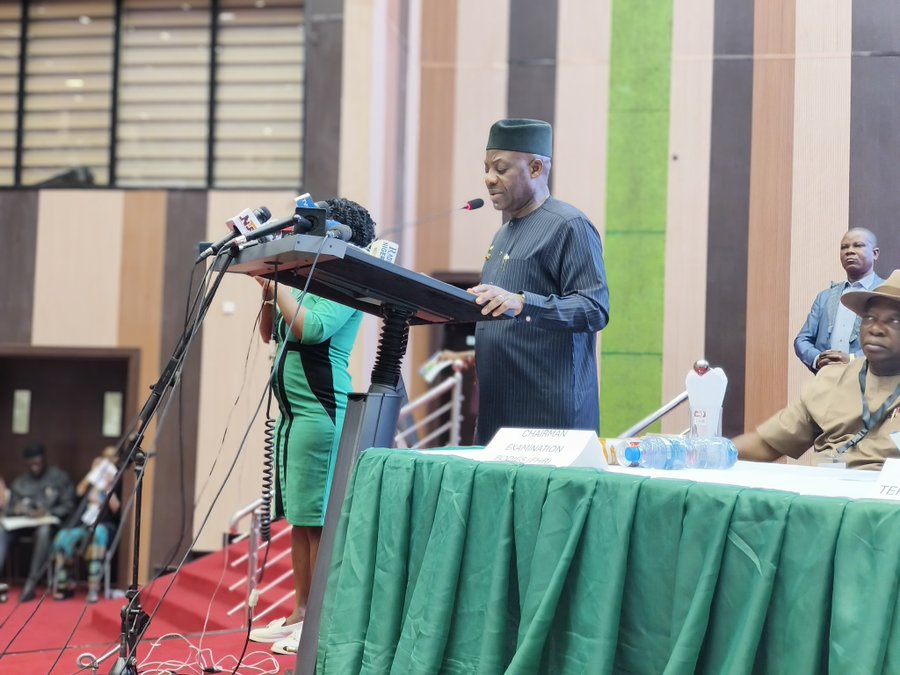
Minister of Education, Maruf Alausa, issued the warning on Monday at the 2026 Policy Meeting on Admissions to Tertiary Institutions held in Abuja.
“Let me reiterate, without equivocation, that admissions conducted outside this framework are illegal and will not be recognised,” Alausa said.
Read More : INEC Seeks Zazzau Emir Support for 2027
He warned that institutions that continued to bypass the Joint Admissions and Matriculation Board’s CAPS platform risked severe consequences.
“The era in which institutions operated parallel admission systems, often to the detriment of deserving candidates, must come to an end,” he added.
Alausa said authorities would not tolerate any breach of admission regulations, noting that erring institutions would be held accountable.
“I have resisted many attempts at condoning illegality in the admissions process. I will not be a party to such actions,” he said.
“Any institution found to have conducted admissions outside the CAPS will be held accountable, and appropriate sanctions shall be applied without hesitation.”

He warned that heads of institutions in both public and private sectors must be aware that such breaches could attract serious penalties, including regulatory action.
“Heads of institutions, whether in the public or private sector, must recognise that such violations could result in severe consequences, including the suspension of operating licences or other regulatory actions, where applicable,” Alausa said.
The minister announced that authorities had retained 16 years as the minimum age for entry into tertiary institutions.
“Following extensive consultations and policy reviews, the government has maintained sixteen (16) years as the minimum age for admission into tertiary institutions,” he said.
He explained that the decision reflected a balance between academic readiness and inclusivity, while noting that exceptional cases would be handled under strict guidelines.
“While we recognise the existence of exceptionally gifted individuals, such cases must be treated within clearly defined and rigorously enforced guidelines,” he added.