Trending
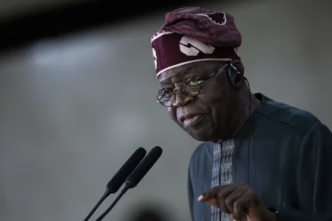
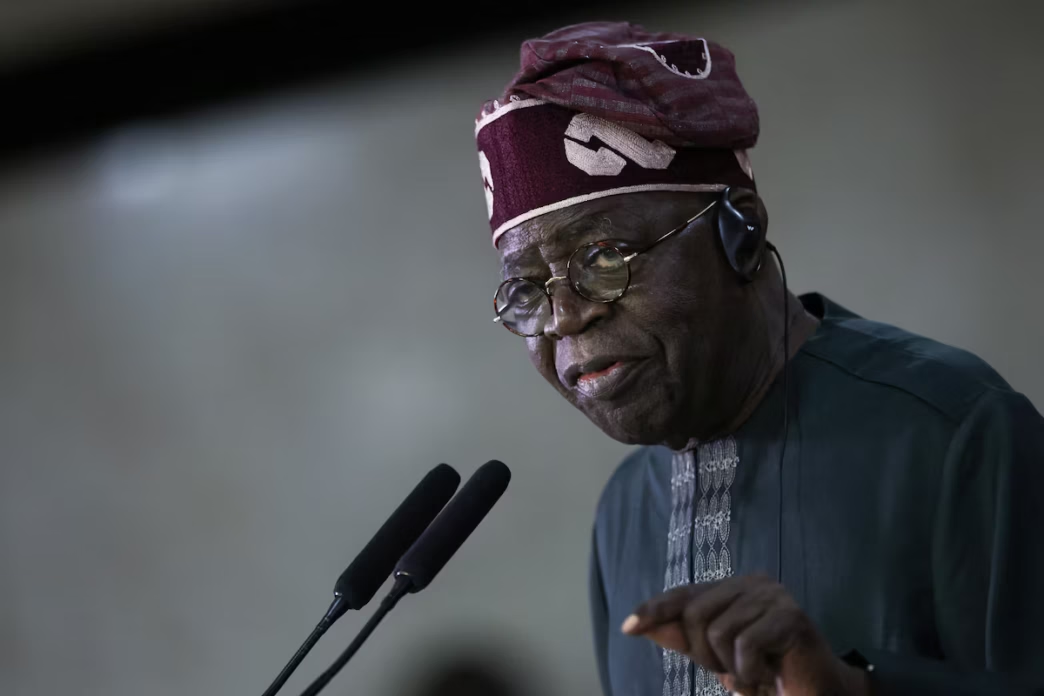
Nigeria’s President Bola Tinubu has called for an urgent overhaul of the global financial system, warning that soaring debt-servicing costs are severely crowding out essential spending on the country’s infrastructure, healthcare, and education.
Speaking at the Africa Forward Summit in Nairobi, Tinubu revealed that Nigeria is projected to spend $11.6 billion on debt service in 2026—nearly half of its total expected revenue.
He argued that the current international financial architecture unfairly penalises African nations with “punitive” interest rates, creating a structural barrier to growth.
Read More : Abia Arrests 86 Over Sanitation Violations
The president emphasised that the financial burden has intensified despite aggressive domestic reforms, including tax overhauls and the removal of costly subsidies.
He noted that debt costs have more than doubled from the $5.15 billion recorded in 2025, diverting funds that could otherwise revitalise the steel, textile, and digital industries.
Tinubu stressed that these high borrowing costs treat African sovereigns as high-risk regardless of their reform efforts, effectively draining the treasury of capital needed to train engineers and provide affordable power.
Read More : Gbajabiamila Denies PFIPC Allegations
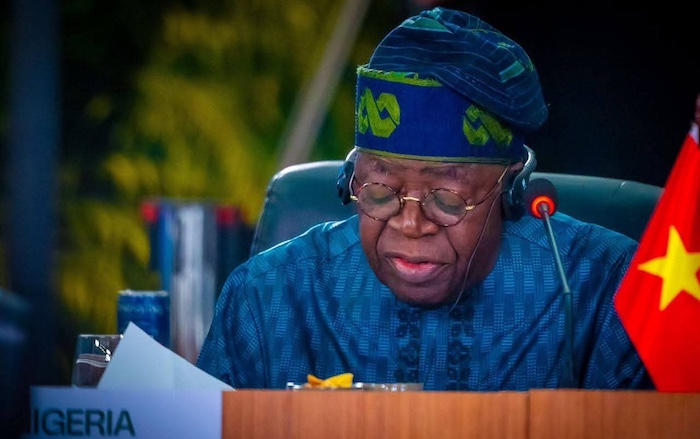
Insisting that Nigeria is seeking equity rather than charity, Tinubu demanded a system that intentionally enables African industrialisation and fair global competition.
He urged the international community to provide cheaper long-term financing and to support efforts to curb illicit financial flows.
As he looks toward the future, the president maintains that while his “homegrown” reforms have stabilised the economy, sustainable prosperity is only possible if the global financial system stops prioritising debt collection over African development.