Trending
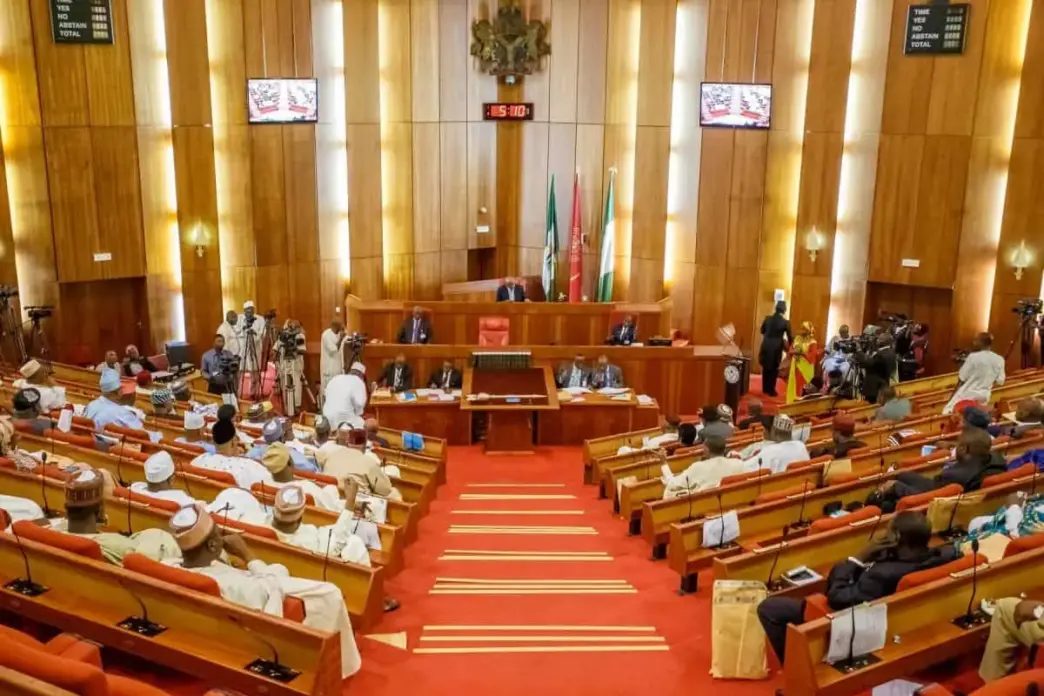
There is a peculiar ritual in Nigerian politics that has quietly become the defining feature of our democracy, or what remains of it. A governor serves two terms, builds a political war chest, appoints loyalists across every tier of government, then, constitutionally barred from a third term, does not retire to private life. He does not start a business, mentor young people, or write his memoirs. He goes straight for a Senate seat.
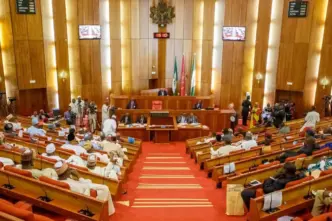
The Senate, Nigeria’s so-called “hallowed chambers”, has long moonlighted as the continent’s most expensive retirement home. But what was once a trickle has become a flood. And in 2027, it threatens to become a tsunami.
The Governors Are Coming. All of Them
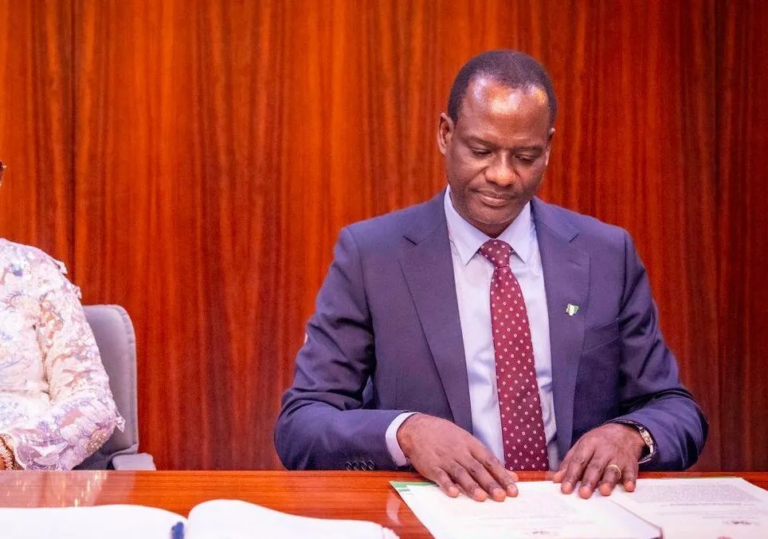
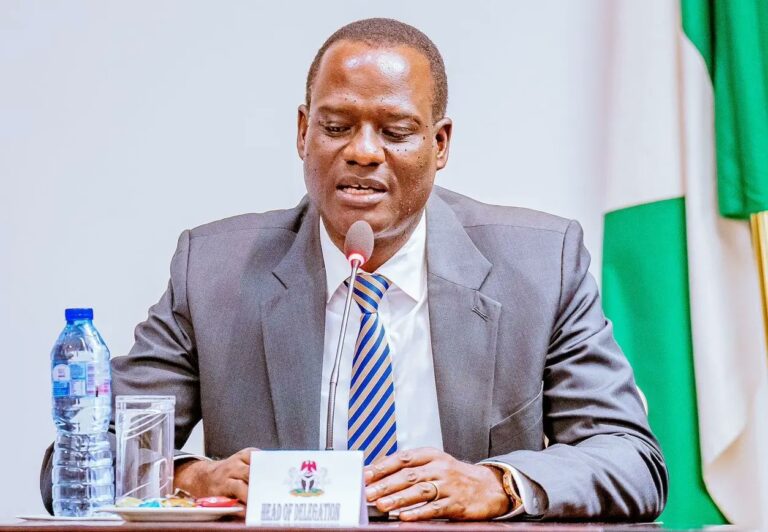
The numbers are staggering, and they are not rumours. According to multiple reports, no fewer than ten sitting governors are actively positioning themselves for Senate seats in the 2027 elections.
Read More : Atiku, NDC Fault 30-Day Petrol Discount
Among them: AbdulRahman AbdulRazaq of Kwara, Abdullahi Sule of Nasarawa, Ahmadu Fintiri of Adamawa, Babagana Zulum of Borno, Mai Mala Buni of Yobe, Dapo Abiodun of Ogun, Bala Mohammed of Bauchi, Muhammadu Inuwa Yahaya of Gombe, and Hope Uzodimma of Imo.
And that is just the sitting governors.
The queue of former governors lining up for or already occupying Red Chamber seats reads like a who’s who of Nigerian political royalty: Senate President Godswill Akpabio (ex-Akwa Ibom), Orji Uzor Kalu (ex-Abia), Danjuma Goje (ex-Gombe), Gbenga Daniel (ex-Ogun), Seriake Dickson (ex-Bayelsa), Simon Lalong (ex-Plateau), Aliyu Wamakko (ex-Sokoto), Abdulaziz Yari (ex-Zamfara), Adamu Aliero (ex-Kebbi), Abubakar Bello (ex-Niger) and Adams Oshiomole (ex-Edo) amongst others.
Still plotting their re-entry into the political fray are names like Ibikunle Amosun, Ifeanyi Okowa, Yahaya Bello, Samuel Ortom, Aminu Tambuwal, and Jolly Nyame.
One simple question: why?

Perpetual Power, Permanent Relevance
Governor Abdullahi Sule of Nasarawa vowed publicly on national television that he would not seek elective office after his tenure. He has since reversed course, citing, as they all do, “immense pressure from stakeholders.”
Governor Dapo Abiodun is sparring with incumbent Senator Gbenga Daniel, a former governor himself, for the same Ogun East ticket.
In Kwara, Governor AbdulRazaq is squaring up against Senator Saliu Mustapha. Even in states where consensus has been manufactured, it has been manufactured through political muscle, with sitting senators shunted aside or simply told to step down. This is not succession planning. This is a power elite eating itself and eating Nigeria in the process.
The appeal of the Senate, Nigerians know well, has little to do with the nobility of lawmaking. It has everything to do with what a Senate seat delivers: fat allowances reportedly worth over ₦14 million per month, salary and running costs combined, constituency project funds of around ₦200 million annually, federal immunity from political irrelevance, proximity to the presidency, and a platform to influence gubernatorial succession back home.
In a country where the minimum wage hovers around ₦70,000, the average worker would take decades to earn what a senator pockets in a single year.
“It is about perpetual access to power, immunity and a bottomless public treasury,” one analysis bluntly put it. Nigerians need not be told this. They have watched it for 26 years.
The Rubber Stamp That Dares Not Stamp Back
There is a deeper constitutional rot at work here. When a former governor enters the Senate, he does not arrive as a humble legislator representing his constituents. He arrives as a political Goliath with his own party structure, his own financial firepower, his own network of loyalists, and in many cases, his own ongoing interest in who sits in Aso Rock. He does not need to represent you. He needs to protect himself.
This, critics argue, is precisely why Nigeria’s Senate has functioned less as a check on executive power and more as its most reliable enabler.
The relationship between the current 10th National Assembly and President Tinubu’s executive arm has been characterised by critics as one of almost seamless acquiescence.
When pressed on the “rubber stamp” label, the Senate’s own spokesman offered a defence so extraordinary it became infamous: he argued that rubber stamps are useful because “without the rubber stamp, a certified true copy is invalid.”
He was not wrong. He just inadvertently confirmed the problem.
A legislature populated by former chief executives who owe their political survival to the same party machinery that installed the president cannot be expected to provide independent oversight. These are not lawmakers who rose through grassroots activism, community organising, or legal advocacy. They are executives on sabbatical, waiting for the next opportunity, a ministerial post, a vice-presidential slot, or even a presidential run, while collecting their monthly stipends and stamping whatever arrives on the table.
The Democracy That Forgot Its Citizens
Meanwhile, the people these senators nominally represent are largely invisible in this calculus.
Across Nigeria, infrastructure decays, schools lack teachers, hospitals lack drugs, and insecurity metastasises. But in the Senate, the business of the day is often bills that seem designed more to protect political interests than public welfare, budget passages that prioritise recurrent expenditure over capital investment, and confirmation hearings that rubber-stamp presidential nominees with surgical speed.
The incoming wave of ex-governors will likely entrench this further. When powerful former chief executives arrive in the Senate, they restructure its internal politics. They jostle for principal officer positions. They use their clout to influence state-level decisions from Abuja. They become federal proxies for state-level godfatherism. And the ordinary senator, even one with the best intentions, finds himself overwhelmed by the weight of this political aristocracy.
The International IDEA observed last year that Nigeria’s political landscape has been marked by “heightened elite bargaining” and dynamics that consistently relegate governance to advancing electoral ambition. The observation is clinical. The reality is gut-wrenching.
The Systemic Disease Has a Name
What Nigeria is witnessing is not a quirk or an aberration. It is a structural feature of a political economy that has never truly separated elite self-interest from state power.
Term limits were introduced to break the monopoly on executive power. But without equivalent protections against elite recycling in the legislature, term limits merely redirect the same power into the next available container.
In functional democracies, legislators rise from civil society, professional life, trade unions, academia, and community leadership. They bring the experience of ordinary life into the business of lawmaking.
Nigeria’s Senate increasingly resembles a political storage facility for those who have already exhausted their constitutional shelf life elsewhere.
Civil society groups have raised alarms about what ThisDay described as “the recycling of political elites at the expense of younger Nigerians.” They are right to be alarmed. Every governorship-to-Senate transition is a seat that could have gone to a teacher, a doctor, a farmer, an activist, an entrepreneur, a woman or someone for whom public service is not a career extension but a genuine calling.
What Must Change
The answer is not simply to bar former governors from the Senate, though a constitutional conversation about cooling-off periods, or single-term caps for former chief executives entering the legislature, deserves serious debate. The more fundamental change must come from the electorate.
Nigerians must stop treating name recognition as a credential. They must demand that candidates articulate specific legislative priorities. They must hold senators accountable for committee attendance, bill sponsorship, constituency presence, and budget scrutiny. Civil society must publish scorecards. The media must track records, not just personalities.
And perhaps most urgently, Nigeria’s political parties must be reformed from the inside, because what Tinubu’s reported instruction to governors about “overseeing candidate selection” makes clear is that the Senate is being staffed from above rather than chosen from below.
The Red Chamber is being filled not by popular will but by presidential preference.
The Price of the Retirement Home
Nigeria is a country of over 220 million people. It is the largest economy in Africa. It has a young, dynamic, innovative population straining against a political ceiling held up by the same hands that have gripped the levers of power for decades.
Read More : Oborevwori Urges Deltans to Collect PVCs
The governors heading for the Senate in 2027 will arrive with press releases about “service,” “experience,” and “giving back.” Some may even mean it. But the system they perpetuate, the one in which political survival trumps public good, in which the Red Chamber functions as a refuge rather than a regulator, in which the executive governs, and the legislature nods, that system is costing Nigeria dearly.
Every year that the Senate fails to be what it was designed to be — an independent, powerful, people-centred check on executive power is another year that infrastructure goes unbuilt, another year that accountability goes unpursued, another year that democracy remains, for most Nigerians, a word on a ballot rather than a force in their lives.
The hallowed chambers is getting more crowded and Nigeria is getting poorer for it.