Trending
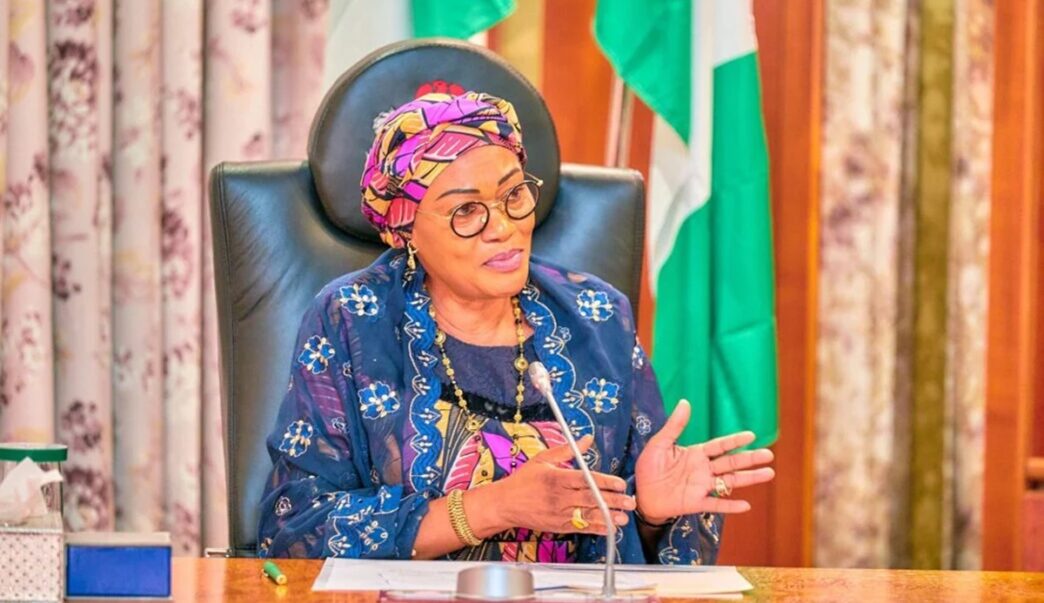
Nigeria’s First Lady, Oluremi Tinubu, has urged stronger action against child marriage and called for improved access to maternal healthcare and girls’ education.
In a statement issued on Saturday to commemorate the International Day to End Obstetric Fistula, she said no woman or girl should suffer from a condition that is both preventable and treatable.
MESSAGE ON THE INTERNATIONAL DAY TO END OBSTETRIC FISTULA
(MAY 23, 2026) pic.twitter.com/pdsWT1BjIK— Office Of The First Lady (@statehouse_Fl) May 23, 2026
The First Lady stressed that quality maternal healthcare must be treated as a basic right, not a privilege, in line with this year’s theme, “Her Health, Her Right: Shaping a Future without Fistula.”
She warned that early marriage and early pregnancy remain major drivers of obstetric fistula, noting that many girls are not physically developed for childbirth.
According to her, harmful cultural practices and lack of awareness continue to limit access to skilled medical care and essential health information.
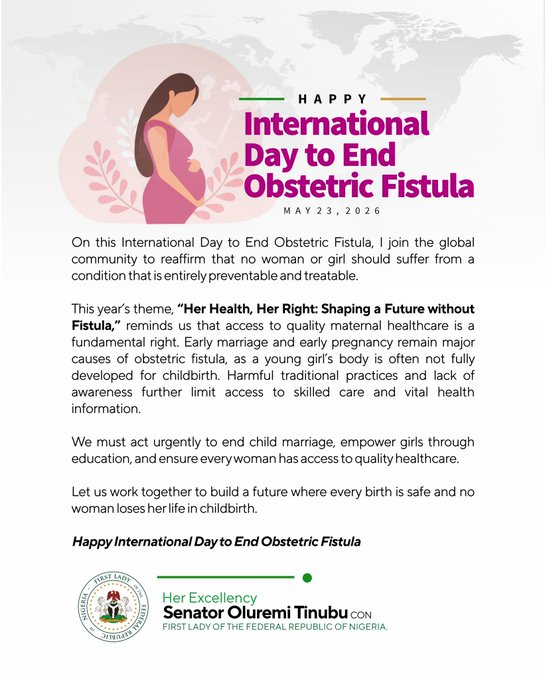
She further emphasised that urgent steps are needed to end child marriage, empower girls through education, and ensure universal access to quality healthcare.
She added that collective action was necessary to ensure safer childbirth outcomes, stressing that no woman should die while giving life.
“Harmful traditional practices and lack of awareness further limit access to skilled care and vital health information.
“We must act urgently to end child marriage, empower girls through education, and ensure every woman has access to quality healthcare.
“Let us work together to build a future where every birth is safe and no woman loses her life in childbirth,” she said.
Read More : Ex-Power Minister Denies Anti-APC Remarks
Obstetric fistula, a childbirth injury caused by prolonged obstructed labour without timely medical intervention, can lead to chronic incontinence, stigma and severe psychological trauma.
Health data cited by the United Nations Population Fund (UNFPA) estimates that between 400,000 and 600,000 women in Nigeria are currently living with the condition, with about 20,000 new cases recorded annually.
Most cases are reported in the North-West and North-East, where child marriage rates are high and access to maternal healthcare remains limited.