Trending
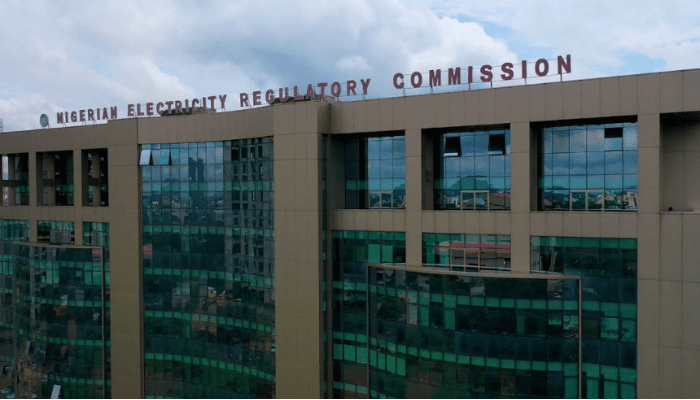
The Nigerian Electricity Regulatory Commission (NERC) has introduced the Net Billing Regulations 2026, a new framework that allows eligible electricity consumers to generate their own power, primarily through renewable sources such as solar, and sell excess electricity back to the national distribution network.
In a post on X(formerly Twitter), NERC said the policy enables users whose generation exceeds their consumption to export surplus electricity to their Distribution Companies (DisCos) in exchange for credits under a regulated billing system.
COMMENCEMENT OF THE NET BILLING REGULATIONS 2026
Read More : Abia Arrests 86 Over Sanitation Violations
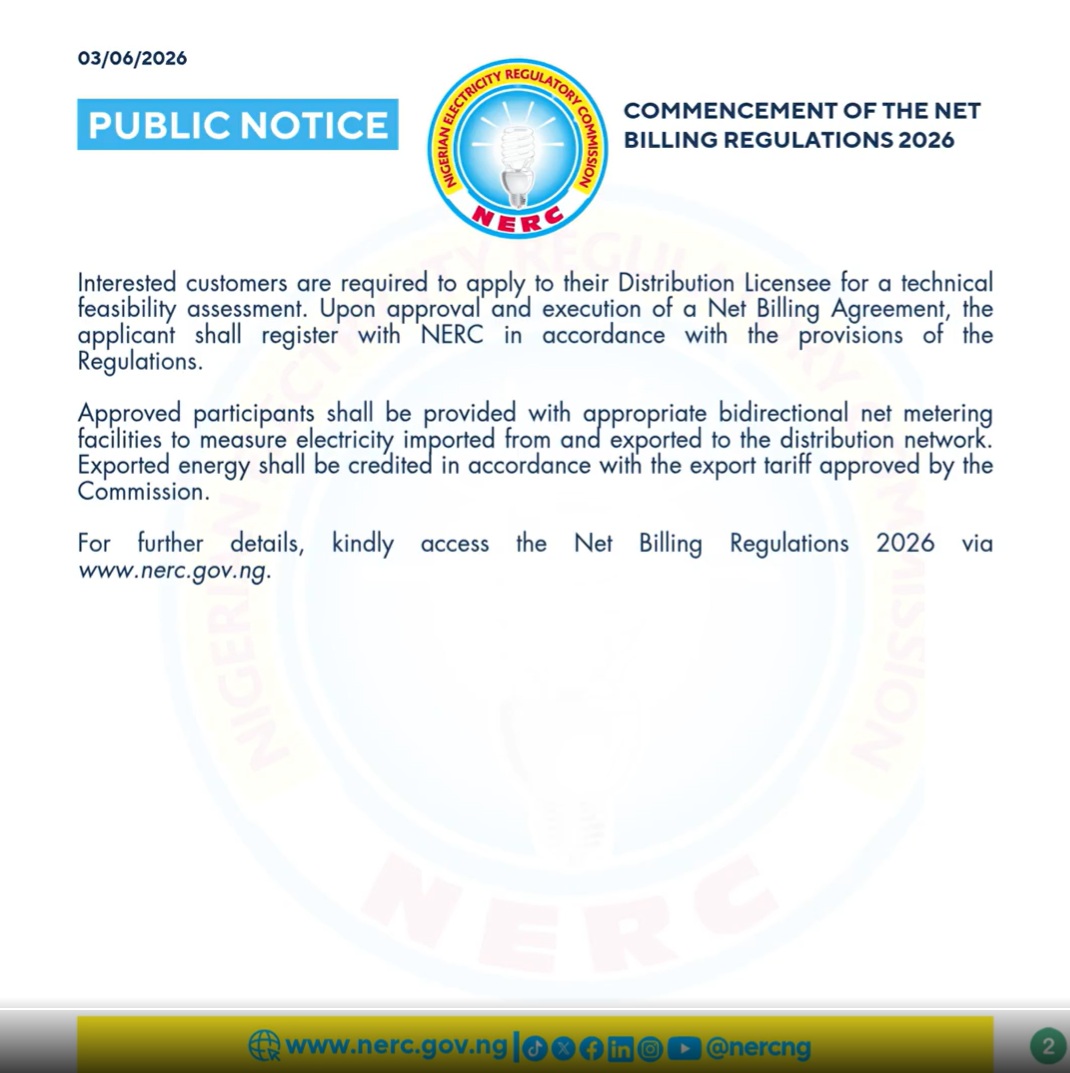
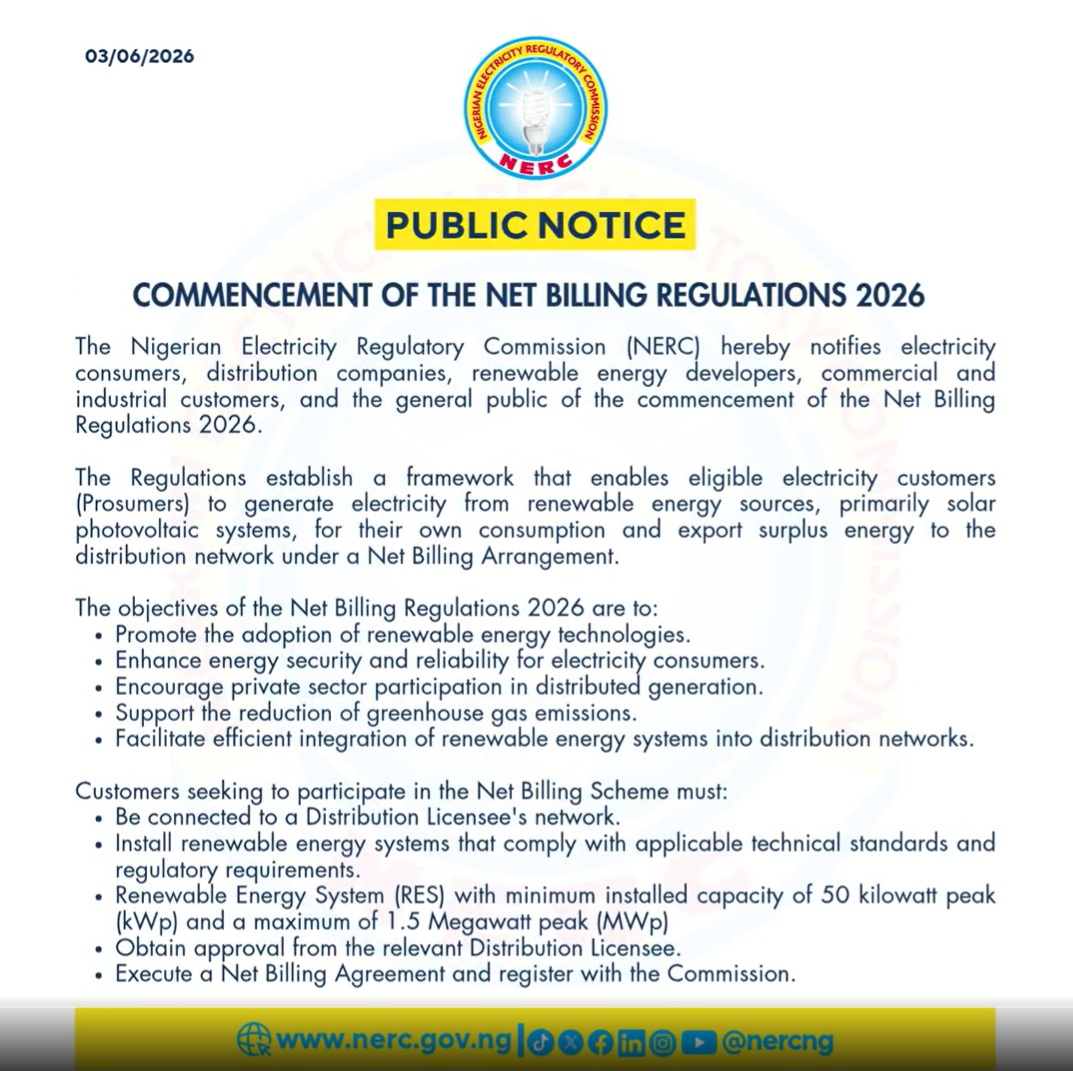
The Nigerian Electricity Regulatory Commission (NERC) hereby notifies electricity consumers, distribution companies, renewable energy developers, commercial and industrial customers, and the general public of the commencement of… pic.twitter.com/qxj6n5n5W7
— NERC Nigeria (@NERCNG) June 3, 2026
Under the arrangement, participating consumers will operate as “prosumers”, a term used to describe individuals or entities that both produce and consume electricity.
The commission, however, said the scheme is not intended for small-scale residential solar installations, as it applies only to qualified users who meet specific technical and regulatory requirements.
Read More : Gbajabiamila Denies PFIPC Allegations
To be eligible, applicants must already be connected to a DisCo network and operate a renewable energy system with an installed capacity between 50 kWp and 1.5 MWp. They are also required to obtain approval from their DisCo and register with NERC under a Net Billing Agreement.
Approved participants will be provided with bidirectional meters capable of measuring both electricity drawn from the grid and power exported back into it.
NERC said the framework is designed to encourage the adoption of renewable energy, improve grid efficiency, and expand private participation in electricity generation.