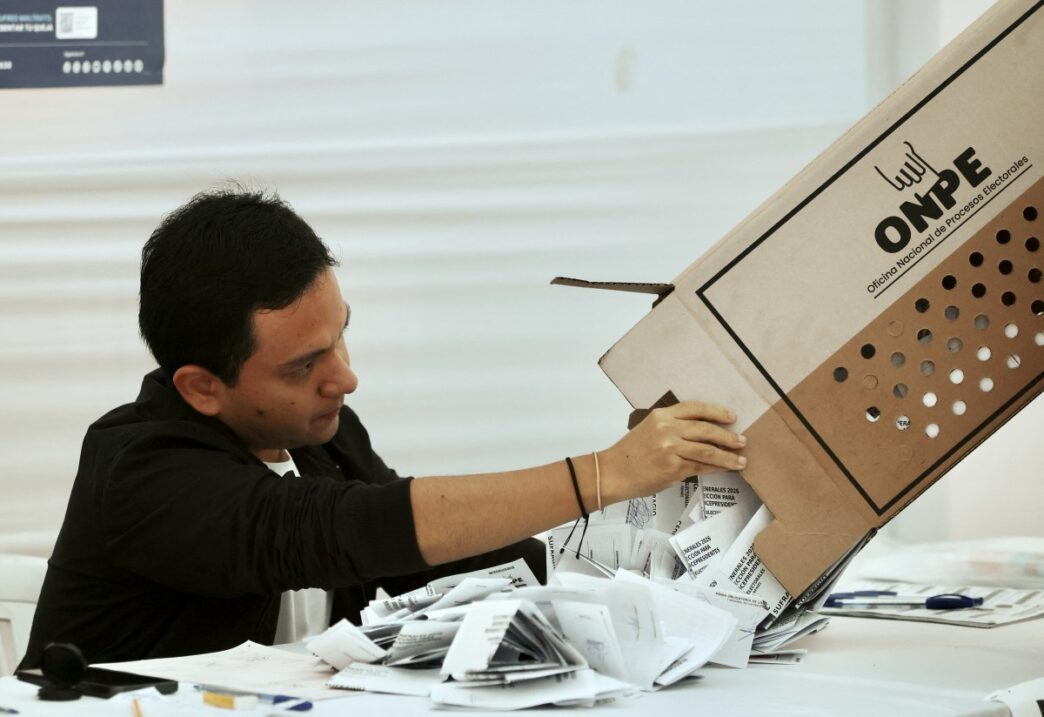
A Peruvian election official counts votes during the presidential election runoff in Lima on June 7, 2026. Peruvians will choose their ninth president in 10 years, in a tight runoff election between conservative Keiko Fujimori and leftist Roberto Sanchez who are trying to woo voters fed up with political chaos and rising crime. (Photo by Connie FRANCE / AFP)
Voting stations have closed across Peru following a closely contested presidential runoff election, with exit polls showing conservative candidate Keiko Fujimori holding a razor-thin lead over her leftist rival, Roberto Sanchez.
According to exit polls conducted by Ipsos and other polling organisations, Fujimori secured 50.7 per cent of the vote compared to Sanchez’s 49.3 per cent, placing the race within the margin of error and effectively making it too close to call.
The election has been dominated by concerns over rising crime and widespread frustration with Peru’s prolonged political instability. The South American nation is seeking its ninth president in just a decade, following years marked by impeachment, resignation, arrest, and political turmoil.
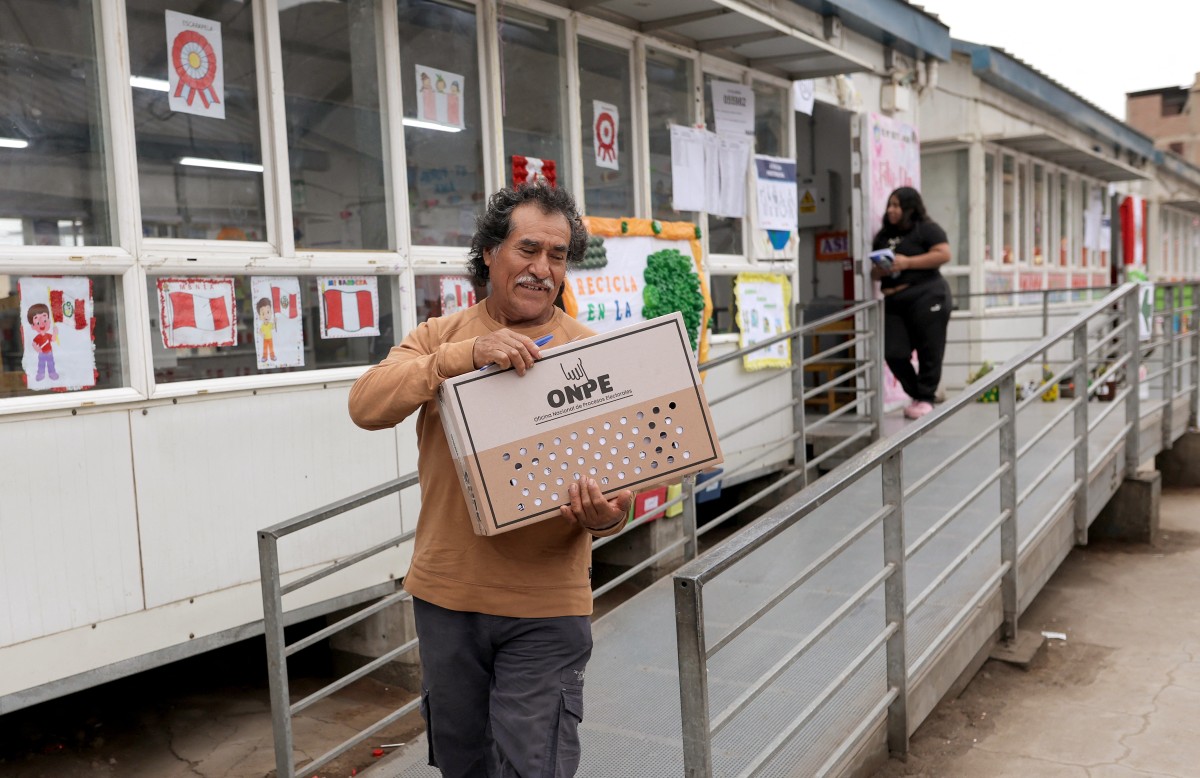
A Peruvian election official moves a ballot box for the vote counting of the presidential election runoff in San Juan de Lurigancho district, province of Lima, Peru on June 7, 2026. Peruvians will choose their ninth president in 10 years, in a tight runoff election between conservative Keiko Fujimori and leftist Roberto Sanchez who are trying to woo voters fed up with political chaos and rising crime. (Photo by Anthony Nino de Guzman / AFP)
Many voters expressed a desire for stability above all else. One voter, 23-year-old Renzo Masa, described the choice as selecting the “lesser evil” amid widespread dissatisfaction with the political class.
Fujimori, making her fourth attempt at the presidency, campaigned on a tough-on-crime platform. She drew support from voters who favour stricter security measures and often invokes the legacy of her father, Alberto Fujimori, who is credited by supporters with stabilising Peru’s economy and defeating a Maoist insurgency, despite later being convicted of corruption and crimes against humanity.
Her campaign promises include militarising prisons, deporting undocumented migrants and adopting a hard-line approach to organised crime similar to policies implemented during her father’s administration.
Sanchez, a former psychologist, gained momentum in the latter stages of the campaign, particularly among poorer rural communities. While he initially advocated sweeping reforms, he has since moderated his positions and pledged to maintain a constructive relationship with US President Donald Trump.
The runoff follows a problematic first-round election in April, which was marred by logistical challenges and a prolonged vote-counting process, further eroding public trust in state institutions.
More than 27 million Peruvians were eligible to vote in the election, where participation is compulsory.
The campaign was also marked by controversy after a judge ruled on the eve of the election that Sanchez should stand trial over alleged financial irregularities involving his political party. His supporters criticised the timing of the decision and suggested it could influence the electoral process.
If elected, Sanchez would enjoy presidential immunity while in office, although he would still face potential political challenges from Peru’s right-leaning Congress, which has played a central role in removing several recent presidents.
Sanchez has received backing from Pedro Castillo, the former schoolteacher-turned-president who was jailed after attempting to dissolve Congress in 2022. Sanchez has indicated he would seek to pardon Castillo if elected.
Political analysts say neither candidate is likely to command a legislative majority, meaning the eventual winner will need to build alliances in Congress to govern effectively.
The next president will replace interim leader Jose Maria Balcazar when the new administration takes office on July 28.
While political instability remains a major concern, security has emerged as the defining issue for many Peruvians as criminal gangs expand their influence and extortion cases continue to rise sharply.
Economically, the incoming president will inherit a relatively stable environment, with growth exceeding three per cent and inflation remaining low. However, a large informal sector continues to dominate the labour market, with around 70 per cent of workers employed outside the formal economy.
Fujimori has pledged to maintain market-friendly economic policies and encourage foreign investment, while Sanchez has promised wage increases and reassured investors that he would preserve central bank independence and an open economic system.
Toyibat is a highly motivated Mass Communication major and results-oriented professional with a robust foundation in media, education, and communication. Leveraging years of hands-on experience in journalism, she has honed her ability to craft compelling narratives, conduct thorough research, and deliver accurate and engaging content that resonates with diverse audiences.
Weekly roundups. Sharp analysis. Zero noise. The NewsCentral TV Newsletter delivers the headlines that matter—straight to your inbox, keeping you updated regularly.
 Trending