Trending
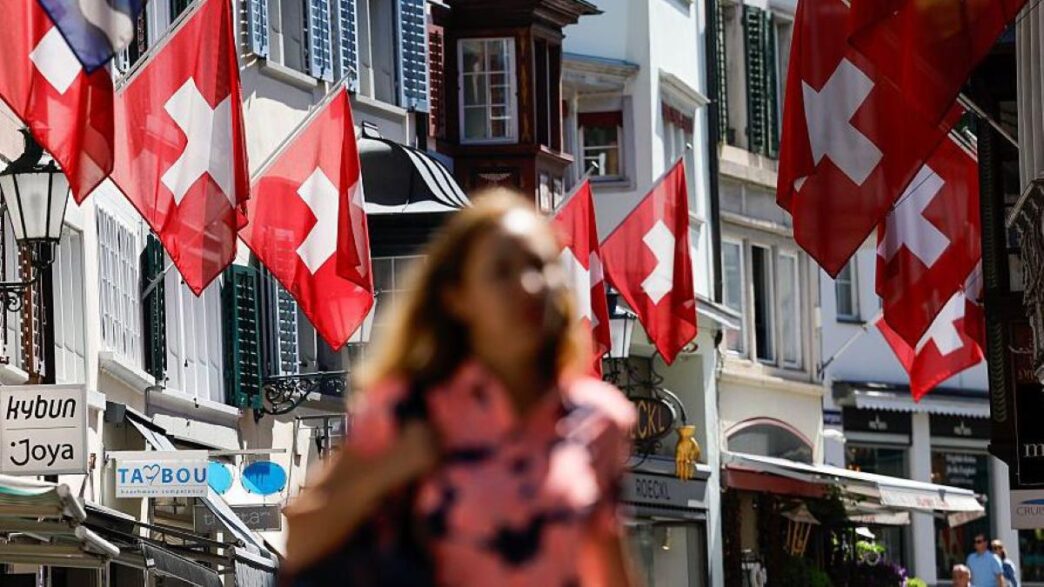
Switzerland will decide on Sunday whether to impose a legal cap on its population at 10 million, in a referendum that has exposed deep divisions over immigration, housing, and the country’s future relationship with Europe.
The proposal, backed by the right-wing Swiss People’s Party, is framed as a “sustainability initiative” aimed at reducing pressure on housing, public services, and the environment. Supporters argue that rapid population growth has strained infrastructure and public systems beyond capacity.
Opponents, including the Swiss government, major political parties, business groups, and trade unions, have dismissed it as a “chaos initiative.” They warn it could trigger severe labour shortages, undermine public services, and damage Switzerland’s long-standing economic ties with the European Union.
Read More : Smotrich Calls for Gaza, Lebanon Annexation
Switzerland’s population has risen sharply from 7.3 million in 2002 to about 9.1 million today, with roughly 27% of residents being foreign nationals. Concerns over overcrowded transport systems, rising rents, and increasing health insurance costs have fuelled public anxiety ahead of the vote.
Opinion polls suggest a tight contest, with about 52% leaning toward rejection, 45% in favour, and a significant number of undecided voters still in play.
The debate has been sharply reflected in exchanges between young politicians on opposing sides. Swiss People’s Party representative Nils Fiechter argues that “we have lost control,” claiming that “unchecked immigration is leading to Switzerland no longer being Switzerland.” He links immigration to “housing shortage, gridlocked traffic, overburdened schools and strained social services.”
By contrast, Social Democrat councillor Helin Genis rejects that framing, saying: “It is not migrants who determine rent levels. It is not migrants who raise health insurance premiums.” She adds that viewing national challenges “through the lens of migration does not lead to solutions, but to division.”
Genis also argues the focus should shift away from restriction toward structural reform. “The key question is not how to exclude people,” she says, “it is how we create enough affordable housing, ensure good working conditions, and invest in a strong public service.”

If approved, the proposal would require Switzerland to enforce the 10 million ceiling before 2050 and take action once the population reaches 9.5 million. Measures could include tighter asylum limits and restrictions on family reunification. In the most extreme case, Switzerland may have to withdraw from international agreements, including EU free movement rules.
That prospect has alarmed business leaders. Economiesuisse economist Rudolf Minsch warns that the country could face “challenges in our relations with the European Union,” noting that the EU remains Switzerland’s most important trading partner and that Switzerland depends on “stable and clear relationships.”
Read More : Russian Strikes Kill Five in Ukraine
Labour market concerns are also central. Immigrants make up a significant share of workers in healthcare, hospitality, and social care, sectors already under pressure from an ageing population.
Social Democrat MP Jon Pult warns that the policy could leave Switzerland “alone in this unstable and dangerous world,” pointing to global tensions and rising trade uncertainty. Supporters dismiss these fears as exaggerated, insisting the initiative is about preserving Swiss prosperity and stability.
With geopolitical anxieties and domestic pressures converging, Sunday’s vote has become a broader test of how Switzerland defines control, openness, and economic survival in an increasingly interconnected world.