Trending


Six months after gunmen dragged them from their village, 163 hostages rescued from forest camps in north-central Nigeria are receiving treatment for malnutrition, skin diseases and fractures, with many requiring psychological support, doctors said.
The patients were among 308 people freed from captivity in the Kainji Lake National Park forest earlier this month.
Suspected terrorists had attacked their village, Woro, in February, killing at least 165 people and abducting scores more.
Read More : Tinubu Ends Vacation, Heads to Lagos
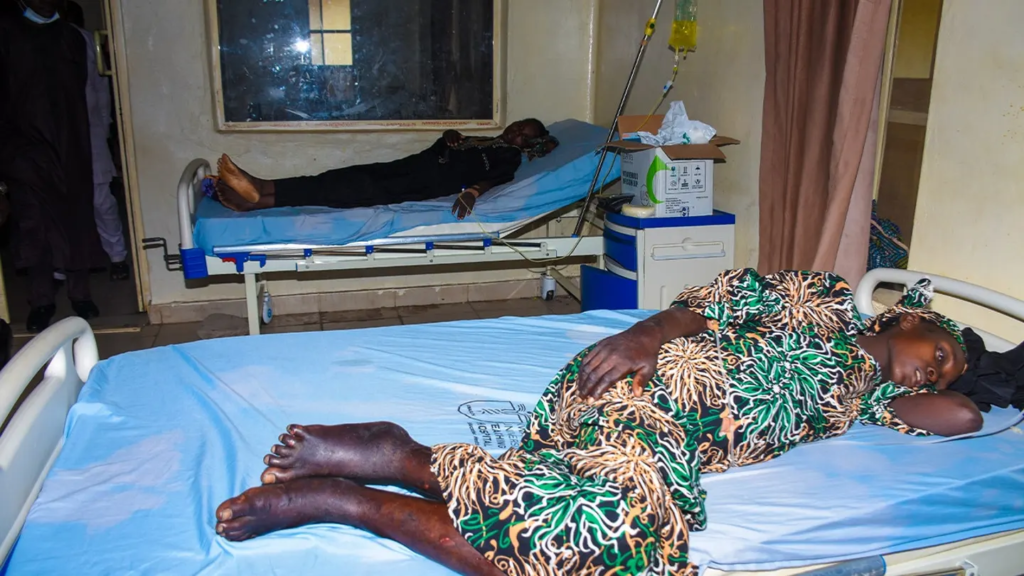
At the Kwara State University Teaching Hospital in Ilorin, patients lay on beds, some attached to respirators, as medical staff attended to them.
A nurse told AFP that some patients still required blood transfusions.
Captives describe harsh conditions
The victims were held at a camp with more than 100 others seized from other villages, including Kasuwan Daji and Konkoso in Niger State, according to Woro village head Umar Bio Salihu.
Thirteen people from Woro died in captivity, he said, adding that 13 others remained in captivity.
During their ordeal, hostages were fed tuwo, a thick porridge made from guinea corn, and a thin soup made from river water and salt.
Occasionally they received seasoning cubes or beef from cattle they believed were stolen.
“We thank God we are out,” said a gaunt victim named Hajara.
“I do not wish that on even my enemies. It was like we just came back from hellfire.”
Amira Salihu, a 25-year-old nurse whose two brothers were killed in the February attack, told AFP that captives who left their sleeping areas without permission were beaten.
She said more than a dozen women gave birth while in captivity, with deliveries conducted by torchlight using bare hands.
“I borrowed a razor blade to cut the placenta,” she said.
“When they came they were quite bad… severe malnutrition, lots of skin diseases, some had fractures, some mothers have just delivered,” said Ahmed Bola Abdulkadir, the hospital’s chief medical director.
He said many patients also required treatment for psychological trauma.
Village slowly recovers
At a police-guarded hotel where some freed hostages are staying, scores of victims, mostly young children, gathered for lunch.
“I am happy seeing them like this,” village head Salihu told AFP. He has been travelling between Woro and Ilorin, about 200 kilometres away, to check on the victims as they recover under government care.
Despite the scale of the tragedy, Woro is returning to life, resident Isah Mogaji told AFP, with the village market operating normally.
“The community is very happy now,” Salihu said. “They are waiting to receive their people.”
Read More : Tinubu Hosts Otedola at Private Paris Dinner
Kidnappings have become a major source of revenue for armed groups across northern and central Nigeria, including terrorists and bandit militias.
The practice has evolved into a multi-million-dollar industry, according to SBM Intelligence, a Lagos-based consultancy.
The government has touted the rescue of the Woro villagers as a significant achievement, but the crisis continues to affect communities across the region.