Trending
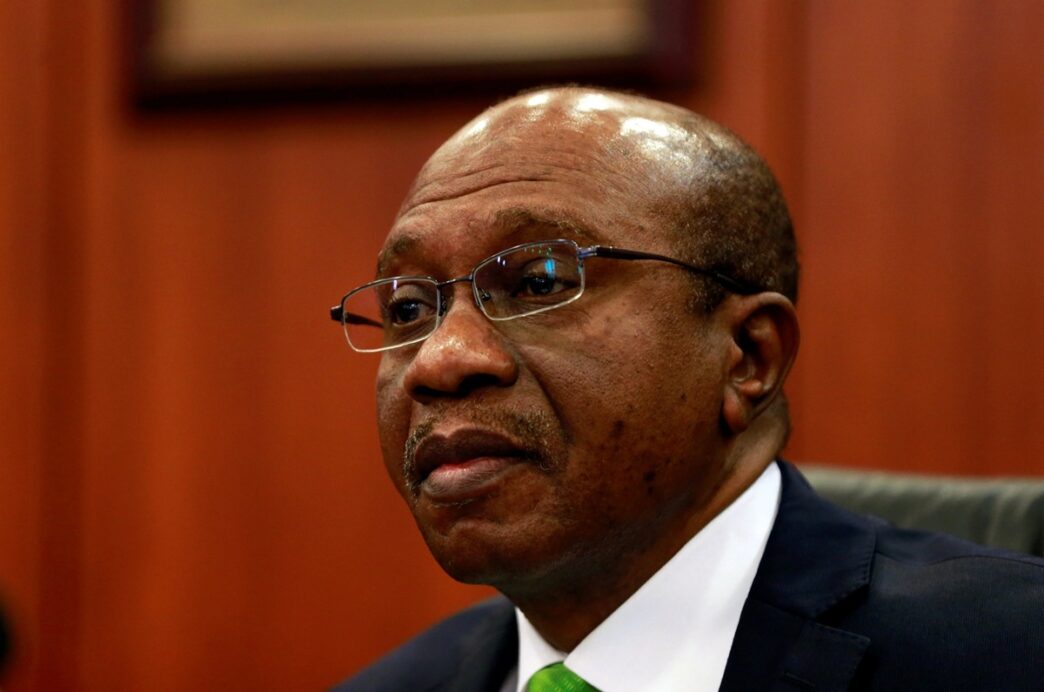
Former Governor of the Central Bank of Nigeria (CBN) Godwin Emefiele has asked the Lagos State High Court to reject statements the Economic and Financial Crimes Commission(EFCC) intends to rely on in his ongoing trial over alleged $4.5 billion and N2.8 billion fraud and abuse of office, arguing they were obtained under torture and unlawful detention.
Appearing before Justice Rahman Oshodi on Friday, Emefiele’s lead counsel, Olalekan Ojo, argued that the statements were extracted while his client was subjected to oppressive, degrading and inhumane treatment during EFCC detention.
According to the defence, Emefiele was held incommunicado for more than 157 days before the statements were obtained, making them inadmissible under the Evidence Act and the Anti-Torture Act.
Read More : Obi Queries Tinubu’s UNGA Absence, Hails Mahama
Ojo argued that Nigerian law prohibits the admission of statements obtained through torture or any form of degrading treatment, insisting that the prosecution must prove the statements were made voluntarily.
“The objection is predicated on the provisions of the Evidence Act and the Anti-Torture Act,” Ojo told the court.
“These statements are products of acts intended to force the first defendant to say what he did not intend to say, having been held incommunicado for over 157 days in EFCC custody,” he argued.
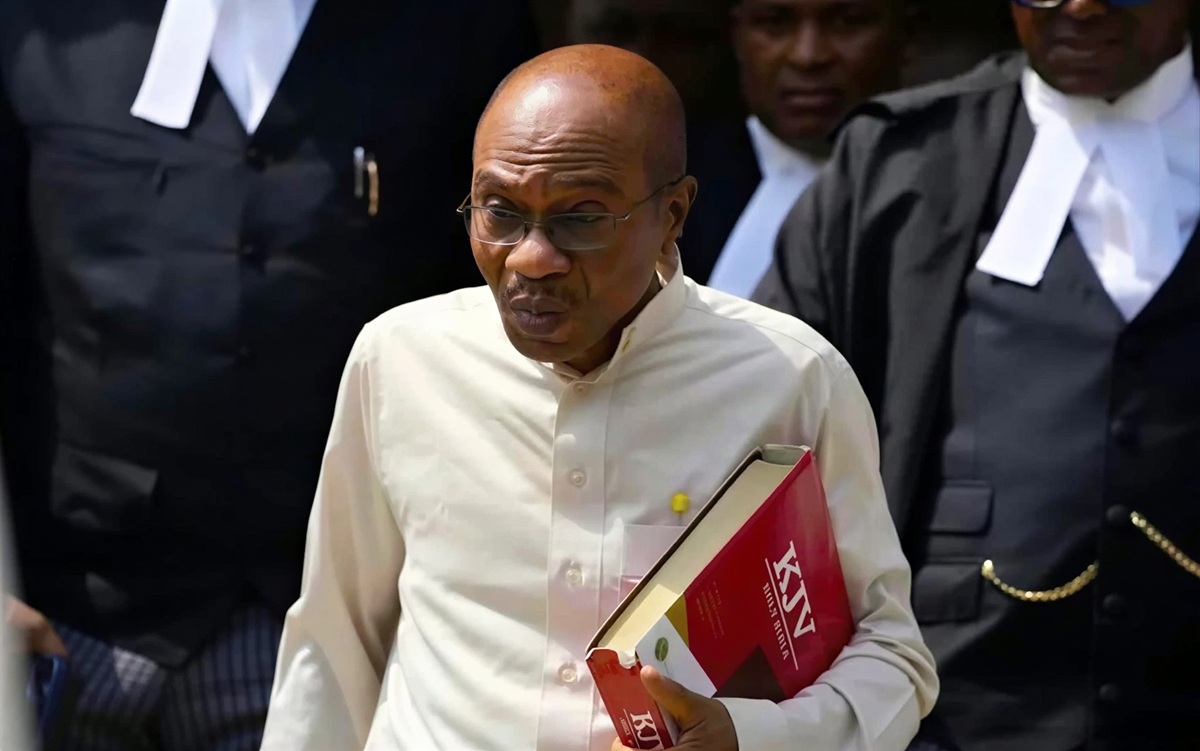
The issue arose after the Director of Public Prosecutions of the Federation, Rotimi Oyedepo, attempted to tender the statements through the fourth prosecution witness, Alvan Ikoku.
While giving evidence, Ikoku told the court that the EFCC invited Emefiele for questioning and recorded statements from him on different dates, including October 26 and 27, 2023.
The defence subsequently requested a trial-within-trial to determine whether the statements were voluntarily made before any ruling on their admissibility.
In response, the prosecution withdrew the October 26, 2023 statement, explaining that it only contained Emefiele’s personal details. The defence did not object, prompting Justice Oshodi to strike it out.
However, Oyedepo opposed conducting a trial-within-trial for the remaining statements, arguing they were not confessional in nature and therefore did not require such proceedings. He also maintained that the Evidence Act governs issues relating to admissibility and urged the court to expedite the trial in the public interest.
“The statements are not confessional. Therefore, there is no basis for a trial-within-trial,” he argued.
Read More : Shettima Reiterates Calls For UN Reform
Replying, Ojo insisted that the court must first determine whether the statements were voluntarily made before admitting them, arguing that allegations of torture and oppression could only be resolved through a trial-within-trial.
“The issue of voluntariness can only be resolved through a trial-within-trial. Only after such a mini-trial can the court properly determine whether the statements are admissible,” he submitted.
After hearing arguments from both sides, Justice Oshodi reserved ruling on the admissibility of the statements until July 9, 2026, and adjourned the substantive trial to October 6, 7, 8 and 9, 2026.