Trending


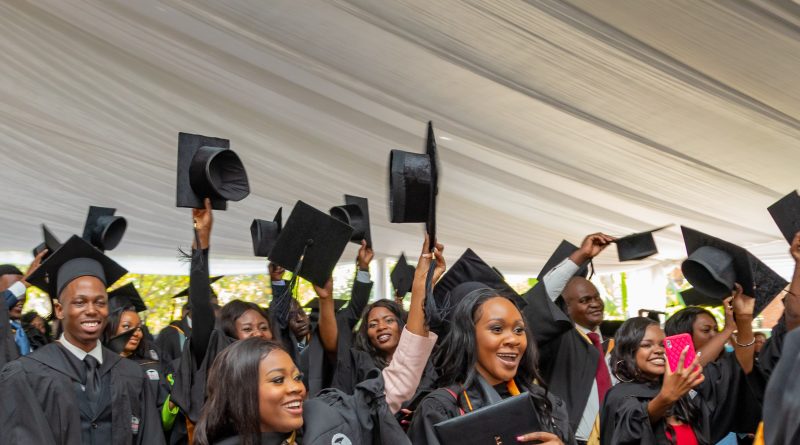
For many Nigerian parents, the school graduation season is meant to celebrate academic milestones. But this year, rising costs have overshadowed the joy, putting families’ finances under increasing strain.
Across many states, July marks the end of the academic session. As the period approaches, parents are scrambling to pay graduation levies, purchase expensive outfits, cover tailoring costs and fund elaborate celebrations, all against the backdrop of Nigeria’s economic hardship.
From preschool and kindergarten to primary, junior secondary and senior secondary schools, many parents are questioning the growing financial demands associated with graduation ceremonies.
Many say the biggest expense is often the purchase of customised outfits that comply with school-prescribed colours or trendy designs, a requirement that particularly affects female students.
One parent, Mojisola Fatai, whose son and daughter are both graduating from Junior Secondary School (JSS) 3, said she was grateful to witness the milestone but lamented the financial burden.
“By God’s grace, we are happy they are moving to senior secondary school, but paying for the graduation is one thing and buying what they will wear is another. The boy’s outfit is usually less expensive but for the girl, it is a lot,” she told the News Agency of Nigeria (NAN).
“Gen Z children insist on specific styles and it has become a competition among their peers instead of simply celebrating. Besides, I don’t even see the need for graduation ceremonies at the junior secondary level because they have not completed their education,” she added.
Another parent, Ego Nnaemeka, shared a similar experience. She said she had already spent N40,000 on fabric for her daughter’s graduation dress, only to be told that sewing the preferred corset gown would cost an additional N80,000.
Parents of younger children are also feeling the financial pressure.
Bolanle Oyewole, whose daughter is graduating from kindergarten, said she was asked to pay N20,000 for the ceremony.
“My daughter was asked to pay N20,000 for graduation. It may create memories for the child, but it is an unnecessary expense. The child will still remain in the same school and continue learning with the same classmates,” she said.
The rising costs are forcing some parents to withdraw their children from graduation activities altogether.
Sunday Akpan, an estate agent, said he had decided not to allow his son to participate in his school’s JSS 3 graduation because of the cost.
“He is not changing schools, so I don’t see the point of organising a graduation and asking parents to pay a certain amount of money. I have already told him he will not be attending,” Akpan said.
Another parent, Linda Ogbonna, recalled how her JSS 2 daughter pleaded with her to pay N30,000 to attend her school’s graduation ceremony because graduating students would receive gift packs.
“My daughter cried and begged me to pay because she wanted the gift pack that would be shared during the ceremony, even though she wasn’t graduating,” she said.
Despite the economic challenges and rising costs, some parents believe the expense is worthwhile.
Nkem Okoye, a businesswoman, said she was willing to celebrate her daughter’s graduation from secondary school.
“It is not easy to raise a child to this stage. It is a celebration for both of us. I don’t mind spending for her graduation,” she said.
Tailors Cash In On Graduation Season
The growing demand for elaborate graduation outfits has also created business opportunities for tailors, although many say customers often underestimate the cost of skilled craftsmanship.
A tailor popularly known as Iya Baraka, who operates in Ebute-Meta, Lagos, said many clients requested intricate designs that required considerable time and expertise.
“Graduation fabrics are coming in, but the styles people bring are very complicated. When you tell them the price for making the dresses, they complain. They want a beautiful outfit but are not willing to pay for the work involved,” she said.
Another tailor, Rasheedat Abdullahi, said she had received numerous orders but declined some because customers expected high-quality work at very low prices.
“This month alone, many customers have brought fabrics, but I have had to turn some of them down because they were not considerate.
“They assume that because you operate from a small shop and you are young, you should charge very little.
“They don’t consider the time, effort and expertise required to produce the outfits they request,” she said.
While some tailors reported increased patronage, others said the economic situation had reduced demand.
Aliyah Tunde said customers had yet to arrive in large numbers but remained optimistic that business would improve before the graduation season peaked.
Similarly, Seun Olawale said he had received only a few orders, noting that many male students now preferred outfits they could wear after the ceremony rather than expensive suits.
Education stakeholders who spoke with NAN said the growing extravagance surrounding school graduations calls for moderation.
They urged schools to place greater emphasis on academic achievement than on fashion displays by adopting standard graduation gowns rather than requiring parents to purchase specific fabrics, colours, and costly bespoke outfits.
According to them, such a move would ease the financial burden on families, reduce unhealthy competition among students and restore graduation ceremonies to their original purpose: celebrating learning rather than showcasing wealth.