Trending
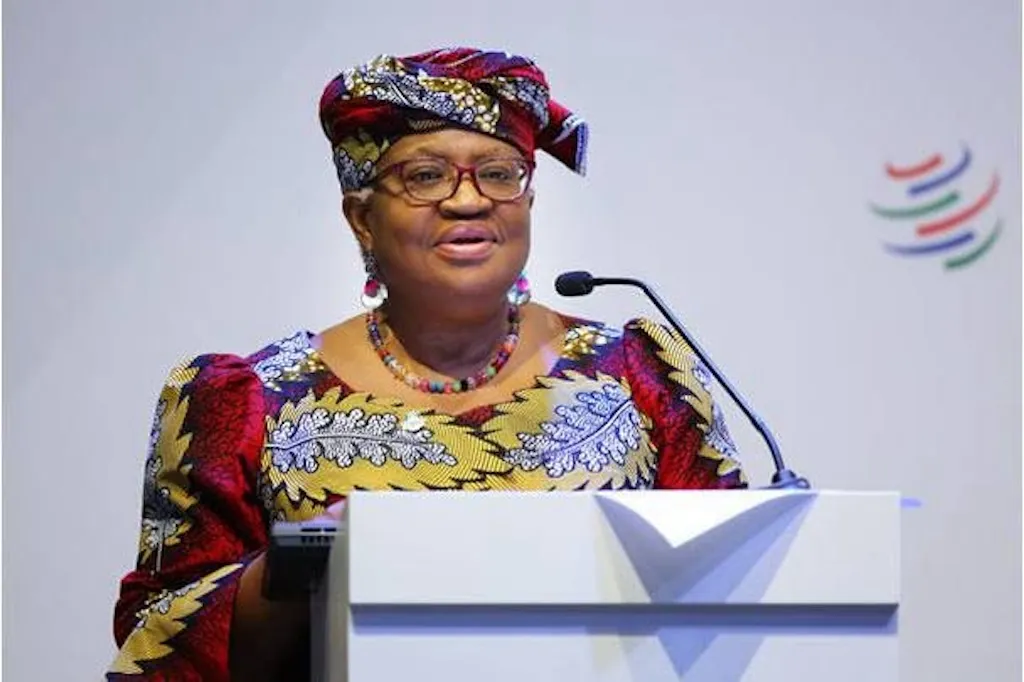
Former Nigerian Finance Minister and Director-General of the World Trade Organisation (WTO), Ngozi Okonjo-Iweala, has called on Nigeria and its sub-national governments to position themselves for emerging opportunities in global trade, warning that the international economic order is facing unprecedented disruption.
Speaking at the Delta State Economic & Investment Summit on Monday, Okonjo-Iweala said the global trading system, which has shaped commerce for about eight decades since the end of the Second World War, is under severe pressure from geopolitical tensions, unilateral tariff measures, technological disruption, and climate-related shocks.
“The rules-based system that has framed global commerce for the past 80 years, since the end of the Second World War, is today under unprecedented strain,” she said.
Read More : Tinubu Ends Vacation, Heads to Lagos
According to her, rising uncertainty has unsettled the environment in which countries and businesses operate, but global trade has demonstrated resilience despite the challenges.
“Despite all of these disruptions, trade and the trading system have shown remarkable resilience, contributing to the wider resilience of the global economy,” she added.
Okonjo-Iweala noted that global goods and services trade reached a record $34.65 trillion last year, while growth in merchandise trade was supported by rising demand for artificial intelligence-related products.
She also highlighted Africa’s growing role in global commerce, noting that the continent’s merchandise export volumes increased significantly, driven by key sectors including minerals, metals, fuels, and agricultural commodities.
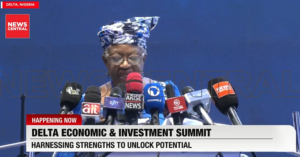
The WTO chief said the disruption of global supply chains has created a strategic opening for countries such as Nigeria to attract more investment through what she described as “re-globalisation” — a restructuring of global value chains to make them more resilient.
“The weaponisation of some of these overdependencies is swelling anxiety, resentment, and a desire for diversification,” she said, adding that the emphasis on diversification at the Delta summit was “appropriate and timely.”
She explained that companies and governments are increasingly seeking to reduce geopolitical risks by spreading supply chains across more locations, creating opportunities for countries previously left on the margins of global production networks.
“Re-globalisation”, she said, could help attract investment to places like Nigeria and Delta State by integrating them more deeply into global value chains.
Okonjo-Iweala also pointed to the African Continental Free Trade Area (AfCFTA) as a major opportunity, describing its potential to create a unified market of 1.4 billion people with common standards and improved infrastructure.
Read More : Court Sentences Four To Death in Edo
She said Africa’s economic prospects were being strengthened by three major opportunities: the global drive for supply chain diversification, continental economic integration, and Nigeria’s recognition that development must extend beyond the federal government.
“The Minister of Finance talked about that, that sub-national governments will have to step up as you are doing, Excellency, to create jobs, attract investment, and provide public goods,” she said.
The WTO Director-General urged Delta State to leverage its resources and transform from a resource-dependent economy into a more diversified and resilient economic hub.