Trending
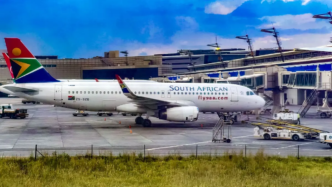
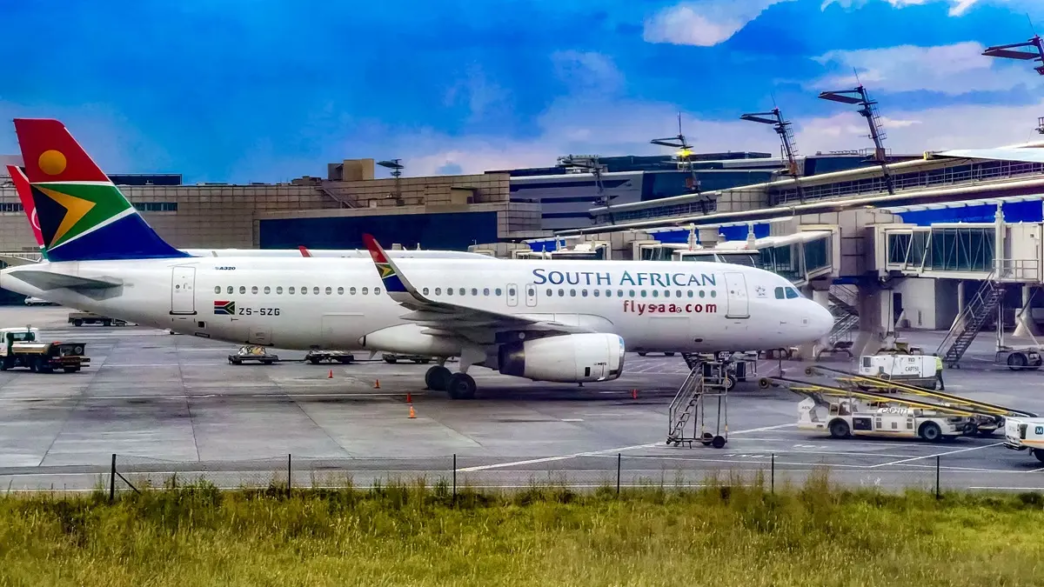
Africa’s aviation hubs are becoming more connected as airlines expand routes and airports invest in new capacity to handle rising traffic.
Johannesburg and Addis Ababa are at the centre of the wider race to build hubs that can connect more African cities to global markets.
According to global aviation data and analytics group OAG’s Megahubs 2026 report, Johannesburg O.R. Tambo International Airport ranks 40th globally, and Addis Ababa Bole International Airport ranks 50th among the world’s most connected airports.
Johannesburg fell from 38th in 2025, while Addis Ababa climbed from 60th.
The two airports are the only African entries in the global Top 50. The ranking includes 12 airports in Europe, 3 in the Middle East, 16 in Asia, 1 in Australia, 11 in the US and 1 in Canada, alongside the 2 African hubs.
According to OAG, which produces the ranking, “The rankings are generated by comparing the number of scheduled connections to and from international flights with the number of destinations served from the airport, on the busiest day of the year.”
The analysis covered the 100 largest airports and 100 largest international airports by scheduled seats for the 12 months to August 2026, using 2 August as the busiest day.
At Johannesburg, Airlink operates 35% of flights, giving the airport a more distributed airline mix. At Addis Ababa, Ethiopian Airlines operates 94% of flights, making it one of the most concentrated major hubs in the world, according to OAG.
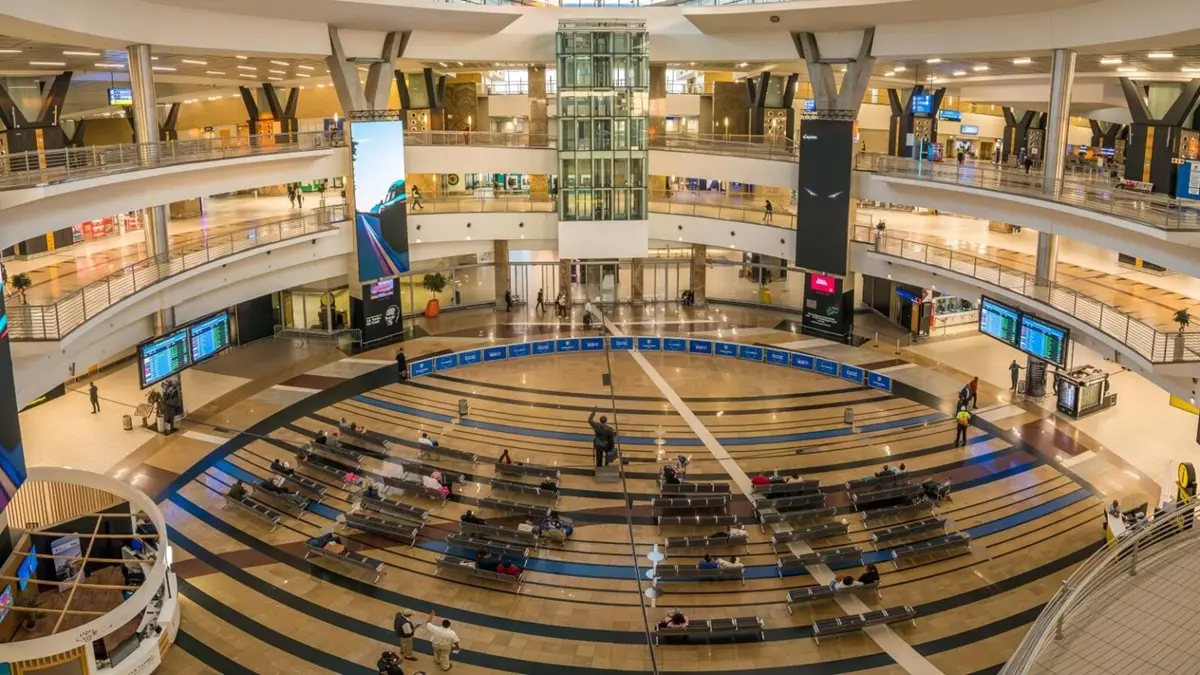
The difference reflects two hub models. Johannesburg draws traffic from several airlines and regional networks, while Addis Ababa is built around Ethiopian Airlines and its expanding long-haul and African network.
OAG’s Middle East and Africa ranking puts Johannesburg second behind Dubai and Addis Ababa fifth. Cairo, Abu Dhabi, Jeddah, Casablanca and Sharjah complete the regional Top 10. Johannesburg is therefore the leading African airport in the connectivity ranking, with Addis Ababa the second African entry.
The capacity figures show why the competition is becoming more important. According to OAG, African airlines and international carriers serving the continent scheduled 25.8 million seats in September 2026, up 9.4% from a year earlier. International services accounted for 78% of that capacity.
Cairo was Africa’s largest airport by scheduled seats in September with 1.79 million, followed by Addis Ababa with 1.19 million and Johannesburg with 1.16 million, according to OAG. Addis Ababa’s capacity was up 6.5% year on year, while Johannesburg’s rose 5.0%.
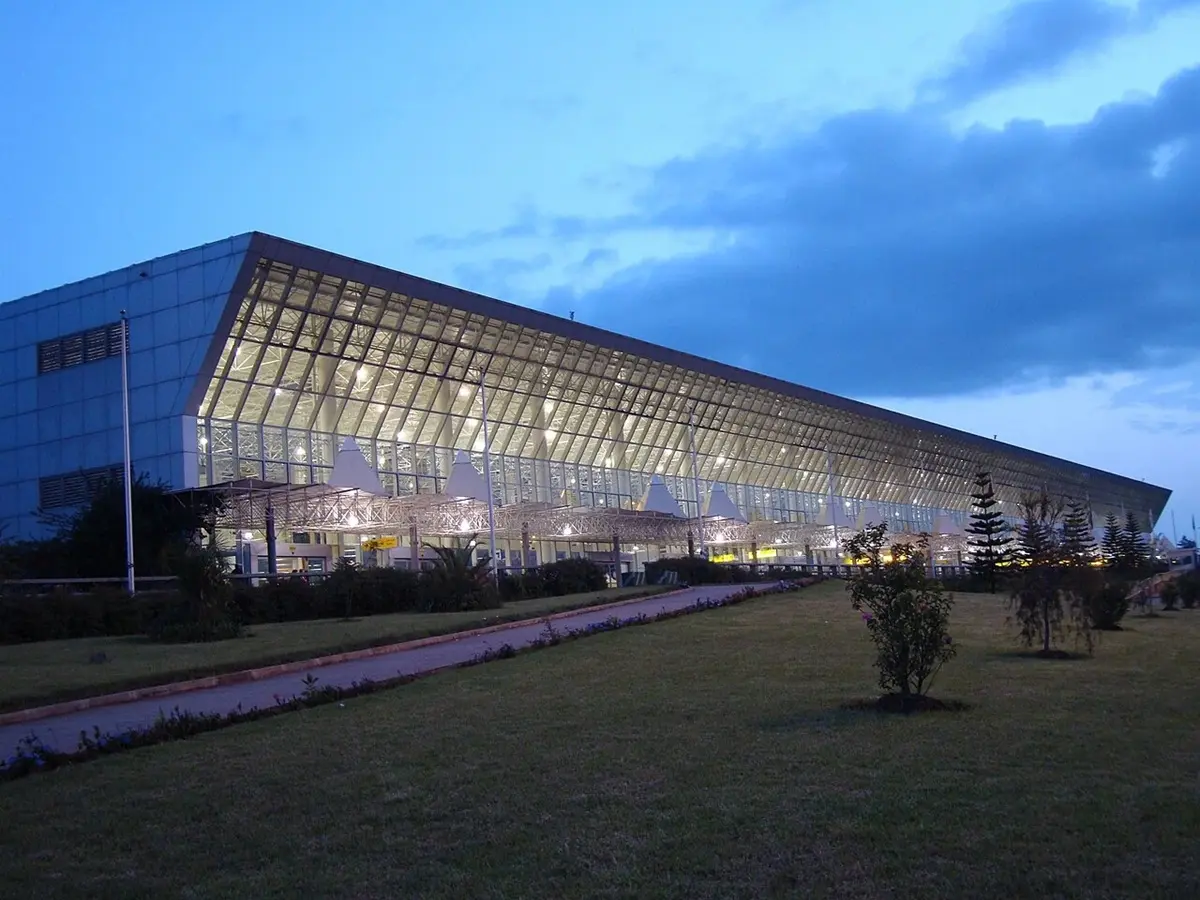
The pressure is most visible in Addis Ababa, where Bole International Airport is approaching the limits of its expanded capacity.
According to Ethiopia’s government, Bole is nearing its expanded capacity of 25 million passengers a year. Ethiopian Airlines says the airport handled 19 million passengers in the financial year ended June 2025, while earlier projections showed the facility could reach its limit as the airline expands its global network.
The response is Bishoftu International Airport, about 40 kilometres southeast of Addis Ababa.
Construction officially began on 10 January 2026, when Prime Minister Abiy Ahmed laid the cornerstone. According to Ethiopian Airlines, the first phase is designed to handle 60 million passengers a year by 2030, while the full master plan provides for 110 million passengers, four runways and parking for 270 aircraft. The first phase is estimated at US$12.5 billion.
According to Zaha Hadid Architects, which designed the terminal, up to 80% of passengers are expected to transfer between flights without leaving the airport. The terminal design uses a central spine inspired by the Great Rift Valley to shorten transfer distances.
The airport’s location also has an operational advantage. According to project documents, Bishoftu sits at about 1,910 metres above sea level, almost 400 metres lower than Bole. Its longer runways are expected to improve aircraft performance and allow Ethiopian Airlines to carry more passengers and cargo on long-haul routes.
Ethiopian Airlines is already expanding the network that will feed the hub.
According to the airline, it will launch daily nonstop flights between Durban and Addis Ababa from 11 December 2026. It will also begin four weekly flights between Addis Ababa and Port Harcourt from 1 December, making the Nigerian city its fifth destination in the country.
The airline has also expanded its European and African network with services to Geneva and Lyon, Port Louis, Nacala and Gizan, adding more routes that can feed traffic through Addis Ababa.
Johannesburg is taking a different approach. Instead of building a new hub, O.R. Tambo International Airport is investing in its existing infrastructure.
According to Airports Company South Africa, O.R. Tambo is implementing a R14.5 billion (about US$884 million) five-year capital programme to modernise the airport and improve operational reliability. The current phase includes refurbished escalators and travelators, new seating, improved wayfinding and replacement of carpets with durable tiling at international boarding gates.
The longer programme includes a R5.7 billion (about US$348 million) Mid-field Cargo project, new cargo infrastructure and plans for a midfield passenger terminal. According to ACSA’s corporate plan, the Mid-field Cargo project is scheduled for completion in the 2029/30 financial year, while other projects are planned through 2031 and beyond.
Johannesburg’s position is supported by a large and established network. According to OAG, O.R. Tambo offers connections to all six inhabited continents. The airport also remained among Africa’s largest by scheduled capacity in 2026.
The investment is coming as demand across the continent continues to rise.
According to IATA’s 2026 outlook, Africa’s passenger traffic is expected to grow 6.0% in 2026, ahead of the global forecast of 4.9%. IATA’s June outlook later projected Africa to record 10.0% traffic growth in 2026 as airlines benefit from changes in global travel routes, particularly as traffic patterns around the Middle East are disrupted.
Capacity is expanding alongside demand. According to OAG, airlines serving African markets scheduled 25.8 million seats in September 2026, up 9.4% year on year.
The growth is still constrained by the economics of operating in Africa.
According to IATA, African airlines are forecast to make about US$200 million in net profit in 2026, equivalent to about US$1.30 per passenger, compared with a global average of US$7.90. IATA also says Africa accounted for 79% of the US$1.2 billion in airline funds blocked globally as of October 2025, leaving about US$954 million trapped across African markets.
The continent’s traffic is now also heavily connected to markets outside Africa. Europe accounted for more than half of Africa’s scheduled international seats in August 2026, according to OAG, making European hubs such as London Heathrow, Amsterdam and Frankfurt important connection points for African airlines and passengers.
African airlines are growing from a relatively small base. According to the African Airlines Association, its 50 member airlines carry more than 85% of international traffic among African carriers. Passenger traffic is projected to reach 137.3 million in 2026, up 21.5% from 2025.
Credit: Bonface Orucho, Bird Story Agency.