Trending
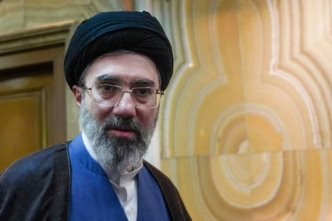
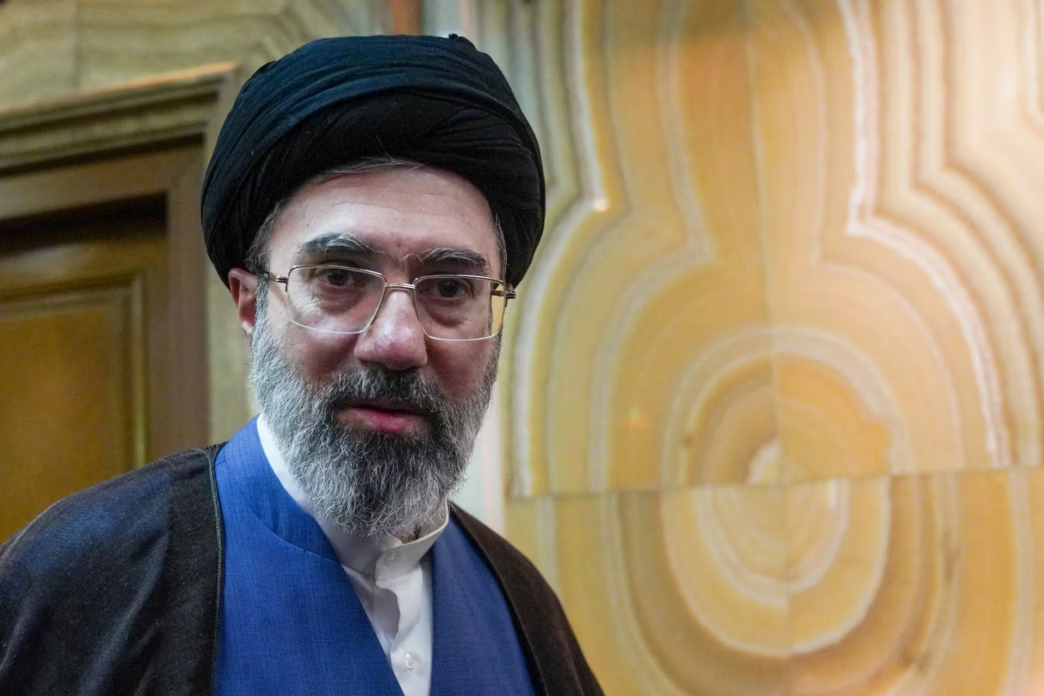
Iranian President Masoud Pezeshkian has described communication with Supreme Leader Mojtaba Khamenei as “very difficult”, while praising his leadership as a “major source of strength” for the country.
Speaking in an interview aired on Iranian state television to mark the second anniversary of his inauguration, Pezeshkian said greater openness among officials when presenting national issues to the Supreme Leader could help improve understanding and decision-making.
“The more openly officials present issues to the Supreme Leader, the easier it becomes to reach mutual understandings,” Pezeshkian said.
Read More : North Korea Fires Ballistic Missiles
The Iranian president also praised Khamenei’s character, describing him as an “exceptional” figure whose ethics, humility and reasoning had left a strong impression on him.
Pezeshkian accused some groups of attempting to “create divisions” in Iran over debates surrounding Khamenei’s position on the US-Iran memorandum of understanding, a 14-point framework signed on June 17, 2026, by US President Donald Trump and Pezeshkian.
The agreement was designed to formalise a ceasefire, remove naval blockades and end active military operations between the two countries. Khamenei later publicly supported the memorandum despite expressing reservations at the initial stage.
Pezeshkian said Iran’s opponents were increasing pressure through sanctions and military confrontation to deepen public dissatisfaction and encourage protests, describing the current period as the most challenging for the country since the 1979 Islamic Revolution.
Khamenei assumed the position of Iran’s Supreme Leader on March 8 following the assassination of his father, Ali Khamenei, in a joint US-Israeli air strike in Tehran on February 28.
The transition occurred as Iran entered direct military confrontation with the United States following a joint US-Israeli attack. Iran responded with missile and drone strikes targeting Gulf states hosting US military facilities.
Read More : Trump: Planned Arch Will Serve as Military Base
A ceasefire between Washington and Tehran was reached in April, followed by a Pakistan-mediated memorandum of understanding in June focused on ending the conflict and pursuing a long-term peace agreement.
However, the agreement later collapsed, leading to nearly two weeks of renewed attacks between both sides before Trump halted the bombardment as reports emerged of efforts to revive negotiations.
:::