Trending

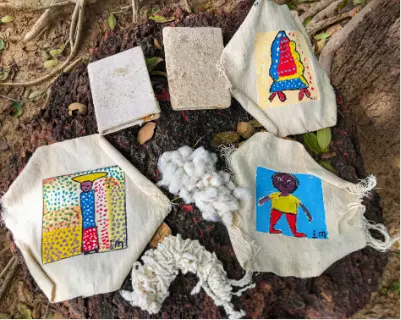
Women in The Gambia have revived local cotton farming and weaving, creating new income sources while preserving cultural traditions in the Central River Region.
For years, Foddy Ceesay travelled from one weekly market to another to find cotton for traditional ceremonies in her community of Njau Sawalo. The fibre had become difficult to find and expensive.
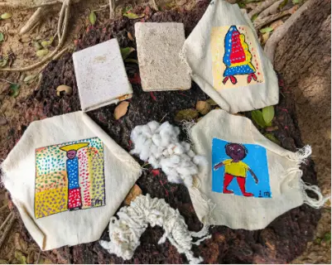
Today, she and other women grow their own cotton and turn it into products such as wrappers, tablecloths and book covers.
Read More : African Fashion Seeks Local Manufacturing Boost
“We used to buy it very costly. But now we farm it ourselves. We no longer purchase it but sell it to others. We now save the money we used to buy it, and selling it ourselves brings us further funds,” Ceesay said.
She is part of a cotton revival project led by Women Initiative Gambia (WIG) through Reforest Future The Gambia. The project aims to restore traditional cotton farming and processing skills while helping women earn money from finished products.
According to WIG founder Isatou Ceesay, 30 women have received training in different stages of the cotton value chain. These include planting, farming, spinning, weaving, design and marketing. The project has run for three years. More than 50 women have benefited from its activities, while 40 women cultivate 1.5 acres at the centre alone.
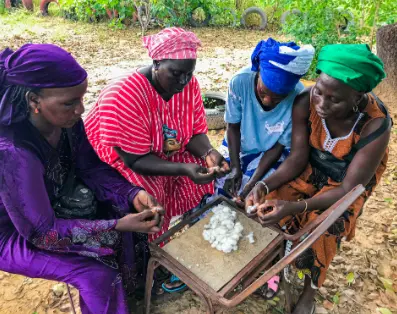
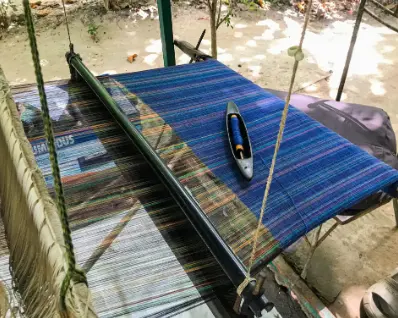
The women produce wrappers, shirts, tablecloths, bags and book covers. Tourists visiting the Reforest Future centre in Njau are among their main customers, Isatou Ceesay said. The project also supports the transfer of cultural knowledge linked to cotton. In Njau Sawalo, the fibre plays an important role in naming ceremonies and funeral practices.
Jamil Ceesay, a WIG member for three years, said the training has given her skills she can use to earn a living. She has learned to weave shirts, wrappers and book covers.
“It is extremely significant for us,” she said, referring to cotton’s place in her community’s traditions.
She has also sold several items made through the project.
“Whatever we weave, it gets sold off. Even though the weaving is tedious,” she said.
Rocky Secka, another participant from Njau Sawalo, said cotton had become difficult to find before the women started growing it again.
“Culturally and economically, it is bringing us some little funds whenever we sell some of the finished products such as tablecloths, book covers, and shirts or wrappers,” she said.
Secka is also learning weaving, drawing and book-cover design, alongside other traditional skills linked to cotton. For Foddy Ceesay, the project has made cotton more affordable for cultural occasions while creating an opportunity to earn from finished products.
“We sell each book cover for D500 (US$7),” she said.
The women are also turning their skills into small businesses. Mansata Sarjo, Isatou Ceesay’s daughter, learned to weave wrappers, bags and purses through the project. She trained with Ousman Sambou in Gunjur, in the West Coast Region.
“I can weave wrappers, shirts, bags and purses. Cotton has endless importance, economically, culturally and skill-wise,” Sarjo said.
Finished products sell for between D500 (about US$7) and D2,500 (about US$34), depending on the item. Sambou said he has taught weaving, marketing and cultural knowledge to women in Gunjur, Kerewan Samba Sira and Njau.
“I feel happy whenever I see women being empowered economically, culturally and traditionally,” he said.
To help members manage their earnings, WIG uses savings boxes. Isatou Ceesay said more than 40 women in the North Central River Region had benefited from the farm-to-cloth project. Each woman had saved at least D4,000 (US$55).
The women also operate what they call a “development box”. They put aside D50 from each sale to support their future financial independence. Ceesay described cotton as the “logo of the African identity”. She said the project aims to protect traditional knowledge while creating economic opportunities for women.
“If we don’t revive cotton today, the next generation will lose it. This means they will lose our cultural and traditional identities and knowledge as Africans,” she said.
The revival effort comes as The Gambia seeks to rebuild a cotton industry that once supported thousands of rural farmers. The country’s Industrial and Diversification Policy 2025–2035 identifies cotton as one of the sectors for support. It proposes a Productivity and Innovation Centre in Farafenni, with equipment, training and quality-testing services for small businesses and cooperatives.
The policy also proposes that at least 30 per cent of resources under a planned Industrial Finance Facility go to businesses owned by women and young people.
Dr Lamin Dibba, director of research at the National Agricultural Research Institute (NARI), said projects such as WIG’s have renewed hopes for the sector. He said NARI, under the Ministry of Agriculture, is willing to work with private investors and farmer groups through technical support, research and training.
Cotton was once one of The Gambia’s major cash crops. A Gambia-European Community report recorded 3,429 registered cotton farmers and 3,117 hectares under cultivation during the 2001/02 growing season.
However, the sector later declined sharply. A 2007 World Bank report said production fell from about 3,000 tonnes of seed cotton in the mid-1990s to around 200 tonnes.
The report linked the decline to irregular rainfall, pest attacks, high farming costs, weak support for farmers and low returns compared with other crops. It also noted that the GAMCOT ginnery in Basse could process 10,000 tonnes but operated far below that level and recorded substantial losses.
The Gambia produced about 532 tonnes of unginned seed cotton in 2024, according to FAOSTAT data reproduced by Terra Cultiva. This was below the reported peak of about 3,100 tonnes in 1993.
Dibba said cotton production had remained low for years because farmers lacked the skills and facilities needed to grow and process the crop into profitable products.
“Due to these factors and others cotton farmers decided to reduce production. Even cotton research also went down over the years,” he said.
“Cotton and groundnut used to be our main cash crops in The Gambia,” he added.
He said reviving the sector could reduce the country’s dependence on imported cotton and textile products. It could also create jobs and increase foreign exchange earnings. However, the women leading the current effort face several challenges.
Isatou Ceesay said the group lacks modern farming equipment and needs support with physically demanding work.
“We are only women. We cannot do certain physically demanding farm work. Besides, we lacked the needed machinery to plough our farm as expected,” she said.
Finding buyers is another challenge. Ceesay said the group lacks a well-organised local market for cotton and its finished products. She added that many people still believe the country’s cotton industry is no longer active.
Dibba also identified access to quality seeds and suitable cotton varieties as major concerns. He said NARI is researching the best seeds and growing areas, taking climate change and other conditions into account.
“We are researching the best seeds and varieties as well as the suitable regions of the country where cotton can do well. This is to help the private sector access best cotton and textile products,” he said.
Dibba added that the institute could help farmers test different varieties to identify those best suited to local conditions. He also called for more public awareness of cotton’s economic and cultural importance.
“Sensitizing farmers and communities of the importance of cotton should be a priority so that across the country they can relate to the crop’s cultural and economic values,” he said.
He said regional cooperation could also support the revival. NARI hopes to build partnerships with cotton-producing countries such as Burkina Faso to promote knowledge sharing and create links for Gambian farmers and businesses.
“We need to network with people who are doing extremely well in this area and regional collaborations is inevitable,” he said.
Meanwhile, WIG plans to establish women-led cotton farms in several districts across North Central River Region. The longer-term goal is to expand the project to other parts of The Gambia.
Isatou Ceesay said the group had already harvested and stored quality seeds for distribution to the districts.
“We have already harvested and stored our best seeds for distribution into the various districts for this level of the cotton revival project,” she said.