Trending

Women in Ethiopia have turned reusable sanitary pad production into a growing effort to keep girls in school, improve menstrual hygiene and break the silence around periods.
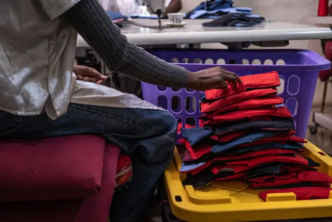
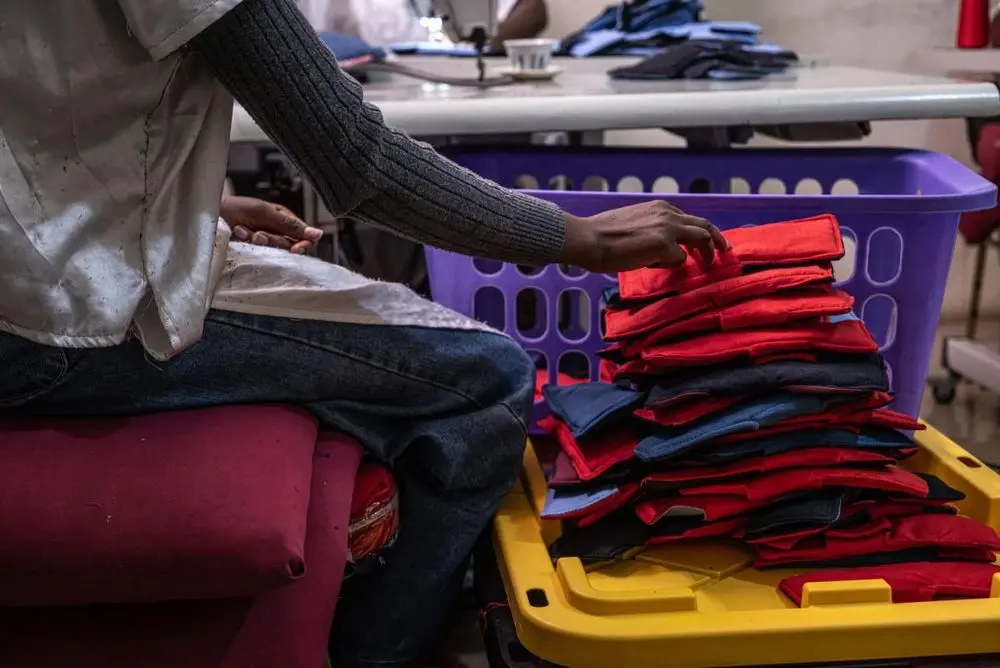
In a small workshop in Addis Ababa, women use sewing machines to turn cotton fabric into washable sanitary pads. The products offer an affordable alternative to disposable pads in a country that imports all its sanitary products.
For many women and girls, the high cost of disposable pads makes menstrual hygiene difficult to manage. As a result, some miss school, lose income or resort to unsafe alternatives during their periods.
Read More : Gambian Women Revive Cotton Through Weaving
Based on an Africannews report, for 41-year-old Hanan Ahmed, the problem is personal. Her experience with heavy menstrual flow and period stains inspired her to leave the fashion industry and establish Han’s With Care in 2021.
Ahmed said she often missed school for one or two weeks because she feared staining her clothes and desk.
“I used to be one of those girl who have a very heavy flow. So whenever my period come, it used to stain my clothes and the desk that I used to sit on. And because of that, like I don’t come to school (for) like a week or two weeks, making up excuses,” she said.
She said the experience pushed her to start the business after the COVID-19 pandemic.
“So I completely left the fashion industry and started this by the end of almost COVID, when COVID finished up. So I said, I just want to do my part in the community,” Ahmed added.
Her company now produces reusable cotton sanitary pads that can last up to two years with proper care. It can make about 1,000 pads daily. The business supplies sponsors, including banks, which distribute the products free of charge to girls and women across Ethiopia.
At Nigat Kokeb School in Addis Ababa, students benefit from the initiative. Fifteen-year-old Betselot Mahareg said the reusable pads help her avoid the leaks and embarrassment she sometimes experiences with disposable products.
“When we use the other one [the plastic pads, ed.], it can leak and touch our inner clothes, it touches our clothes, and then embarrassment arises,” she said.
She added that the washable pads can be cleaned and reused.
“This one, first it is cloth, we can wash and re-use it; second, in a way that doesn’t touch our clothes or inner clothes, I have understood that it is a great pad that we can handle properly and cleanly,” Mahareg said.
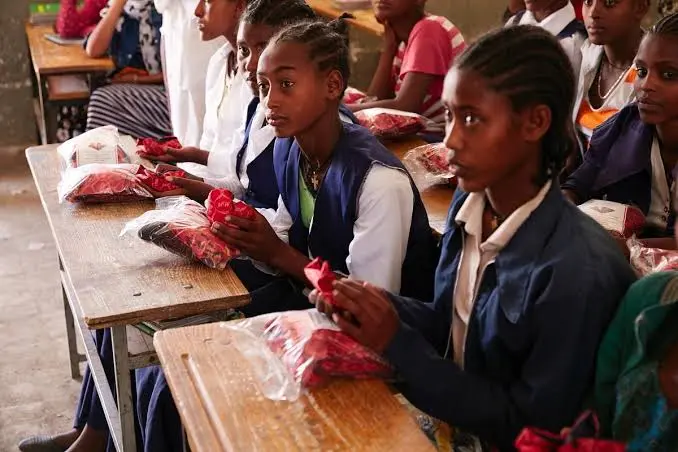
However, Ahmed’s work goes beyond making affordable sanitary products. She also wants to change how people talk about menstruation, especially among young girls.
At Nigat Kokeb School, teacher Tigist Shewangizaw said girls need proper information before their first period. This can help them manage the experience without fear and continue attending school.
“Before it comes, we pass safety cues to young children so they don’t panic before seeing their period, don’t feel they are alone or scared in experiencing this, and we ensure they don’t miss school,” she said.
Menstrual stigma remains a challenge in parts of Ethiopia. In some rural communities, girls face exclusion from their households when they begin menstruating.
Ahmed believes education and open conversations can help change these attitudes. She has also started teaching her own daughter to see menstruation as a natural part of growing up.
“I do the same thing with my daughter at home. When she sees her period we celebrate it as her womanhood,” she said.
Read More : African Fashion Seeks Local Manufacturing Boost
“So we’re trying to create that kind of freedom to talk about period(s), be it in our social media, in our community, we are raising our voices,” she added.
For Ahmed, every reusable pad is an opportunity to reduce shame, improve access to menstrual hygiene products and help girls take part in everyday activities without fear.
She hopes more public support and awareness will ensure that menstruation no longer keeps girls away from school or makes them feel excluded.