Trending
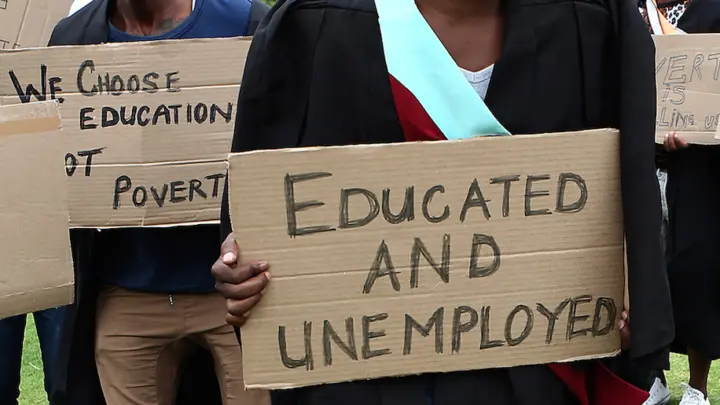
In May, Moniepoint’s chief executive, Tosin Eniolorunda, told an audience at The Platform in Lagos that his company had 500 open roles it could not fill. Not because Nigeria has no graduates, but because it has the wrong kind, in the wrong place, at the wrong price. Four million young Nigerians enter the labour force every year. A fintech with money to pay cannot find five hundred of them.
That contradiction is the real story, bigger than one company. SBM Intelligence’s new regional labour survey, polling 1,180 respondents across all six geopolitical zones, found digital skills are the first-choice training preference nearly everywhere, 52.7 percent nationally. Nigerians are choosing correctly and still not getting hired, because training, infrastructure and wages have not caught up with the choice.
Meanwhile, the official numbers say almost nothing went wrong. The National Bureau of Statistics puts unemployment at 4.3 percent, a figure achieved in 2022 by redefining anyone who worked one hour in the survey week as employed, down from a threshold of 20 hours. Under that definition, the plantain seller outside a Magodo shop and the okada rider ferrying passengers from Shangisha to Ketu both count as gainfully employed. So, in a different way, does Omotoso Ajiboye, a 43-year-old accounting HND holder whom Saturday PUNCH once found driving a motorcycle taxi at an Ibadan junction after years of failed job applications. His story is not rare. It is the median story, repeated across 93 percent of a workforce that survives without contracts, pensions or a floor beneath it.
Read More : From Ojuelegba Bridge to the Ballot Box
SBM’s survey puts a number on the anxiety that the jobs crisis produces. Across Nigeria’s six geopolitical zones, 45.3 percent of households reported a job loss, business closure or inability to find work in the past year. Four in five respondents would consider relocating for a good job; nearly one in three in the South-South would leave without hesitation. The Southeast’s shock rate is worse: two-thirds of households, with the knock-on effect of IPOB’s sit-at-home order eating into commercial life on top of everything else. This is six separate crises evenly distributing misery and wearing one national unemployment figure as a mask.
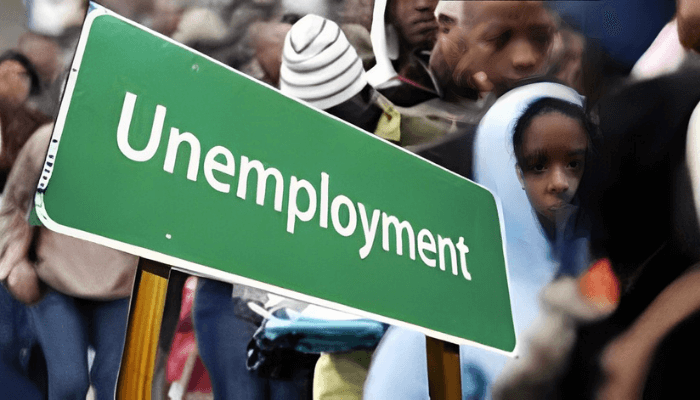
The social consequences of this exclusion are not abstract. When millions of young people see no future in formal employment, they do not simply wait. They migrate, join informal economies that offer survival but no dignity, or, in the worst cases, become recruitment pools for organised crime and insurgency. China’s Zhu Rongji, who died this month at 97, understood the political weight of this arithmetic better than most reformers of his era: his restructuring of state enterprises in the late 1990s cut around 34 million jobs in four years, but he moved in parallel to sell state housing cheaply to displaced workers and build unemployment insurance from scratch, because he understood that idle, dispossessed workers would not stay quiet. Nigeria has performed the layoffs, informal and structural, without providing the safety net. The connection between joblessness and insecurity is not theoretical but the lived reality of communities where bandits and kidnappers recruit from the same ranks of idle, frustrated young men who would otherwise be workers. The state that cannot provide jobs also cannot provide security, because the two failures share the same root: the absence of a functional economic bargain between citizen and state.
Underneath both stories sits the same fault: capital refuses to go where jobs would be created. Nigeria’s top ten listed companies, banks and Dangote Cement among them, created roughly 11,000 jobs a year on average between 2020 and 2024, a rounding error against four million new entrants. Banks now earn 40 percent of their interest income from government securities rather than business loans; a recent Treasury Bill auction drew ₦4.4 trillion in bids for ₦800 billion on offer. Manufacturers pay up to 60 percent to borrow, when they can borrow at all. The truth is that the money that can power small businesses to put a true dent in the unemployment rate is not missing. It is parked somewhere safer than a factory in Aba or a farm in Kano.
None of this is unfixable, but it will not fix itself along a single national policy line, because the crisis is not one crisis. The Northwest needs skills investment layered onto agriculture it already does well. The Southeast needs power and formalised credit before it needs another training programme. The South-South needs an industrial push or it will keep exporting its most qualified people. Nationally, banks need lending quotas that force capital back into manufacturing and agro-processing, and the Land Use Act’s collateral chokehold needs reform so a factory owner can actually borrow against the land beneath the factory. Fix the plumbing capital moves through, zone by zone, and the jobs SBM’s respondents say they want will start meeting the jobs Moniepoint says it cannot fill.
Cheta Nwanze is the CEO at SBM Intelligence.