Trending
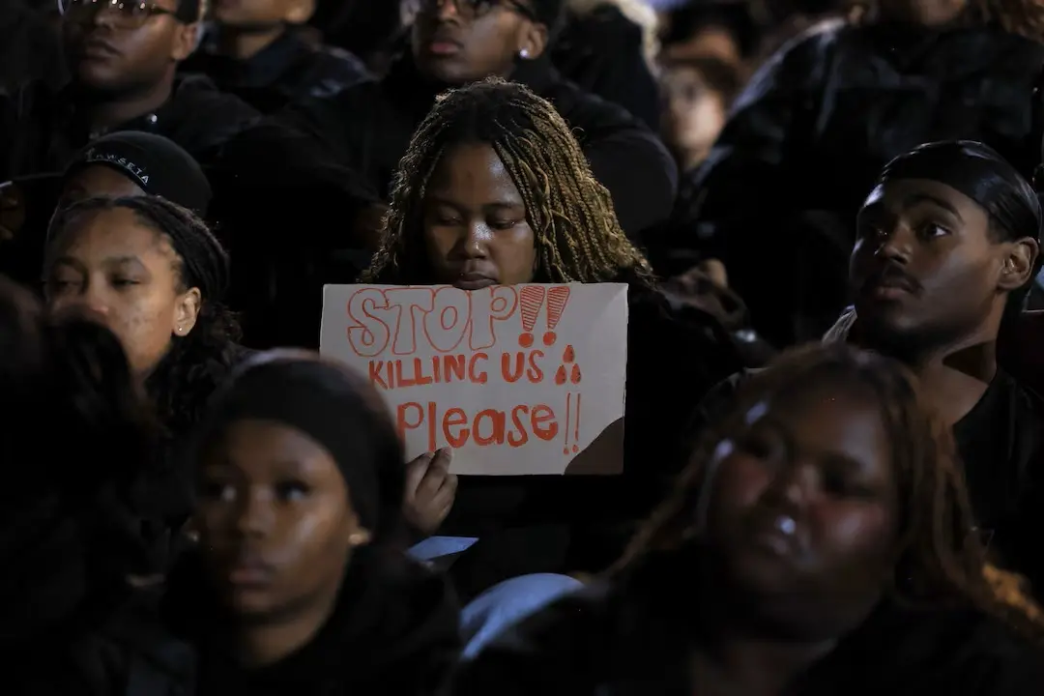
Another woman has been killed. Another family is in mourning. Another community is searching the shadows for answers.
Yet again, women are hearing the same tired advice: avoid certain neighbourhoods, don’t go out alone, let everyone know where you are at every moment. It’s exhausting. And it’s not enough.
In effect, women are left to make cold calculations every day about survival. And we ask: how many more need to die before we see these killings as part of a disturbing pattern, rather than isolated tragedies?
This story is burning up. And it calls for more of us to act.
South Africa Knows This Story Too Well
South Africa knows this story all too well. Time and again, we read in our papers the killing of a woman. And this year, in particular, killings of women in large numbers have reminded us of violence against women here.
Police say 569 women were killed between April and June this year. Parliament says the rate of killing of women in South Africa is 9 in every 100,000 women. That’s five times the global average. But behind each of those numbers is a person: a daughter, a sister, a mother, a partner or a friend.
The Fear After Kempton Park
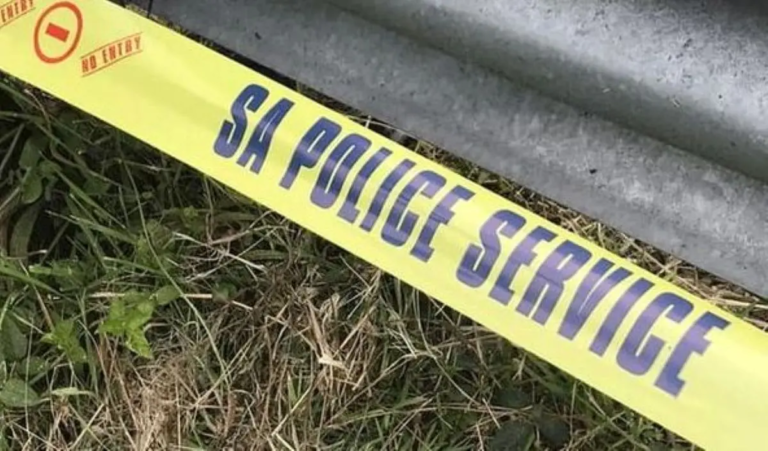
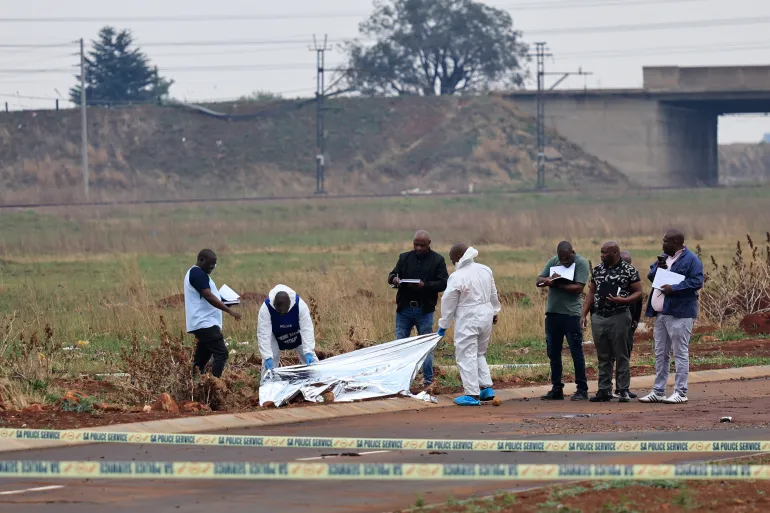
In September, news of the discovery of several women’s bodies in and around Ekurhuleni and Kempton Park struck fear in people. Within days, that fear turned to outrage.
Police are still trying to unravel what happened in the dark. And it’s not clear if these killings were committed by one person.
One of those killed was Elizabeth “Tsontso” Moselakgomo. She was 38 and a runner. Her relatives identified her body.
But her death hits close to home for many of us. Running is one of the most fundamental of freedoms. And it shouldn’t leave us asking whether a route is safe, whether it’s too dark or too light, or whether we need someone to walk with us.
A woman should be free to walk home, go to work, take a bus, go to the gym or meet a friend. She shouldn’t have to ask whether she’ll make it home alive. That seems reasonable.
In the wake of the discoveries in Kempton Park, the Commission for Gender Equality said women shouldn’t have to change when and where they work, or go out in a group, in order to feel safe outdoors. In theory, the safety of those being chased shouldn’t weigh on them.
But more than just a “women’s issue,” this is a breakdown of public safety for all of us.
Femicide Is Bigger Than the Numbers
Murder rates in general are slipping, but only slightly. Police recorded 5,181 murders in the first three months of this year. That’s a 9.5% drop from the same period last year. But it still means roughly 58 murders every day. A falling murder rate doesn’t mean a safe haven.
And it’s not possible to get a sense of femicide simply from the number of killings. Often it is the culmination of threats, abuse, control and imbalance of power between a woman and someone in her life. And often it sits beneath the surface and isn’t spoken.
A Crisis Beyond South Africa
South Africa is not alone in this. According to the United Nations in 2024, Africa had the highest rate in the world of women and girls killed by their partners or family members. Three in every 100,000 women and girls in the region died this way. And globally, some 50,000 women and girls died at the hands of their partner or relative in 2024.
Look at Cameroon, for example. In August 2026, Human Rights Watch documented a string of killings of women by people they knew or used to know. According to the ministry, since 2023, there has been an upward trend in femicide in the country. It fears that many more killings go unreported. In 2024, 77 women were killed by their partner or ex-partner. And in some neighbourhoods of the city of Douala, killings of women on gender-related grounds increased from 188 in 2023 to 214 in late 2024.
This isn’t just a problem in one country. It’s an emergency across the continent. In part, that’s because of the violence around South Africa. Its murder rate is 36.6 per 100,000 people. On average across Africa, it’s 12.7.
But often long before someone is killed, there are signs of violence against a woman. Threats, intimidation, an abusive or possessive relationship and sexual violence. And often there are warning signs. They go unheeded, or unspoken, until the government itself recognises that killings of partners and ex-partners often stem from domestic abuse, sexual violence and intimidation, especially when women are less well-off or less attractive.
Waiting for the Next Tragedy Isn’t Enough
Just waiting for the next tragedy isn’t enough. We want faster action.
If a woman is suffering, she needs real routes to safety before she dies. Protection orders need meaning. Shelters need to exist. Police need to take threats of abuse and past abuse seriously.
Investigators need support. Prosecutors, judges and others in the system need to make sure predators don’t get away with their crimes.
And let’s face it: another problem is that we don’t know enough about where women are going, why they’re disappearing and in what shadows. How can we stop the next killing spree?
In South Africa, they’re now trialling a Femicide Review Methodology. It looks at cases, identifies what went wrong and holds the right people to account. Good.
But a report doesn’t protect anyone. And findings need to spark action.
Everyone Has a Role to Play
No longer can communities look away. Families, neighbours, schools, workplaces, faith groups, civil society need to step in. If we keep violence behind closed doors, it will fester.
And so should men.
Too often we put the responsibility for survival on women. And only hint at the existence of men capable of killing them.
Women shouldn’t feel the need, for example, to stop running alone, to avoid certain parts of town, to share their whereabouts at all times. That shouldn’t fall to them.
That responsibility falls on people who would unleash violence, and on institutions whose role is to keep safe those at greatest risk.
Women Deserve More
South Africa recognised gender-based violence and femicide as a national disaster. Well, it should. It should mean more funding, more protection, fair trials, support for survivors, better data and accountability.
These women are more than data points. They are people. Mothers, sisters, daughters, friends, and colleagues. They had dreams. Someone wanted them. Their lives could have blossomed.
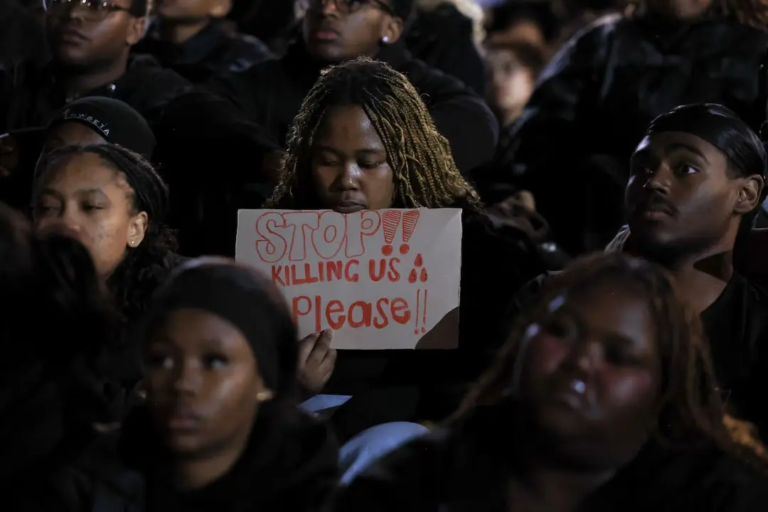
Read More : South Africans Protest Killings of Nine Women
Too often we have outrage, then a statement from somewhere, then vague promises, followed by silence until another tragedy hits the headlines. These women deserve more.
A woman should be free to go for a run, catch the bus, visit a friend and come home at the end of the day. She shouldn’t wake up every day and wonder if she’s putting herself at risk by being alive.
A woman shouldn’t fear returning home. And that right can’t be left to some distant promise. It needs to be protected right now.