Trending
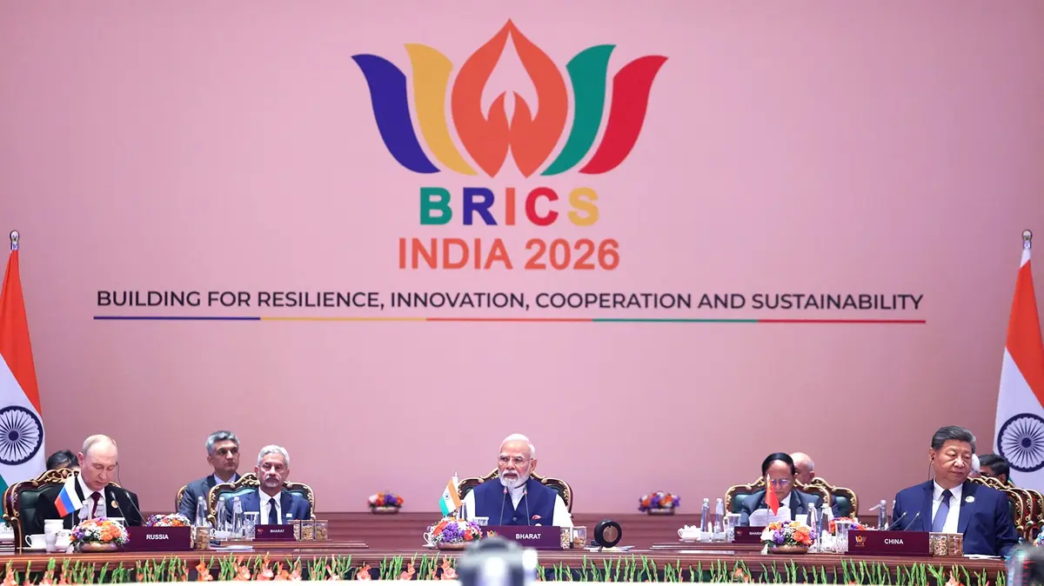
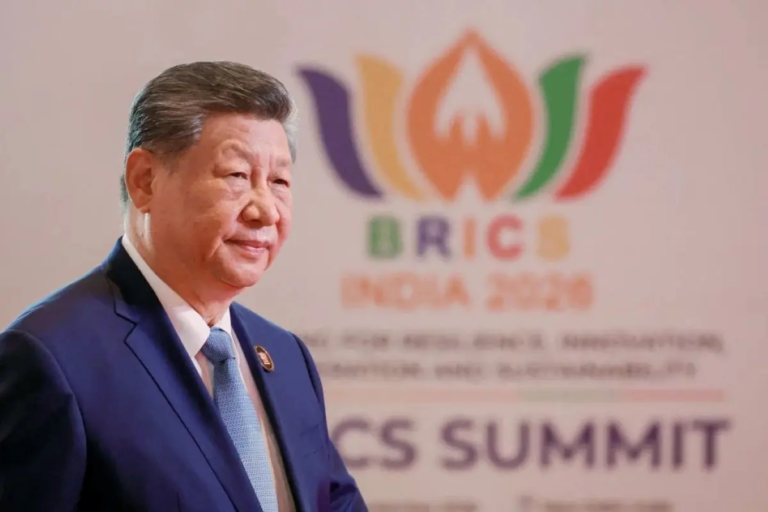
BRICS leaders, including China, Russia, and India, began the final day of talks in New Delhi on Sunday, focusing on inclusive global growth and economic cooperation.
Indian Prime Minister Narendra Modi called for greater cooperation among bloc members as leaders gathered for the summit’s final day. Modi said BRICS’ strength came from the diversity of its members and their ability to work together, noting that the group represents about half of the world’s population, 40 per cent of global GDP and more than a quarter of global trade.
“The power of BRICS lies in our diversity and cooperation,” Modi told leaders.
He said the bloc had sought to promote inclusive global growth despite members being shaped by different economic and political realities.
“We may be rooted in different realities, but together we rise through cooperation and blossom for humanity,” he said.
Brazil, Russia, India, China, and South Africa (BRICS) was established in 2009 as a platform for major emerging economies seeking greater influence in international institutions dominated by Western powers. The group is now seeking to expand its global influence while addressing challenges involving conflict, trade and energy security.
The first day of the summit on Saturday focused heavily on the conflict in the Middle East, with leaders reaching an agreement calling for restraint.
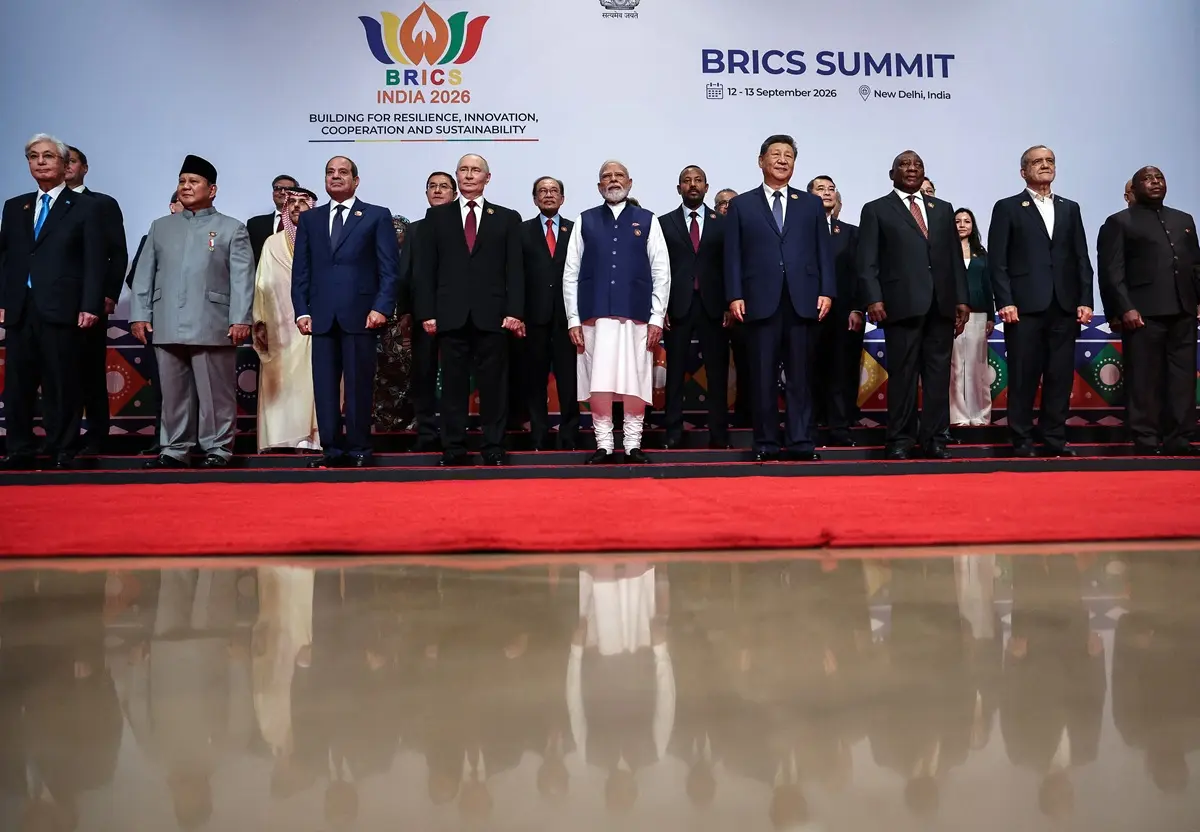
BRICS foreign ministers had failed to reach a joint statement during a meeting in New Delhi in May, with Iran, Saudi Arabia and the United Arab Emirates divided over the war that began with US-Israeli strikes on February 28.
However, leaders, including Iranian President Masoud Pezeshkian, agreed to a joint statement after India’s diplomatic efforts.
The statement expressed concern over the continued escalation of tensions in the Middle East and called on all sides to exercise maximum restraint.
Modi maintains relations with Iran and the United States’ ally Israel while also seeking to balance India’s relationship with Washington.
India has partly responded to the energy crisis caused by the US-Iran war by turning to Russia, despite Moscow’s war in Ukraine and pressure from the United States and other Western countries.
Chinese President Xi Jinping’s participation also marked his first visit to India since 2019 and the latest step in efforts to improve relations between the two nuclear-armed neighbours.
Relations between Beijing and New Delhi have gradually improved through the restoration of flights and visas, as well as high-level contacts, following a deadly military clash along their disputed border six years ago.
During a meeting with Modi, Xi said China and India could benefit from their differences by complementing each other’s strengths and working towards shared progress.
“Although our two countries are different in many respects, they are fully capable of complementing each other’s strengths, supporting one another, achieving mutual success and advancing together,” Xi said, according to a video released by New Delhi.
The two countries, however, continue to dispute their roughly 3,500-kilometre high-altitude border, where both maintain significant military deployments.
India’s foreign ministry said the two leaders reaffirmed their commitment to finding a fair, reasonable and mutually acceptable solution to the boundary dispute. Trade tensions and strategic rivalry continue to complicate the relationship, including concerns over India’s widening trade deficit with China.
Xi also called for greater financial cooperation between the two countries and support for an open and inclusive global economic system.
“Both sides should… work hand-in-hand to promote high-quality major financial cooperation, advocate an equal and sustainable global order, and foster an economic globalisation that is open and inclusive,” Xi said.
Xi’s visit also drew protests from dozens of Tibetans in New Delhi, including exiles who oppose Chinese rule and support the Dalai Lama, who has lived in India since fleeing a Chinese crackdown in 1959.