Trending

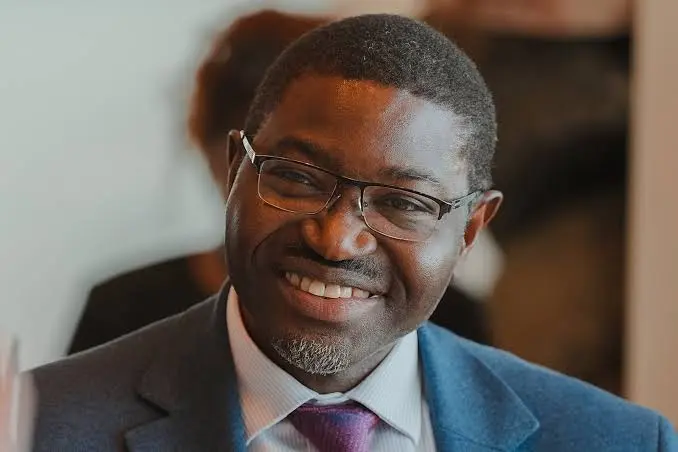
Nigerian-trained lawyer and international law scholar Professor Dapo Akande has been elected as a judge of the International Court of Justice (ICJ), earning a nine-year term at the United Nations’ (UN) principal judicial body.
His election on Tuesday marks a new chapter in a career spanning nearly three decades in international law, legal research and dispute settlement.
From his legal education at Obafemi Awolowo University in Nigeria to his work at the University of Oxford and international courts, Akande has built a career across academia and legal practice.
Here are 10 things to know about the Nigerian-born legal scholar.
1. Education At Obafemi Awolowo University
Akande began his legal education in Nigeria, where he obtained his law degree from Obafemi Awolowo University in Ile-Ife. He later built an international career in legal research, teaching and practice.
2. Oxford University Academic Career
Akande is the Chichele Professor of Public International Law at the University of Oxford’s Faculty of Law. He is also a Fellow of All Souls College and Co-Director of the Oxford Institute for Ethics, Law and Armed Conflict.
3. Role in the United Nations Legal Commission
Beyond his academic responsibilities, Akande is a member of the United Nations International Law Commission. He is also a barrister at Essex Court Chambers, where he practices international law.
4. International Teaching And Academic Experience
Akande’s academic career includes visiting professorships in the United States, Europe and Australia.
These include Yale Law School. In 2015, he also served as the Sir Ninian Stephen Visiting Scholar at the University of Melbourne Law School’s Asia-Pacific Centre for Military Law.
5. Specialisation In Public International Law
His research focuses on the law of international organisations, armed conflict, international criminal law, cyber operations and international dispute settlement. He has also contributed to research on international humanitarian law and legal protections during conflict.
6. Award-Winning Legal Publications
Akande co-authored Oppenheim’s International Law: The United Nations, published by Oxford University Press in 2017. The book received the 2019 Certificate of Merit from the American Society of International Law.
He has also co-edited The Oxford Guide to International Humanitarian Law (2020), Human Rights and 21st Century Challenges: Poverty, Conflict and the Environment (2020), and Practitioners Guide to the Application of Human Rights Law in Armed Conflict (2016).
7. Contributions To Cyber Law Research
Akande was a member of the International Group of Experts that prepared the Tallinn Manual 2.0 on the International Law Applicable to Cyber Operations, published in 2017. He also convened the Oxford Process on International Law Protections in Cyberspace.
Between 2012 and 2017, he served as Co-Director of the Oxford Martin Programme on Human Rights for Future Generations.
8. Experience Before International Courts
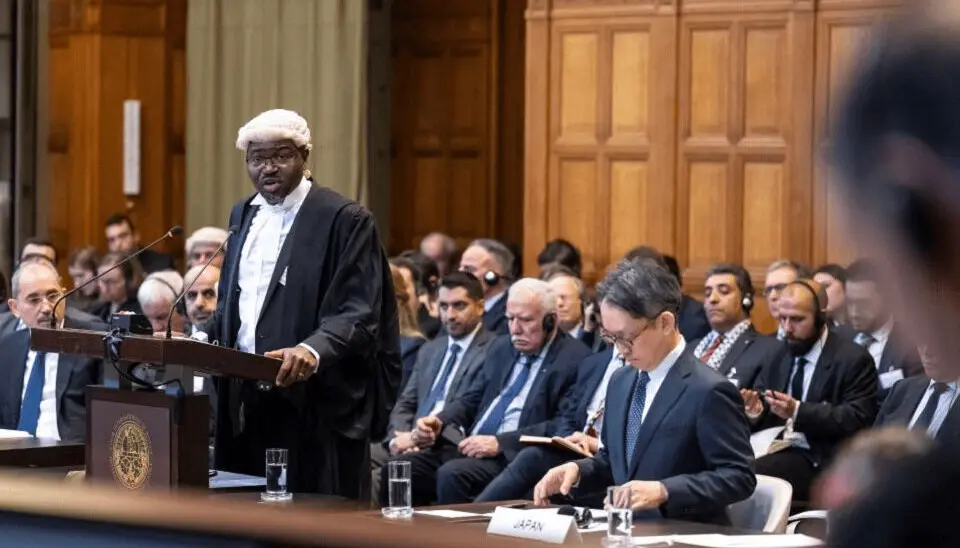
Akande has participated in international legal proceedings as an advocate, counsel, adviser and expert.
His work has involved the International Court of Justice, the International Tribunal for the Law of the Sea, the European Court of Human Rights, the African Court of Human and Peoples’ Rights, and the International Criminal Court.
He has also appeared before World Trade Organisation (WTO) panels and advised on cases in England, including proceedings before the UK Supreme Court.
9. Advisory Roles For Governments And Global Institutions
Akande’s advisory work has covered governments across all continents and organisations such as the United Nations, the African Union Commission, the Commonwealth Secretariat, the Council of Europe, and the North Atlantic Treaty Organisation.
In 2024, the President of the World Bank, acting as chair of its Administrative Council, designated him to the panel of arbitrators of the International Centre for Settlement of Investment Disputes. He was later appointed to ad hoc committees handling applications to annul ICSID awards.
He has also served on advisory bodies linked to the United States Department of State, the UK Ministry of Defence and the International Committee of the Red Cross.
10. Pledge to Serve the World Court Impartially
Following his election, Akande said he was honoured by the confidence member states had placed in him. He pledged to serve independently and impartially, applying the law faithfully when deciding cases.
“I pledge to serve with independence and to deciding cases on the basis of a faithful and impartial application of the law,” he said in a statement published by the UK Foreign, Commonwealth and Development Office on Tuesday.
He added that he looked forward to contributing to the court’s work in resolving disputes through peaceful means.