Trending
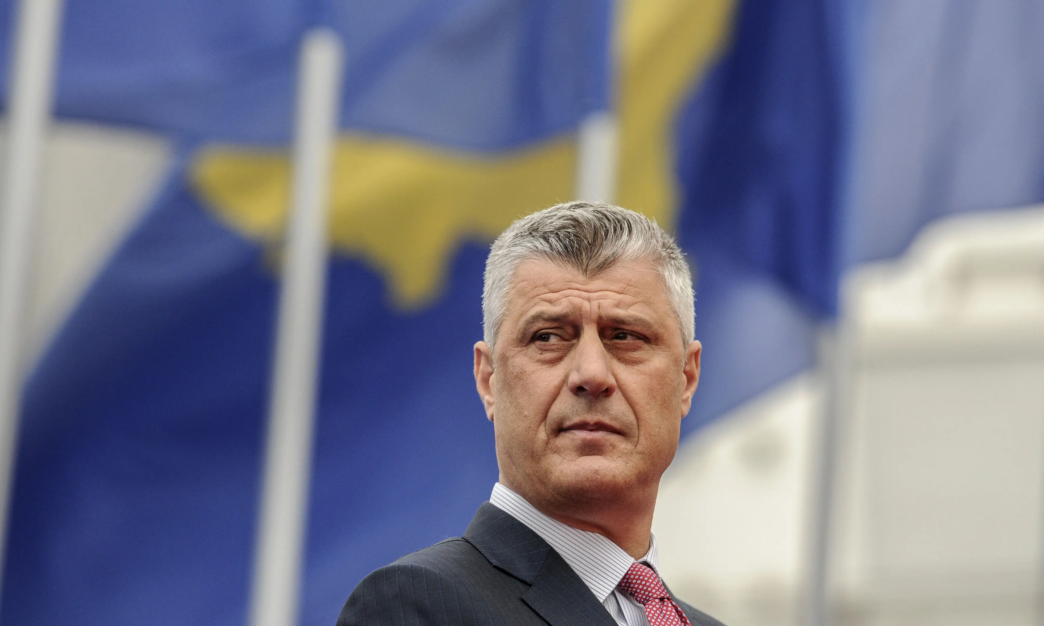
Former Kosovo President Hashim Thaçi has been sentenced to 25 years in prison by a special court in The Hague for war crimes linked to the late-1990s Kosovo conflict.
The Kosovo Specialist Chambers found Thaçi criminally responsible for the murder of 96 people, as well as other war crimes including arbitrary detention, cruel treatment and torture.
Three other former Kosovo Liberation Army (KLA) leaders tried alongside Thaçi also received lengthy prison terms. Kadri Veseli was sentenced to 18 years, Rexhep Selimi to 13 years, and Jakup Krasniqi to 25 years.
The verdicts are not final and can be appealed.
In a statement, the court said its Trial Panel found all four defendants criminally responsible for the arbitrary detention of 385 people, cruel treatment of 49 people, torture of 303 people and murder of 96 people.
Thaçi, 58, had maintained that he was “completely innocent.” He showed no visible emotion as presiding judge Charles Smith delivered the verdict.
Prosecutors had requested a 45-year prison sentence for Thaçi over crimes allegedly committed during the 1998–1999 Kosovo war.
The three-year trial heard testimony from nearly 300 witnesses, while 155 victims participated in the proceedings.
Prosecutors alleged that Thaçi, Veseli, Selimi and Krasniqi belonged to the KLA leadership and were responsible for crimes committed against civilians and others during the conflict.
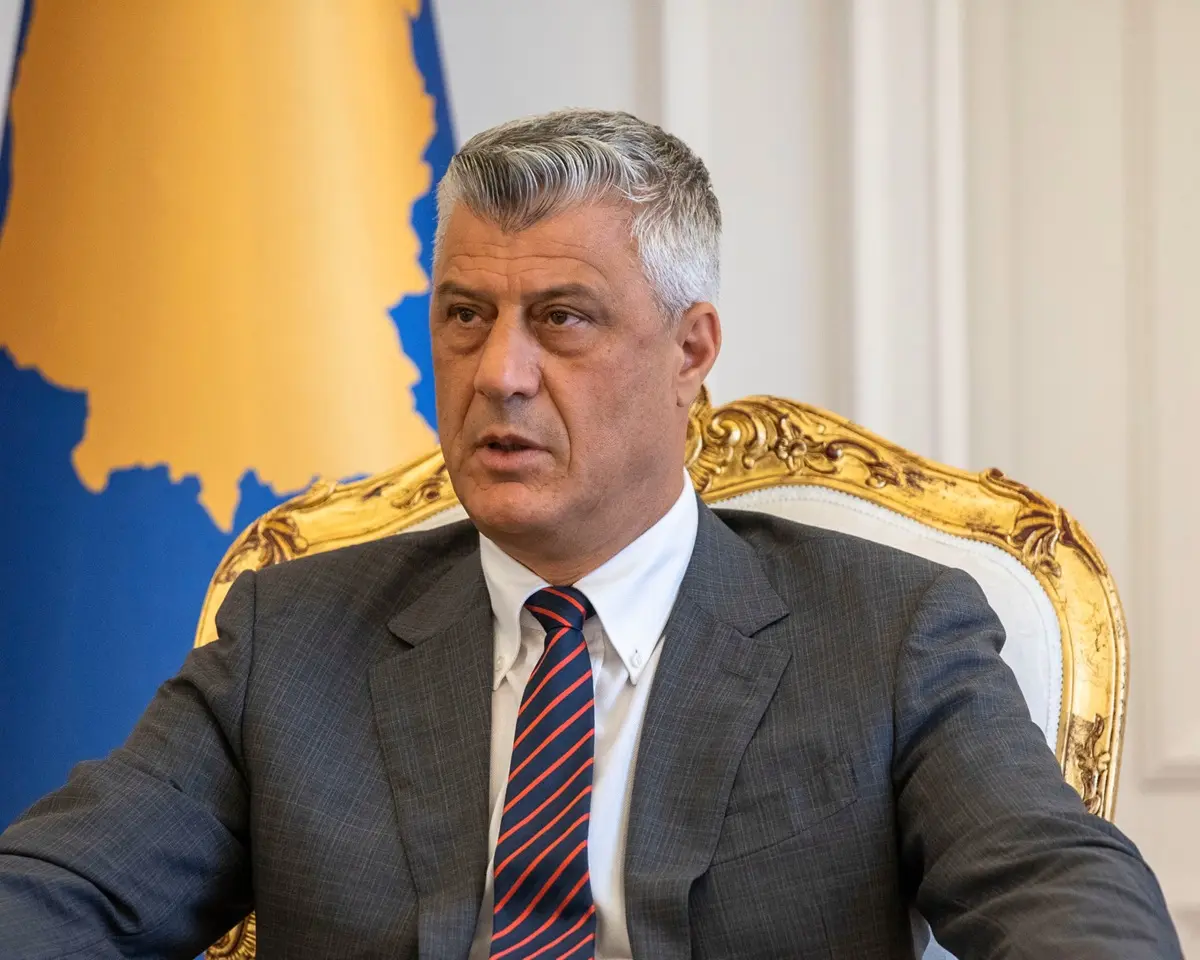
Judge Smith stressed that the case was not about the KLA’s political objectives or military methods, but about the individual criminal responsibility of the four defendants for the war crimes the court established.
The Trial Panel did not take several other charges, including allegations of crimes against humanity, into account because it found the evidence insufficient.
Thaçi held several senior political positions after the war, serving as Kosovo’s prime minister, foreign minister and president between 2008 and 2020.
He resigned as president in 2020 to face proceedings before the court in The Hague.
All four defendants held senior positions in the KLA and later occupied prominent political roles in Kosovo.
The KLA fought from 1998 to 1999 for Kosovo’s independence from Serbia, a predominantly ethnic Albanian province.
The conflict ended after NATO intervened against Serbian forces. Serbian security forces were accused of committing widespread crimes against Kosovo’s Albanian population, allegations that were investigated by the UN-established International Criminal Tribunal for the former Yugoslavia.
The Kosovo Specialist Chambers were established in 2015 following international pressure to prosecute alleged crimes linked to the KLA. Although they form part of Kosovo’s judicial system, the chambers operate with international judges and prosecutors and are based in The Hague for security reasons.
The verdict has drawn strong criticism in Kosovo.
Foreign Minister Glauk Konjufca described the ruling as a “sad, unjust, and undeserved decision” and called it a “devastating verdict for Kosovo and for our war of liberation” after leaving the courtroom.
The Democratic Party of Kosovo (PDK), founded by Thaçi after the Kosovo War in 1999, also rejected the ruling, calling it a “great injustice.”
The party said the allegations and evidence presented during the trial had been fabricated as part of Serbian propaganda intended to “criminalise the KLA’s just war.”
Thousands of people watched the verdict being delivered on large public screens across Kosovo before returning home, according to a dpa reporter in Pristina.
The ruling also drew protests in Kosovo and the Netherlands. Tens of thousands of people had demonstrated against the proceedings the previous Saturday, while several hundred Kosovars gathered in The Hague on Wednesday to protest the verdicts, according to Dutch news agency ANP.
Security forces were reportedly pelted with stones during the demonstration, prompting police to use tear gas to disperse protesters.